

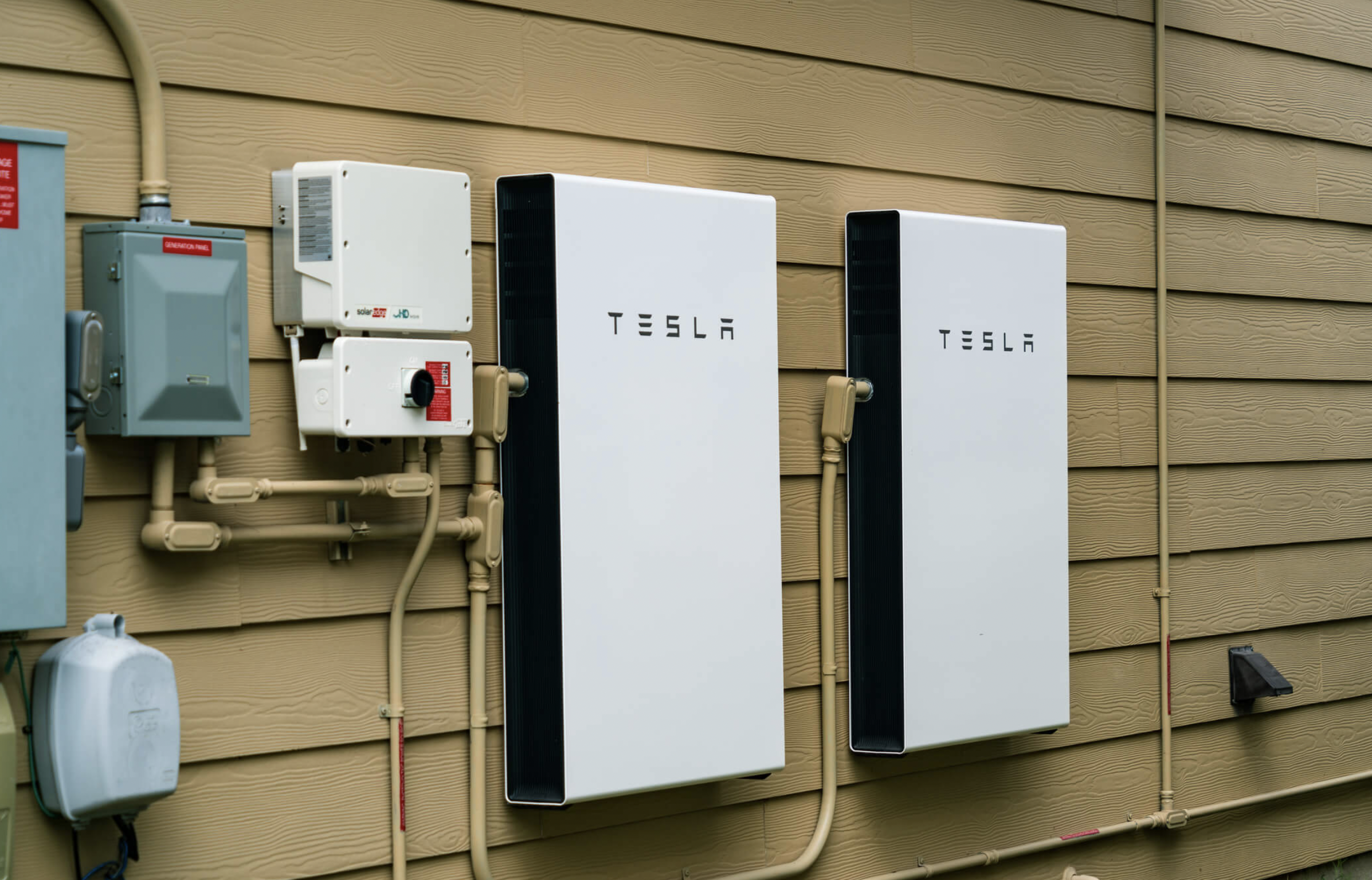
A decade ago, home solar meant one thing: panels on a roof, feeding power into the grid during the day and drawing it back out at night. That trade worked well under generous net metering rules, but as utilities have rewritten those rules and storms have knocked out power for longer stretches, a second piece of hardware has moved from niche to mainstream. Home battery storage lets a household keep the electricity its panels generate instead of handing it back to the utility for a few cents on the dollar, then use that stored power after sunset or during an outage.
The pairing of batteries with solar panels is now one of the fastest-growing categories in residential energy, and the decisions involved, sizing, chemistry, cost, and installation, are more layered than most homeowners expect.
Pairing Batteries With Solar Panels
The basic concept is straightforward: solar panels produce direct current electricity whenever sunlight hits them, an inverter converts that into alternating current for home use, and any surplus either flows to the battery, back to the grid, or gets curtailed if there is nowhere for it to go. A battery sits between generation and consumption, smoothing out the mismatch between when the sun shines and when a household needs electricity most, which is typically in the morning and evening. Three configurations dominate the market today.
- AC-coupled systems: the battery connects to the home’s existing AC wiring through its own inverter, making it a common retrofit option for homes that already have solar installed.
- DC-coupled systems: the battery shares an inverter with the solar array, which tends to be more efficient because power is converted fewer times, but it usually requires planning the battery in from the start.
- Hybrid inverter setups: a single inverter manages both solar input and battery charging and discharging, simplifying wiring and often lowering installation labor.
- All-in-one units: battery, inverter, and sometimes a backup transfer switch are housed together, trading some flexibility for a simpler install and a tidier footprint.
Homeowners adding storage to an existing solar system will generally land on AC coupling, while those designing a system from scratch have more freedom to choose DC coupling for efficiency gains. Neither choice is wrong; the right one depends on existing equipment, budget, and how much backup capacity a household wants.
The software layer matters as much as the hardware. Most battery systems ship with an app that lets owners set operating modes, prioritizing self-consumption on a normal day, reserving a minimum charge for backup protection, or shifting to a time-of-use mode that charges during cheap off-peak hours and discharges during expensive evening peaks. A household that never touches these settings after installation often leaves real savings on the table, since the default factory mode is rarely tuned to a specific local utility rate structure.
Sizing a System for Your Household Needs
Oversizing a battery wastes money; undersizing one leaves a household without power exactly when it matters most. Installers typically start by pulling twelve months of utility bills to establish a baseline of daily and seasonal consumption, then narrow the goal down to one of three outcomes: bill reduction through self-consumption, backup power for critical circuits during an outage, or full home backup capable of running everything, including air conditioning, for an extended period.
A household aiming only to cover a refrigerator, some lighting, a router, and phone charging during an outage might get by with a battery in the 5 to 10 kilowatt-hour range. A household wanting to run a well pump, a sump pump, and partial HVAC load during a multi-day outage often needs 15 to 20 kilowatt-hours or more, frequently split across two linked battery units. Full home backup, including central air conditioning in summer, can require 30 kilowatt-hours or more, which pushes the cost and the physical footprint of the installation well above a bill-reduction setup.
Climate matters too. A household in a region with frequent, short outages from storms may prioritize fast recharge from solar the following day, while a household facing wildfire-related shutoffs that can last a week may prioritize raw capacity and a backup generator as a supplement, since no residential battery is sized to run a home indefinitely without sunlight or an external charging source.
Household size and appliance mix shift the math further. A family running an electric vehicle charger, a heat pump, and a large refrigerator has a very different load profile than a smaller household with gas heating and no electric vehicle, and installers increasingly build load profiles circuit by circuit rather than relying on a flat average. Some homeowners choose to phase in storage, starting with a smaller battery sized for critical loads and adding a second unit later once budget allows, since most major battery brands support stacking additional modules onto an existing system rather than requiring a full replacement.
Battery Chemistry and Lifespan Differences
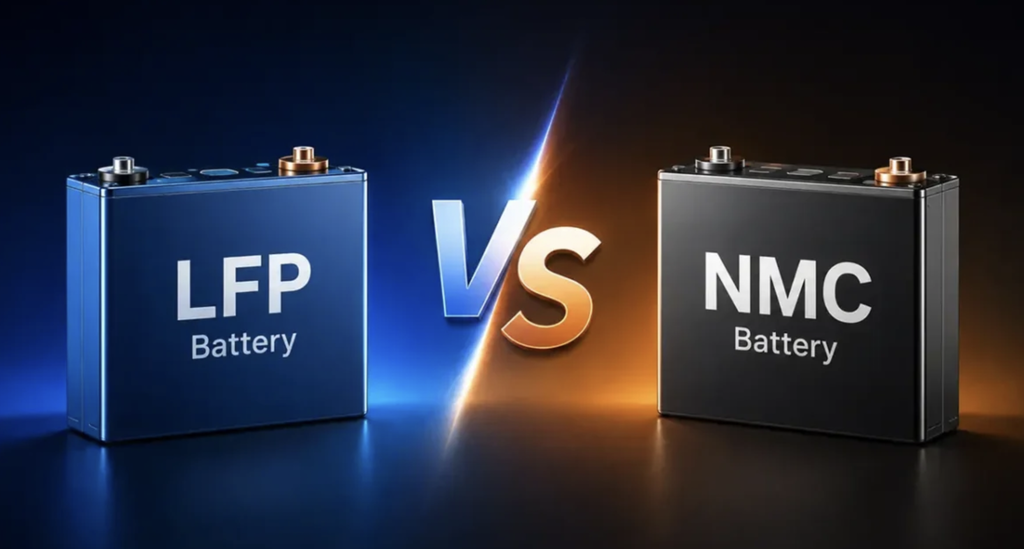
Most home batteries sold today use one of two lithium-ion chemistries, and the difference between them affects safety margins, cycle life, and cost in ways that are not always obvious from a sales brochure.
- Lithium iron phosphate (LFP): increasingly the default choice for residential storage because it tolerates heat better, degrades more slowly over thousands of charge cycles, and carries a lower thermal runaway risk than older lithium chemistries.
- Nickel manganese cobalt (NMC): offers higher energy density, meaning more capacity in a smaller footprint, which matters in tight installation spaces, but it generally has a shorter usable lifespan and a narrower temperature tolerance.
- Lead-acid and saltwater alternatives: still sold in some off-grid markets for their lower upfront cost, though they require more maintenance and offer far fewer usable cycles before replacement.
Manufacturers typically warranty batteries for 10 years or a set number of cycles, often somewhere between 4,000 and 10,000, whichever comes first. Degradation is gradual rather than a cliff edge: a battery rated to retain 70 percent of its original capacity at the end of its warranty period will still function, just with less usable storage than on day one. Homeowners comparing products should look past the headline capacity number and check the warranted capacity retention, since two batteries with the same starting size can age very differently.
Temperature exposure is one of the biggest factors in long-term performance, which is why installers increasingly recommend indoor or shaded garage placement over an exposed exterior wall in regions with extreme summer heat. A battery that regularly operates above its ideal temperature range will lose capacity faster than one kept in a moderate environment, and some manufacturers include active cooling or heating systems in their enclosures specifically to manage this, adding to the unit cost but extending usable life in harsh climates.
Costs, Incentives, and Payback Timelines
Installed home battery systems commonly run from roughly 9,000 to 20,000 dollars before incentives, depending on capacity, brand, and whether the installation includes a full backup transfer panel. Labor, electrical upgrades, and permitting fees add to the base hardware cost, and homes with older electrical panels sometimes need an upgrade that adds another one to three thousand dollars.
- Federal tax credit: in the United States, a residential clean energy credit has historically covered a share of both solar and standalone battery installation costs, reducing net out-of-pocket spending.
- State and utility rebates: several states and individual utilities offer additional rebates, sometimes tied to enrolling the battery in a grid services program that lets the utility draw on stored power during peak demand in exchange for bill credits.
- Time-of-use savings: households on time-of-use electricity rates can shift consumption away from expensive evening peak hours by drawing from the battery instead of the grid, which compounds over years into real savings.
- Avoided outage costs: for households with medical equipment, remote work needs, or food storage concerns, the value of backup power during an outage is harder to quantify but factors heavily into the decision.
Payback periods vary widely by region and rate structure, ranging from under seven years in markets with strong incentives and high electricity prices to well over fifteen years where incentives are thin and rates are low. A battery paired with solar in a state that has reduced net metering compensation often pays back faster than the same battery added to a system in a state with generous export rates, since the battery is replacing a lost benefit rather than competing with a good one.
Financing options have expanded alongside demand. Many installers now offer loans structured so that monthly payments roughly match or undercut prior electricity bills, making the upgrade cash-flow neutral or positive from the first month for some households. Leasing and power purchase agreements, long common in solar-only deals, have also extended to storage in some markets, though homeowners should read these contracts closely, since a leased battery generally does not qualify the owner for the same tax credits available to an outright purchase, and resale of the home can be complicated by an active lease.
Installation Steps and Permitting Rules
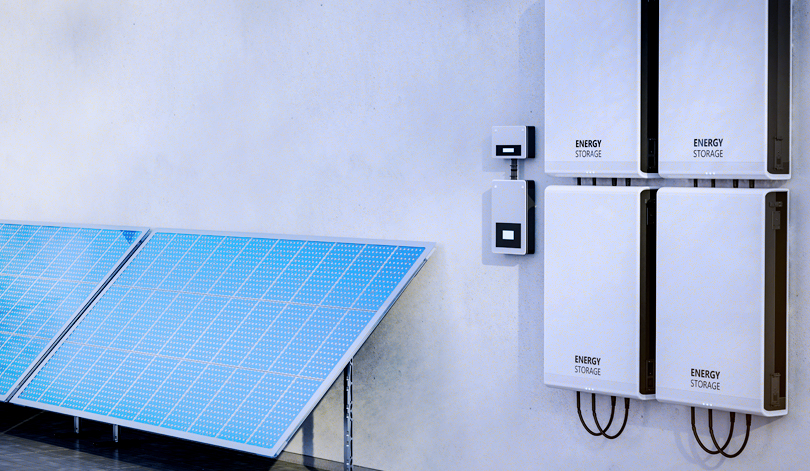
Getting a battery installed and operating legally involves more steps than hardware installation alone, and timelines of two to four months from signed contract to full operation are common in many jurisdictions. The general sequence looks like this:
- ● Site assessment: an installer evaluates roof condition, electrical panel capacity, available wall or garage space for the battery enclosure, and any shading that affects solar output.
- System design and permitting: local building and electrical permits are filed, which can take anywhere from a few days to several weeks depending on the jurisdiction’s review backlog.
- Utility interconnection application: the utility must approve the system before it can be connected to the grid, a step that exists independently of local permitting and often takes the longest.
- Physical installation: panels, inverter, and battery are mounted and wired, typically over one to three days for a standard residential system.
- Inspection and permission to operate: a local inspector signs off on the electrical work, after which the utility issues formal permission to operate, the final step before the system can legally run.
Placement rules for the battery itself are stricter than many homeowners expect. Fire codes in numerous jurisdictions restrict battery enclosures from being installed inside habitable living space, near bedroom windows, or within a set distance of doors and ignition sources, pushing most installations to a garage, exterior wall, or dedicated utility closet. Homeowners in wildfire-prone or flood-prone areas should also confirm whether local code requires additional clearance or elevation for outdoor-mounted units.
Choosing a contractor is its own research project. Licensing requirements for solar and battery installers vary by state and sometimes by city, and homeowners are well served by confirming that a prospective installer carries both electrical licensing and manufacturer certification for the specific battery brand being proposed, since warranty claims can be denied if installation was not performed by a certified installer. Requesting references from recent local jobs, rather than relying solely on online reviews, remains one of the more reliable ways to gauge whether a company follows through after the check clears and the crew leaves.
Grid Outages Are Reshaping Demand
Utility-scale blackouts tied to extreme heat, wildfire prevention shutoffs, and aging transmission infrastructure have pushed storage from an optional upgrade to something closer to insurance for homeowners in outage-prone regions. Public utility commissions in several states have also revised net metering policies to reduce compensation for exported solar power, which changes the math: electricity that once earned a near-retail credit now earns far less, making it more attractive to store and self-consume that power instead of sending it to the grid.
Manufacturers have responded with virtual power plant programs, where a utility or third-party aggregator can draw a small amount of power from thousands of enrolled home batteries simultaneously during peak demand, paying participating households in return. These programs are still young, but they represent a shift in how batteries are viewed, not just as personal backup devices, but as distributed grid assets that utilities can call on instead of building new peaker plants.
Insurance carriers and mortgage lenders have started paying closer attention as well, with some offering modest premium discounts for homes equipped with battery backup in regions prone to extended outages, reasoning that a powered home is less likely to suffer frozen pipes, spoiled food claims, or security system failures during a storm. None of this has reached the scale of a standard discount category yet, but it signals that storage is increasingly viewed as a resilience feature comparable to a generator or a reinforced roof rather than a purely optional convenience.
Final Thoughts
Pairing a battery with solar panels has moved from an enthusiast upgrade to a mainstream decision shaped by shifting utility rate changes, climate-driven outages, and steadily falling hardware costs across the industry. The right system depends on specific goals, whether that is trimming a monthly bill, keeping the lights on during a storm, or running a household entirely off stored power for days at a time.
Chemistry, sizing, and local permitting rules all affect the final cost and the realistic performance a household can expect. Anyone weighing the investment should gather detailed usage data, compare at least two or three local installers, and treat the marketing capacity number as a starting point for research rather than a guarantee of real-world performance.
Frequently Asked Questions
Do I need solar panels to install a home battery?
No. Batteries can be installed as standalone backup power, charging from the grid during off-peak hours and discharging during outages or peak pricing periods. Pairing with solar simply allows the battery to charge from free, self-generated electricity instead of relying solely on grid power.
How long does a home battery last during an outage?
That depends entirely on capacity and the load connected to it. A battery sized only for essential circuits, lighting, a refrigerator, and a router, can often run those items for a day or more, while a battery attempting to power central air conditioning or an electric water heater may drain within a few hours unless it is a large, full-home system.
Can I add a battery to a solar system I already own?
In most cases, yes, through an AC-coupled retrofit, though the exact compatibility depends on the inverter already installed and the battery brand being added. Some installers can mix brands, while others require the same manufacturer for the solar inverter and battery to communicate correctly.
What happens to the battery if the grid goes down during the day?
A battery with backup capability and a transfer switch will automatically disconnect from the grid and continue powering the home, recharging from solar panels if the sun is out, a feature sometimes marketed as islanding. Without that transfer switch and automatic disconnection, federal safety rules require solar systems to shut down during an outage to protect utility workers, even if a battery is present.
Are home batteries covered by homeowners insurance?
Most standard homeowners policies extend coverage to permanently installed battery systems the same way they cover other fixed home equipment, but coverage limits and specific exclusions vary by insurer, so it is worth confirming with an agent before installation rather than after a claim.
How many years before a battery needs replacement?
Most manufacturers warranty batteries for around ten years or a set cycle count, after which usable capacity has typically declined enough that many owners choose to replace or add capacity, though the battery often still functions at reduced performance beyond that window rather than failing outright. Panels, by comparison, degrade far more slowly and typically remain productive well past the battery’s warranty window, which is why many households end up replacing storage hardware at least once over the working life of a single solar array.