

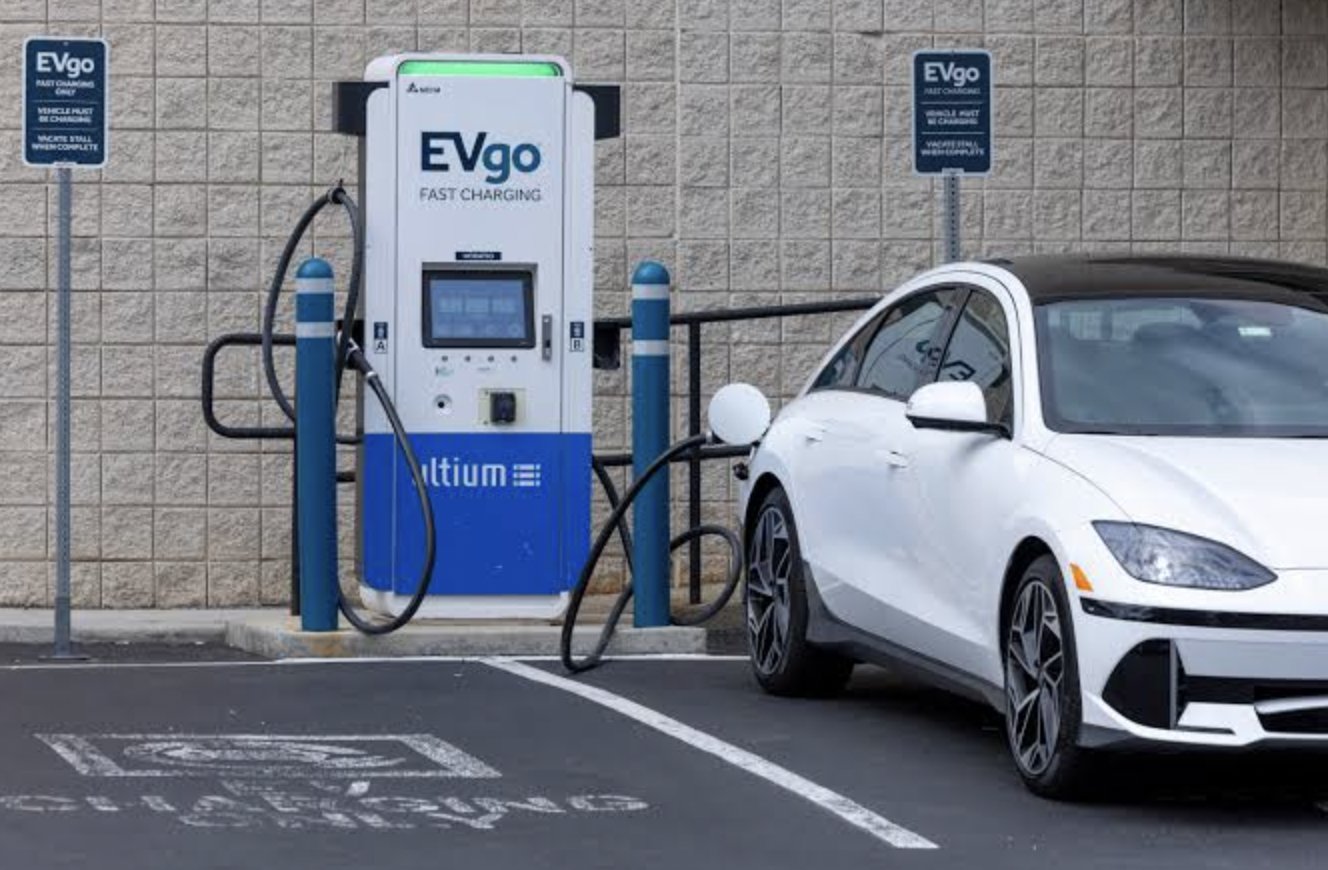
Last summer, a family of four drove a Hyundai Ioniq 5 from Chicago to Nashville for a wedding, mapping their route entirely around charging stops instead of gas stations for the first time. They arrived only forty minutes behind schedule, spent the extra time at a charging plaza that had a coffee shop and a dog park attached, and admitted the trip felt less like a compromise than they expected.
That kind of story, once rare enough to make local news, has become common enough to signal a real shift in what long-distance electric vehicle travel looks like in 2026, even as gaps in the network still catch unprepared drivers off guard. Just five years earlier, the same route would have meant careful research into which small-town gas stations happened to have a compatible charger bolted to the wall, often with no guarantee it worked when the family arrived.
Corridor Charging Takes Shape on Major Highways
The backbone of long-distance EV travel in the United States now runs along interstate corridors where fast-charging stations have been installed roughly every fifty miles, close to the spacing federal planners identified as necessary to eliminate range anxiety on major routes. States received funding through the National Electric Vehicle Infrastructure program to build out these corridors, prioritizing interstates like I-95 on the East Coast and I-80 across the Midwest where traffic volume justified early investment.
- Corridor prioritization: federal guidelines directed states to build along designated Alternative Fuel Corridors first, concentrating early stations where long-distance traffic is heaviest
- Station density targets: the program’s benchmark of chargers roughly every fifty miles addresses the specific anxiety of running low on battery between usable stops.
- Multi-plug requirements: funded stations must include multiple simultaneous fast-charging ports, reducing the wait times that plagued early single-plug installations.
- Reliability standards: NEVI-funded stations must maintain a minimum uptime percentage, a response to widespread complaints about broken or offline chargers at older networks.
Coverage remains noticeably uneven despite this progress. The Northeast corridor and much of California offer dense, reliable charging within short detours of major highways, while stretches of the Mountain West and parts of the rural South still require careful trip planning around sparser station placement.
Plaza design has also evolved alongside the raw station count. Early charging locations were often little more than a row of pedestals in an unused corner of a parking lot, with nothing to do during the twenty to forty minutes a charge required. Newer flagship locations, including some built by Buc-ee’s, Mercedes-Benz, and Tesla’s own diner-style flagship in Los Angeles, pair charging bays with food, restrooms, and seating explicitly designed to make the wait feel like a break rather than a delay, a shift that reflects operators treating charging time as an experience to design around rather than a problem to minimize.
What Road Trip Range Anxiety Looks Like Today
The anxiety long-distance EV drivers describe has shifted in character rather than disappeared entirely. Early adopters worried about running out of charge with nowhere to plug in at all; today’s concern more often centers on whether a station will be functional, available, and fast enough to keep a trip on schedule. Broken chargers, occupied stalls with no queue system, and payment terminal glitches remain the most commonly cited frustrations in driver surveys and owner forums.
Trip-planning apps have become essential tools for managing this uncertainty. ABRP (A Better Routeplanner) and PlugShare aggregate real-time station status and user reports, letting drivers route around known problem locations rather than discovering a broken charger only after arriving. Vehicle-integrated navigation, especially in Tesla and increasingly in other manufacturers’ software, now factors charging stops directly into route calculations, adjusting for weather, elevation, and cabin climate use that all affect real-world range.
Driver behavior has adapted alongside the tools. Frequent long-distance travelers describe planning charging stops around meal breaks and rest needs rather than treating them as a separate obligation, effectively folding the charging requirement into a driving rhythm that resembles how road trips were paced before fast, ubiquitous gas stations made nonstop driving the default expectation. That reframing, more than any single technical improvement, seems to explain why experienced EV road-trippers report far less stress than first-time long-distance drivers encountering the process for the first time.
Network Providers and the Competition Emerging
The charging network landscape has consolidated around a handful of major providers competing for both driver loyalty and automaker partnerships. Electrify America, originally funded through Volkswagen’s diesel emissions settlement, built out a national network of high-speed stations
independent of any single automaker. EVgo has focused on urban and suburban fast-charging locations, often partnered with retail sites like grocery stores. ChargePoint dominates workplace and destination charging rather than the highway fast-charging segment specifically.
- Electrify America: built with settlement funding rather than pure commercial investment, giving it an early lead in station count along major corridors.
- EVgo: emphasizes urban accessibility and retail partnerships, positioning itself for shorter opportunistic charging rather than long highway stops.
- ChargePoint: strongest in workplace and destination charging, a complementary rather than competing use case to highway fast-charging networks.
- Rivian Adventure Network: a smaller, brand-specific network built to support Rivian’s own vehicles along routes popular with outdoor recreation travelers.
Reliability data collected by independent researchers, including studies from J.D. Power and university transportation research centers, has consistently found real gaps between providers, with some networks reporting notably higher successful-charge rates than others. That data has started influencing both consumer choice and automaker partnership decisions in ways that pure station count numbers previously obscured.
Payment friction has also drawn regulatory attention. Early charging networks frequently required a proprietary app and account setup before a driver could initiate a session, a barrier gas stations never imposed. Legislation in several states now requires charging stations to accept standard credit card payment without a mandatory app download, a change aimed at making the experience feel closer to the simplicity drivers already expect from fueling a gas-powered car.
Tesla’s Supercharger Network Opens to Rivals
Tesla’s Supercharger network, long regarded as the most reliable fast-charging system in North America, has begun opening to non-Tesla vehicles following the industry’s broad adoption of Tesla’s charging connector, now standardized as the North American Charging Standard. Ford, General Motors, Rivian, and most other major automakers announced plans to adopt NACS starting with 2025 model year vehicles, a shift that effectively made Tesla’s charging network the emerging national standard almost overnight.
This transition has reshaped competitive dynamics across the entire industry. Automakers that spent years building CCS-compatible vehicle fleets now face a transition period requiring adapters or new vehicle hardware, while drivers benefit from access to a network widely regarded as more reliable and more consistently maintained than many CCS-based competitors. Tesla itself has leaned into the opportunity, opening a growing share of its Supercharger stalls to all NACS-compatible vehicles and treating network access fees as a notable new revenue stream beyond vehicle sales.
The transition has not been entirely smooth for owners caught mid-changeover. Some early adapter hardware shipped with limited compatibility or reduced charging speeds compared to native NACS ports, and a handful of automakers delayed adapter shipments past their original announced timelines,
leaving some CCS-equipped vehicle owners waiting longer than expected for full Supercharger access. Owner forums tracking the rollout have become a de facto real-time source of compatibility information that official manufacturer communications have sometimes struggled to keep current with.
Charging Speeds and the NACS Shift
Charging speed claims from manufacturers often describe best-case scenarios that real-world conditions rarely match exactly. A vehicle’s peak charging rate typically only holds for a narrow window of the battery’s state of charge, usually between roughly ten and sixty percent, with speeds tapering noticeably as the battery approaches full to protect long-term battery health.
- Peak versus average speed: marketing figures describe peak rates achievable only briefly, while average speed across a full charging session is notably lower.
- Temperature sensitivity: cold weather slows charging speed substantially, a factor that catches drivers in northern climates off guard during winter road trips.
- Battery chemistry differences: lithium iron phosphate batteries, increasingly common in lower-cost models, tolerate frequent fast charging differently than nickel-based chemistries used in higher-range vehicles.
- Charger hardware limits: a vehicle capable of very high charging speeds still charges only as fast as the station’s hardware allows, making station specifications as relevant as vehicle specifications.
Next-generation charging hardware capable of speeds exceeding 350 kilowatts is being deployed by several networks, though most current vehicles cannot yet draw power that fast, meaning the infrastructure is, in some respects, ahead of the vehicles currently on the road.
Battery preconditioning has become one of the more overlooked factors separating a fast charging stop from a frustrating one. Vehicles that automatically warm or cool the battery pack to an ideal temperature while en route to a charger, a feature increasingly standard on newer models, can charge noticeably faster on arrival than an identical vehicle whose battery sits at ambient temperature. Drivers unaware of this feature, or driving older vehicles without it, sometimes attribute slow charging entirely to the station when the vehicle’s own battery condition is the larger factor.
Rural Gaps and Underserved Corridors
Rural America remains the clearest weak point in the national charging picture, and it is not purely a matter of population density. Lower traffic volume makes station economics harder to justify for private operators, while longer distances between towns mean a single broken or occupied charger can strand a driver with no nearby alternative. States with large rural footprints, including Montana, Wyoming, and parts of the Dakotas, have received NEVI funding specifically targeted at closing these gaps, though construction timelines for remote stations often run longer than urban and suburban installations due to permitting, grid connection costs, and contractor availability.
- Grid connection costs: rural stations sometimes require expensive utility upgrades to deliver the power fast-charging equipment demands, adding cost and delay beyond the charger hardware itself.
- Lower utilization economics: sparse traffic makes rural stations less commercially attractive without public subsidy, slowing private investment relative to high-traffic corridors.
- Backup planning: drivers on rural routes are advised to maintain a larger buffer above minimum range than urban drivers, given fewer redundant charging options nearby.
Federal Funding Driving Build-Out
The NEVI program, funded through the 2021 Infrastructure Investment and Jobs Act, allocated billions toward state-administered charging infrastructure, with each state submitting its own deployment plan for federal approval. Program rules require funded stations to meet specific standards for reliability, payment options, and connector availability, an attempt to avoid repeating the fragmented, inconsistent experience that characterized earlier private charging buildouts.
Implementation pace has varied a great deal by state, with some completing planned stations well ahead of schedule while others faced delays tied to permitting, utility coordination, and contractor bidding processes. Political shifts at the federal level have introduced additional uncertainty into the program’s future funding levels, making the pace of continued build-out somewhat dependent on policy decisions that extend beyond the automotive industry itself.
State transportation departments have responded to this uncertainty by front-loading spending where possible and diversifying funding sources, layering state incentive programs and utility company investment on top of federal dollars rather than relying on a single funding stream. That diversification strategy has helped some states keep construction moving even during periods when federal program guidance faced delays or legal challenges.
International Comparisons Worth Noting
Europe and China have each approached long-distance charging infrastructure differently than the United States, offering useful points of comparison. The European Union’s AFIR regulation mandates minimum charging station spacing along the core trans-European transport network, similar in spirit to the American NEVI corridor approach but backed by binding regulatory requirements rather than funding incentives alone. China has built the largest public charging network in the world by raw station count, driven by aggressive government investment and a domestic EV market that now represents a majority of global electric vehicle sales.
Norway, with the highest EV adoption rate of any country, offers a preview of what a mature charging market looks like at scale, with fast-charging stations common enough along major routes that range anxiety has become a largely historical concern for Norwegian drivers rather than an active daily consideration. Transportation researchers studying Norway’s rollout frequently point to its combination of dense population along key routes, favorable climate for cold-weather charging engineering, and sustained multi-decade policy support as reasons its experience is not perfectly transferable to larger, more geographically dispersed countries like the United States.
Final Thoughts
Long-distance electric vehicle travel has moved from a real logistical challenge to a manageable, if occasionally imperfect, experience across most of the country’s major highway corridors. Federal investment, industry consolidation around the NACS standard, and growing network reliability have each played a role in closing gaps that made early EV road trips a source of real anxiety rather than routine planning.
Rural coverage and inconsistent reliability across smaller networks remain the honest weak points, and drivers venturing off major corridors still benefit from extra planning and range buffer that gas-powered road trips never required.
The trajectory points toward continued improvement, but the current state of the network rewards preparation far more than it punishes spontaneity, a tradeoff most long-distance EV drivers say they have made peace with.
Frequently Asked Questions
How far apart are fast chargers on major US highways?
Federally funded NEVI stations target spacing of roughly fifty miles along designated highway corridors, though actual spacing varies by state and route, with some rural corridors still showing larger gaps. Trip-planning apps remain the most reliable way to check actual coverage along a specific route before departing.
Can any electric vehicle use Tesla Superchargers now?
A growing number of Superchargers accept non-Tesla vehicles equipped with the NACS connector or an adapter, following the industry’s broad shift toward Tesla’s charging standard. Compatibility still depends on the specific vehicle, adapter availability, and which individual Supercharger locations have opened access to outside brands.
Why do charging times vary so much between stops?
Charging speed depends on battery temperature, current state of charge, the vehicle’s maximum charging rate, and the charger’s own power output, all of which combine differently at every stop. A charge from ten to eighty percent on a warm battery at a high-powered station can take a fraction of the time a cold battery at a lower-powered charger requires.
Is rural long-distance EV travel realistic yet?
It is more realistic than a few years ago but still requires more careful planning than urban and suburban routes, especially in sparsely populated states where station spacing remains wider. Building in extra range buffer and checking real-time station status before departing reduces the risk of an unpleasant surprise.
What should I do if a charger is broken during a trip?
Most trip-planning apps show real-time station status and driver-reported outages, making it possible to reroute to a working station before arriving at a broken one. Reporting broken chargers through the app also helps other drivers and, in many cases, alerts the network operator to the outage faster than internal monitoring alone.
Are charging costs predictable for long trips?
Pricing varies by network, membership status, and even time of day at some stations, making costs less predictable than a fixed per-gallon gas price. Many frequent long-distance drivers subscribe to a preferred network’s membership plan specifically to lock in lower per-kilowatt-hour rates across multiple trips.