


Before a surgeon makes the first incision or a physician adjusts a medication dosage, a growing number of hospitals are testing that decision first on a computer model built from the patient’s own data. Digital twins in healthcare, virtual replicas of a patient’s organs, physiology, or entire disease progression, let clinicians simulate treatment outcomes before committing to a real intervention.
Drawing on techniques first developed for manufacturing and aerospace engineering, this approach is now working its way into surgical planning, drug testing, and chronic disease management, offering a preview of medical decisions that were once made purely through clinical judgment and population-level averages.
Modeling Patients Before Treatment Begins
A digital twin, in the industrial sense the term originated from, is a continuously updated virtual model of a physical object or system, built from real sensor data and used to predict how that object will behave under different conditions. Manufacturers have long used digital twins to simulate how a jet engine or wind turbine will perform under stress before committing to a physical design change, catching problems in simulation rather than after expensive real-world failures.
Healthcare has adapted this concept to model individual patients rather than machines, using imaging data, genetic information, lab results, and sometimes real-time sensor data from wearable devices to build a personalized virtual representation of a patient’s specific anatomy or physiological system. Unlike a generic anatomical model built from population averages, a patient-specific digital twin reflects the specific structure and function of that individual’s body, allowing clinicians to test how a specific intervention might play out before performing it on the patient in real life.
Early applications have concentrated in fields where anatomy and physiology vary widely between patients and where planning errors carry serious consequences, including cardiac surgery, orthopedic implant planning, and oncology treatment design. In each of these areas, a digital twin built from a patient’s own imaging and clinical data offers a more tailored simulation than relying purely on general surgical guidelines developed from broad patient populations that may not closely resemble the specific patient in front of the surgeon.
Academic medical centers were the first to invest in this technology, given their access to research funding, advanced imaging equipment, and computational resources that most community hospitals lack. Partnerships between hospital systems, universities, and technology companies specializing in physiological simulation software have driven much of the early development, with published case studies documenting specific instances where digital twin modeling changed a surgical plan or flagged a risk that traditional imaging review alone had missed.
These case reports remain relatively small in number, but they have built enough clinical confidence to justify continued investment and broader piloting across additional hospital systems.
Building Blocks of a Digital Twin
Constructing a useful patient digital twin requires combining several distinct data streams into a coherent, continuously updated model, a technical challenge that has taken years of research to make clinically practical. The process typically begins with detailed imaging data, such as CT scans, MRI images, or echocardiograms, which provide the structural foundation for the virtual model. Key components that come together to form a functioning healthcare digital twin include the following:
- High-resolution imaging data: CT, MRI, or ultrasound scans that establish the detailed structural geometry of the specific organ or system being modeled.
- Physiological simulation software: Computational models that simulate how blood flow, electrical signals, or mechanical stress behave within the patient-specific anatomy captured in imaging.
- Genetic and molecular data: Genomic or biomarker information that helps tailor simulations to a patient’s specific disease subtype or predicted treatment response.
- Continuous sensor data: Wearable devices or implanted sensors that feed ongoing physiological data back into the model, allowing it to update as the patient’s condition changes over time.
- Clinical history integration: Prior treatment records, medication history, and outcome data that provide context for how the specific patient has responded to interventions previously.
Bringing these data streams together requires substantial computational infrastructure and specialized software capable of running complex physics-based or machine-learning-driven simulations fast enough to be useful within a real clinical decision-making timeline, rather than taking so long to compute that the results arrive after the treatment decision has already been made.
Interoperability between different hospital data systems presents a persistent technical obstacle to building these models efficiently. Imaging data, lab results, and sensor readings often live in separate software systems that were not originally designed to share data seamlessly with one another, requiring custom integration work before a digital twin platform can pull everything together into a single coherent model.
Some hospital systems have invested in dedicated data integration teams specifically to solve this problem, recognizing that the underlying simulation technology means little if the data feeding it cannot be assembled reliably and efficiently from the start.

Clinical Applications Taking Shape
Cardiac care has emerged as one of the most active areas for digital twin adoption, since heart anatomy and blood flow patterns vary enough between patients that generic surgical planning can miss important individual detail. Surgeons planning complex procedures, including structural heart repairs and custom implant fitting, have used patient-specific digital twins to simulate how a specific device or surgical approach will interact with a patient’s unique anatomy before performing the real procedure, reducing the risk of complications that might only become apparent during surgery itself under a one-size-fits-all approach.
Oncology represents another area of active development, where digital twins model how a specific tumor might respond to different treatment combinations based on its genetic profile and the patient’s broader physiological context. Rather than relying solely on population-level clinical trial data, which reflects average outcomes across many different patients, oncologists using digital twin modeling aim to predict how an individual patient’s specific tumor is likely to respond, informing treatment selection with a more tailored prediction than general treatment guidelines alone can offer. A summary of leading clinical use cases for digital twin modeling today includes the following:
- Cardiac procedure planning: Simulating how a specific valve replacement or structural repair will interact with a patient’s unique heart anatomy before surgery.
- Tumor response prediction: Modeling how a specific cancer’s genetic profile might respond to different chemotherapy or targeted therapy combinations.
- Orthopedic implant fitting: Testing how a custom joint replacement or spinal implant will fit and perform within a patient’s specific skeletal structure.
- Chronic disease trajectory modeling: Projecting how a patient’s diabetes or cardiovascular condition might progress under different medication or lifestyle interventions over time.
- Drug dosing simulation: Predicting how an individual patient’s metabolism might process a specific medication, supporting more tailored dosing than standard population-based guidelines.
Radiation oncology has also become an area of interest, since digital twin modeling can help plan radiation beam angles and dosing with greater precision around a patient’s specific tumor geometry, aiming to maximize damage to cancerous tissue while sparing as much surrounding healthy tissue as possible.
Chronic disease management has also begun incorporating digital twin concepts, especially for conditions like diabetes and cardiovascular disease, where continuous data from wearable devices can feed an ongoing model that predicts how a patient’s condition might progress under different lifestyle or medication scenarios.
This allows physicians and patients to see a simulated preview of how a proposed treatment change might affect long-term outcomes, supporting more informed shared decision-making around chronic disease management than relying purely on general clinical guidelines applied uniformly across a broad patient population.
Data and Privacy Considerations
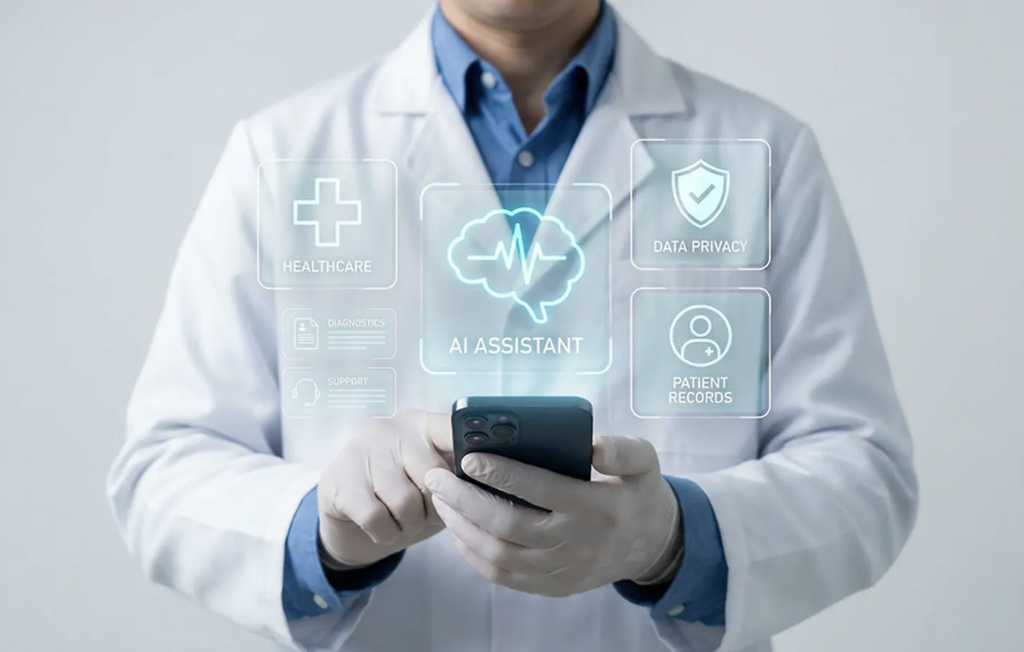
Building a detailed digital twin requires aggregating an unusually rich set of personal health data, raising privacy and security questions that go well beyond standard electronic health record protections. A model combining imaging data, genetic information, and continuous sensor readings creates a far more detailed digital picture of an individual than most existing healthcare data systems were originally designed to handle securely.
Healthcare organizations building digital twin programs must navigate a range of data governance considerations, including several that carry direct regulatory weight:
- Data storage security: Protecting highly sensitive, identifiable health data against breaches, given how much personal information a complete digital twin model contains in one place.
- Consent for ongoing data use: Ensuring patients are clearly informed of and agree to how continuously updated sensor and clinical data will be used to build and refine their virtual model.
- Cross-institution data sharing rules: Navigating regulatory frameworks that govern how patient data can move between hospitals, research institutions, and technology vendors involved in building these models.
- Algorithm transparency: Providing clinicians and patients with enough insight into how a simulation reaches its predictions to support informed clinical decision-making rather than opaque, unquestioned outputs.
- Long-term data retention policy: Determining how long detailed digital twin data should be retained given its sensitivity, balancing ongoing clinical value against accumulating privacy risk over time.
Regulatory bodies overseeing medical software have begun developing specific guidance for digital twin and simulation tools used in clinical decision-making, treating them as a distinct category from traditional diagnostic software given their predictive, rather than purely descriptive, function within patient care.
Barriers to Wider Adoption
Despite promising early results, digital twin technology in healthcare faces real barriers standing between current pilot programs and routine clinical use across most hospitals and health systems. Cost represents one of the most immediate obstacles, since building and maintaining the computational infrastructure, specialized software, and clinical expertise needed to run these models requires investment well beyond what most hospital budgets currently allocate toward advanced simulation technology.
Validation presents an equally serious challenge, arguably the most important one facing the field as it moves from research pilots toward routine clinical use. Before clinicians can trust a digital twin’s predictions enough to change treatment decisions based on them, the underlying models need extensive clinical validation demonstrating that simulated predictions reliably match real patient outcomes across a wide range of cases, a process that takes years of careful study and cannot be rushed without risking patient safety.
Regulatory approval pathways for these tools remain less established than for traditional medical devices, since digital twins occupy a newer category combining software, data modeling, and clinical decision support in ways existing regulatory frameworks were not originally designed to evaluate carefully.
Workforce readiness adds a further hurdle. Clinicians need training to properly interpret digital twin simulations and weigh their predictions alongside traditional clinical judgment, rather than either dismissing the technology entirely or, at the other extreme, over-relying on simulation output without applying their own clinical expertise to double-check results that may not fully capture every relevant patient factor.
Reimbursement and cost recovery represent an underappreciated barrier as well. Insurance systems in many countries have not yet established clear billing codes or reimbursement pathways for digital twin modeling as part of standard patient care, leaving hospitals to absorb the cost of building and running these simulations without a direct path to recoup that investment through standard billing practices.
Until payers establish clearer reimbursement frameworks, adoption is likely to remain concentrated in research-funded pilot programs and academic medical centers with grant support, rather than spreading naturally into everyday clinical practice at community hospitals operating on tighter margins. A short list of the main barriers standing in the way of wider clinical adoption includes:
- High infrastructure cost: Computational hardware, specialized software licenses, and skilled staff needed to build and run these models remain expensive relative to typical hospital technology budgets.
- Limited clinical validation: Extensive testing against real patient outcomes is required before clinicians can trust simulation output enough to change treatment decisions.
- Unclear reimbursement pathways: Insurance billing codes for digital twin modeling remain underdeveloped in most healthcare systems, leaving hospitals to absorb costs directly.
- Workforce training gaps: Clinicians need dedicated training to interpret simulation results properly alongside their own clinical judgment.
- Regulatory uncertainty: Approval pathways for these tools remain less mature than for established medical devices and diagnostic software.
The Road Toward Personalized Simulation
Looking forward, researchers and healthcare technology companies are working to make digital twin modeling faster, cheaper, and applicable to a wider range of medical conditions beyond the cardiac and oncology applications currently leading adoption. Advances in machine learning have accelerated how quickly complex physiological simulations can run, reducing the computational time needed to generate useful predictions from what once took days down to hours or even minutes in some newer systems.
Integration with electronic health record systems represents another area of active development, aiming to make digital twin tools a seamless part of existing clinical workflows rather than a separate specialized system clinicians must access outside their normal patient care software. As this integration matures, digital twin modeling may extend beyond planning single procedures toward ongoing, continuously updated models that track a patient’s health trajectory across years rather than a single treatment episode, offering a more complete simulation of long-term health outcomes under different care pathways.
The long-term vision many researchers describe involves every patient eventually having access to some form of personalized digital model that supports treatment decisions throughout their life, similar to how personalized medicine has already begun tailoring drug selection based on individual genetic profiles. Reaching that vision at scale will likely take years of continued technical development, regulatory clarity, and cost reduction, but the direction of research investment suggests digital twins are moving from a specialized research tool toward a more standard part of advanced clinical care.
Collaboration between hospitals and technology companies is also likely to shape how quickly this vision becomes reality. Rather than each hospital system building proprietary simulation tools from scratch, a growing number of institutions are turning to shared platforms and cloud-based simulation services, spreading the cost of development across many client hospitals and accelerating how quickly improvements reach patient care broadly rather than staying confined within a single research institution’s walls for years before wider release.
Final Thoughts
Digital twins in healthcare represent a promising shift toward more tailored, simulation-informed treatment planning, allowing clinicians to preview how a specific patient’s body might respond to an intervention before committing to it in the operating room or clinic.
Early applications in cardiac care, oncology, and chronic disease management show real clinical promise, though cost, validation requirements, and data governance challenges continue to limit how quickly the technology spreads beyond leading research hospitals.
As computational tools mature and clinical evidence accumulates, digital twin modeling looks poised to become a more standard part of how treatment decisions get made across many more specialties, complementing rather than replacing the clinical judgment physicians have long relied upon.
Frequently Asked Questions
What exactly is a digital twin in healthcare?
A digital twin in healthcare is a virtual, continuously updated model of a patient’s organ, physiological system, or disease built from imaging, genetic, and sensor data, used to simulate how different treatments might affect that specific patient before performing them in real life.
Which medical fields use digital twins most today?
Cardiac surgery, oncology treatment planning, and chronic disease management, especially diabetes and cardiovascular conditions, represent the most active current areas of clinical digital twin adoption.
Is patient data used to build a digital twin secure?
Healthcare organizations building these systems must follow strict data governance practices given the sensitivity of combined imaging, genetic, and sensor data, though this remains an active area of regulatory development as the technology matures.
How accurate are digital twin predictions compared with real outcomes?
Accuracy varies by application and continues improving as models are validated against larger sets of real patient outcomes, though extensive clinical validation remains an ongoing requirement before these tools see routine, widespread clinical use.
Will digital twins replace a doctor’s clinical judgment?
No, most healthcare experts view digital twins as a decision-support tool meant to inform, not replace, clinical judgment, with physicians expected to weigh simulation output alongside their own expertise and direct patient assessment.
How soon will digital twin technology be common in hospitals?
Widespread routine adoption across most hospitals likely remains years away, given cost, validation, and workforce training barriers, though specialized applications in leading medical centers continue to expand steadily.