

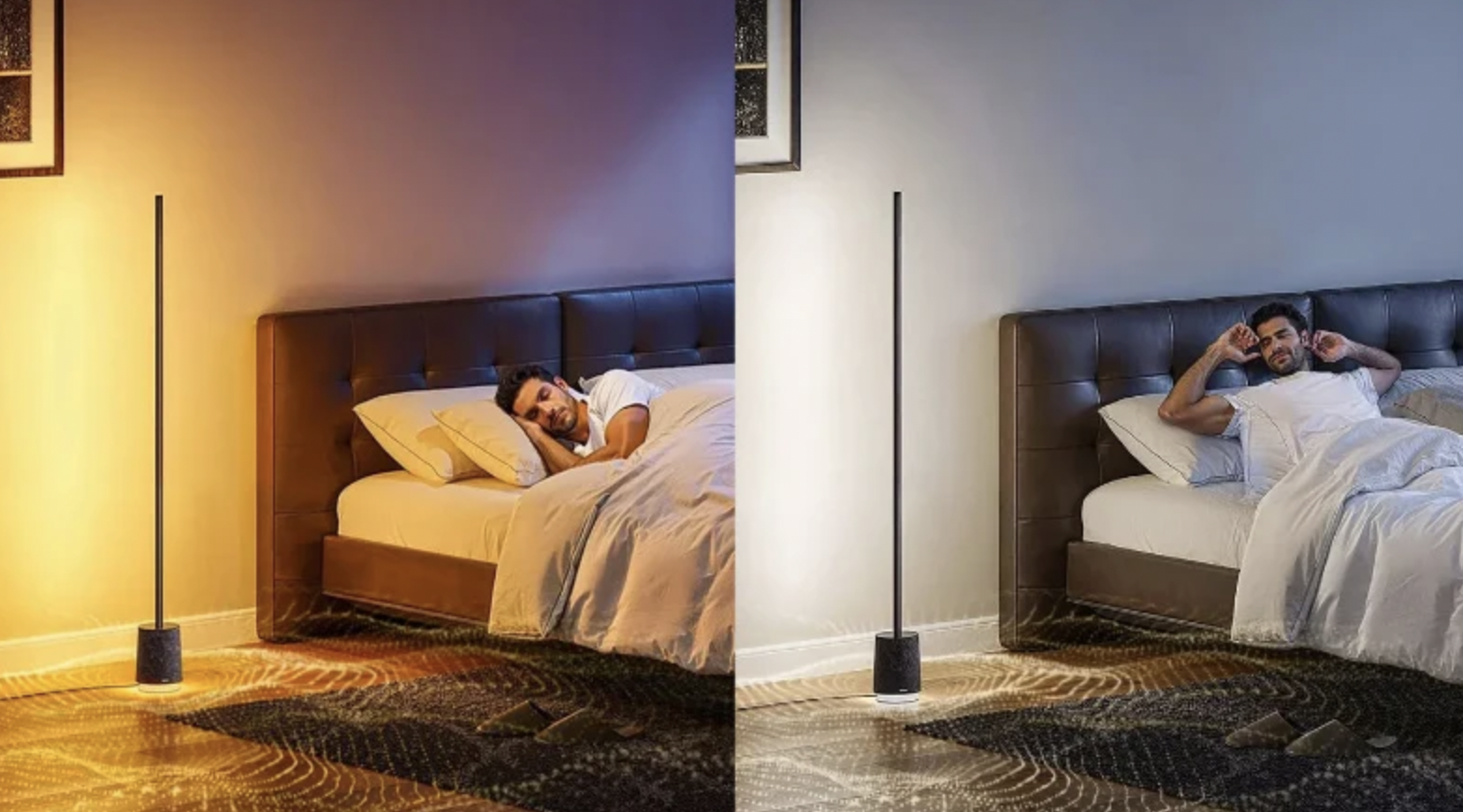
The light bulb hanging in most homes was designed for one purpose: illuminating a room, regardless of the hour or the effect on the people underneath it. Circadian lighting flips that assumption, treating light as a biological input that shapes sleep, alertness, and mood rather than a fixed background utility.
Smart bulbs built around this idea shift their color temperature and brightness across the day, mimicking the natural arc of sunlight from a crisp morning glow to a warm evening dim, in an effort to work with the body’s internal clock rather than against it.
Light as a Biological Signal
Every person carries an internal circadian clock, a roughly twenty-four-hour cycle that regulates sleep timing, hormone release, body temperature, and alertness. This clock, centered in a small region of the brain, relies heavily on light exposure as its primary external cue for staying synchronized with the real day-night cycle outside. Bright, blue-shifted light in the morning signals the brain to suppress melatonin and promote wakefulness, while dim, warmer light in the evening allows melatonin production to rise, preparing the body for sleep.
Modern indoor life disrupts this system in ways that simply did not exist before electric lighting became widespread. Office buildings, homes, and devices bathe people in consistent, often blue-heavy light well into the evening hours, sending the brain cues that resemble daytime long after the sun has set. Screens on phones, tablets, and televisions compound this effect, since many emit light skewed toward the blue wavelengths that most strongly suppress melatonin production.
Researchers studying circadian biology have documented that this mismatch between artificial lighting patterns and the body’s natural rhythm contributes to delayed sleep onset, reduced sleep quality, and daytime grogginess for many people, especially those who spend most of their day indoors under artificial light with limited exposure to natural daylight. This research forms the scientific basis for circadian lighting products, which attempt to correct the mismatch by adjusting artificial light to better track the qualities of natural daylight throughout the day.
A specialized set of light-sensitive cells in the retina, distinct from the rods and cones used for standard vision, play a central role in relaying light information to the brain’s circadian clock. These cells respond most strongly to blue-toned wavelengths, which is part of why blue-heavy light in the evening carries such an outsized effect on melatonin suppression compared with warmer, amber-toned light of similar overall brightness.
This biological detail underlies the entire design logic behind circadian bulbs, which specifically target the color temperature evening light emits, not merely its brightness, in an effort to reduce this melatonin-suppressing effect during the hours leading up to sleep. A short list of common daily disruptions to this internal clock helps explain why circadian lighting has drawn so much interest:
- Late-night screen exposure: Phones, tablets, and televisions often emit blue-heavy light well after sunset, delaying the body’s natural transition toward sleep readiness.
- Overhead office lighting: Many commercial buildings use uniform, often cool-toned lighting throughout the day regardless of the time, missing the natural variation that supports a healthy daily rhythm.
- Limited daylight exposure: Many people spend the bulk of daylight hours indoors, missing the strong morning light signal that helps anchor a stable wake and sleep schedule.
- Irregular sleep and wake times: Inconsistent schedules, common among shift workers and frequent travelers, compound the effects of poor lighting by adding further disruption to the body’s expected rhythm.
How Smart Bulbs Mimic Daylight
Circadian smart bulbs use tunable LED technology capable of shifting both color temperature, measured on a scale from warm amber tones to cool blue-white tones, and brightness across a programmed daily schedule. In the morning, these bulbs typically emit brighter, cooler light resembling midday sun, intended to support alertness and help reinforce a stable wake time.
As the day progresses toward evening, the bulbs gradually shift toward warmer, dimmer tones that more closely resemble sunset lighting, reducing the blue light exposure that can interfere with the body’s natural transition toward sleep. Several design elements distinguish circadian lighting products from standard smart bulbs that merely offer dimming or color options for aesthetic purposes:
- Automated daily scheduling: Pre-programmed transitions tied to sunrise and sunset times, often adjusted automatically based on the user’s geographic location and time of year.
- Wide color temperature range: Bulbs capable of shifting across a broad spectrum, from warm amber tones suited to evening use to cool, bright white tones suited to morning alertness.
- Gradual transition curves: Smooth shifts in color and brightness throughout the day, rather than abrupt jumps that would feel jarring or unnatural to occupants.
- Integration with sleep tracking apps: Some systems sync lighting schedules with sleep tracking data, adjusting bedtime lighting cues based on a person’s own sleep patterns.
- Manual override options: Flexibility for users to temporarily adjust settings for specific activities, like reading before bed or hosting an evening gathering, without disrupting the broader daily schedule.
Underlying this functionality is typically a smartphone app or smart home hub that manages scheduling, connecting to existing smart lighting ecosystems that many households already use for basic remote control and voice command features. Manufacturers differ in how much automation versus manual control they build into these products. Some circadian lighting systems run entirely on a fixed daily curve calculated from local sunrise and sunset data, requiring little ongoing input from the user beyond initial setup.
Others lean toward a more customizable approach, letting users adjust the intensity of color shifts, set custom wake and bedtime targets, or pause the automated schedule entirely for special occasions like a late dinner party or an early morning flight, before resuming the default pattern automatically the following day.
Applications Beyond the Home
While residential use represents the most visible application of circadian lighting, workplaces, healthcare settings, and educational institutions have shown growing interest in the technology as well, often for reasons tied directly to alertness, safety, or recovery rather than general comfort.
Offices adopting circadian lighting systems typically aim to support employee alertness and reduce the afternoon energy slump that fluorescent or static LED lighting can contribute to, especially in windowless spaces where workers receive little natural daylight exposure throughout the workday. Hospitals have explored circadian lighting in patient rooms and staff areas, since disrupted sleep is common among hospitalized patients and shift-working staff, and some early research suggests that lighting designed to reinforce day-night cues may support better rest and recovery outcomes, though this remains an active area of ongoing study.
Schools have also piloted circadian lighting in classrooms, motivated by research suggesting that lighting conditions affect student alertness and mood throughout the school day. Some pilot programs have reported improved focus during lessons scheduled under brighter, cooler morning lighting compared with static fluorescent lighting used previously, though sample sizes in these early studies remain relatively small.
Manufacturing and industrial facilities represent a less publicized but growing application area. Workers on overnight shifts in warehouses and production facilities often struggle with fatigue and reduced alertness during the circadian low point that typically occurs in the early morning hours. Some facility managers have introduced brighter, cooler lighting during these overnight shifts specifically to counter this natural dip in alertness, then transition to warmer lighting as the shift ends, aiming to ease the transition back toward sleep for workers heading home after a long overnight shift. A summary of the settings where circadian lighting has moved beyond the pilot stage includes:
- Corporate offices: Used to support daytime alertness and counter the energy slump common in windowless conference rooms and open-plan workspaces.
- Hospitals and care facilities: Applied in patient rooms and nursing stations to reinforce day-night cues for patients experiencing disrupted sleep during a hospital stay.
- Schools and universities: Piloted in classrooms to support student focus and mood, especially during early morning class periods.
- Warehouses and manufacturing plants: Deployed on overnight shifts to counter natural alertness dips and support a smoother transition at shift’s end.
- Senior living communities: Introduced to help reinforce daily rhythm for older residents, who often experience naturally weaker circadian signaling with age.
Choosing and Installing a System
Setting up circadian lighting at home does not require rewiring an entire house, since most systems on the market today rely on standard smart bulbs that screw into existing fixtures and connect to a home network. Choosing the right system depends largely on which rooms matter most for sleep and alertness support, and how integrated a person wants the lighting to be with other smart home devices they already own. A few practical considerations tend to guide setup decisions for people building out a circadian lighting system:
- Bedroom and living room priority: These spaces benefit most from evening dimming and warming schedules, since they are where wind-down activities typically happen before sleep.
- Compatibility with existing smart home platforms: Checking whether bulbs integrate with an existing voice assistant or hub avoids creating a fragmented, hard-to-manage smart home setup.
- Automatic location-based scheduling: Systems that adjust automatically for changing sunrise and sunset times across seasons reduce the need for manual reprogramming throughout the year.
- Dimmer switch compatibility: Confirming that existing wall switches or dimmers work properly with smart bulbs prevents flickering or unreliable performance after installation.
- Household routine flexibility: Shift workers or households with inconsistent schedules may need more manual control options than a fully automated daylight-following schedule can offer.
Cost varies widely depending on how many rooms are outfitted and whether a household opts for premium bulbs with wider color ranges versus basic tunable white bulbs offering more limited adjustment.
Research on Sleep and Health Outcomes
The scientific foundation behind circadian lighting draws from decades of chronobiology research establishing how light exposure timing affects the body’s internal clock. Studies on shift workers, for example, have long shown that irregular light exposure patterns correlate with higher rates of sleep disorders, mood disturbances, and even certain metabolic health issues over time, providing strong motivation for exploring whether controlled artificial lighting could help mitigate some of these effects.
Direct research specifically evaluating circadian lighting products remains more limited than the broader body of research on light and circadian rhythm generally, since these consumer products are relatively new compared with decades of laboratory research on light exposure. Early studies conducted in workplace and healthcare settings have shown promising, though modest, improvements in self-reported alertness, mood, and sleep quality among people exposed to circadian-tuned lighting compared with static lighting conditions, but researchers caution that more extensive, long-term studies are needed before drawing firm conclusions about the scale of benefit these products provide in everyday home settings.
It is also worth noting that circadian lighting alone cannot fully offset other disruptive habits, such as late-night screen use, irregular sleep schedules, or excessive caffeine consumption. Most sleep researchers frame circadian lighting as one component within a broader set of habits supporting healthy sleep, rather than a standalone fix capable of resolving sleep problems on its own regardless of other behaviors.
Funding for larger, longer-term clinical studies on consumer circadian lighting remains modest compared with research budgets devoted to pharmaceutical sleep aids, partly because lighting interventions are harder to patent and monetize in ways that attract large-scale research investment. Academic researchers studying light and circadian rhythm often rely on smaller grants and partnerships with lighting manufacturers, which can introduce funding bias concerns that independent researchers are careful to flag when interpreting study results tied closely to a specific commercial product line.
Limitations and Open Questions
Despite growing enthusiasm, circadian lighting technology faces real limitations worth acknowledging honestly rather than glossing over in marketing material. Individual variation in circadian rhythm sensitivity means that a lighting schedule calibrated to general population averages may not align perfectly with every person’s personal internal clock, which can vary based on genetics, age, and existing sleep habits.
Cost also remains a barrier for widespread adoption, since outfitting an entire home with premium tunable bulbs and supporting smart home infrastructure carries a higher upfront cost than standard lighting, even though ongoing energy use tends to remain comparable to other LED bulbs on the market and typically pays down over the life of the bulb. Some critics also raise concerns that marketing around circadian lighting sometimes outpaces the current evidence base, packaging still-developing research into confident health claims that may overstate the benefit an average household would experience purely from installing tunable bulbs, without also changing screen habits or sleep schedules.
There is also a question of behavioral compliance. Circadian lighting systems only work as intended if households consistently use the automated schedule rather than overriding it frequently for convenience or aesthetic preference, and anecdotal reports suggest that many users eventually revert to simpler, static lighting settings once the novelty of a new smart home gadget wears off, undermining the long-term benefit the system is designed to provide. Manufacturers have begun experimenting with gentler default schedules and simplified app interfaces aimed at keeping households engaged with the feature well beyond the initial setup period.
Final Thoughts
Circadian lighting represents a thoughtful application of biological research to everyday home technology, recognizing that light does far more than illuminate a room. By mimicking the natural arc of daylight, these systems aim to support the body’s internal clock rather than working against it, offering a plausible tool for better sleep and alertness alongside other healthy habits.
The evidence base, while promising, remains early, and cost and behavioral consistency present real barriers to widespread benefit. Circadian lighting works best as one piece of a broader sleep-supportive routine rather than a standalone fix, and households considering the technology should approach it as a helpful complement, not a guaranteed solution.
Frequently Asked Questions
Does circadian lighting really improve sleep quality?
Early research suggests modest benefits for alertness and self-reported sleep quality, though direct, long-term studies on consumer circadian lighting products remain limited compared with broader research on light and circadian rhythm.
How much does a circadian lighting system typically cost?
Costs vary widely depending on the number of bulbs and brand, with premium tunable bulbs costing more upfront than standard LED bulbs, though ongoing energy costs remain roughly comparable to typical smart lighting products.
Can circadian lighting help with jet lag or shift work?
Some research suggests controlled light exposure timing can help realign the body’s internal clock during travel or irregular work schedules, though results vary by individual and require consistent use to see benefit.
Do I need to replace all the bulbs in my house for circadian lighting to work?
No, most households start with bedrooms and living areas where evening wind-down matters most, gradually expanding coverage to other rooms rather than replacing every bulb in the house at once.
Is blue light from screens as disruptive as artificial room lighting?
Yes, screens often emit blue-heavy light similar to daytime lighting, and many circadian lighting advocates recommend pairing tunable bulbs with reduced evening screen use for the best overall effect on sleep.
Are circadian lighting systems compatible with existing smart home devices?
Most major circadian lighting bulbs integrate with common smart home platforms and voice assistants, though it is worth checking specific compatibility before purchasing to avoid a fragmented setup.