

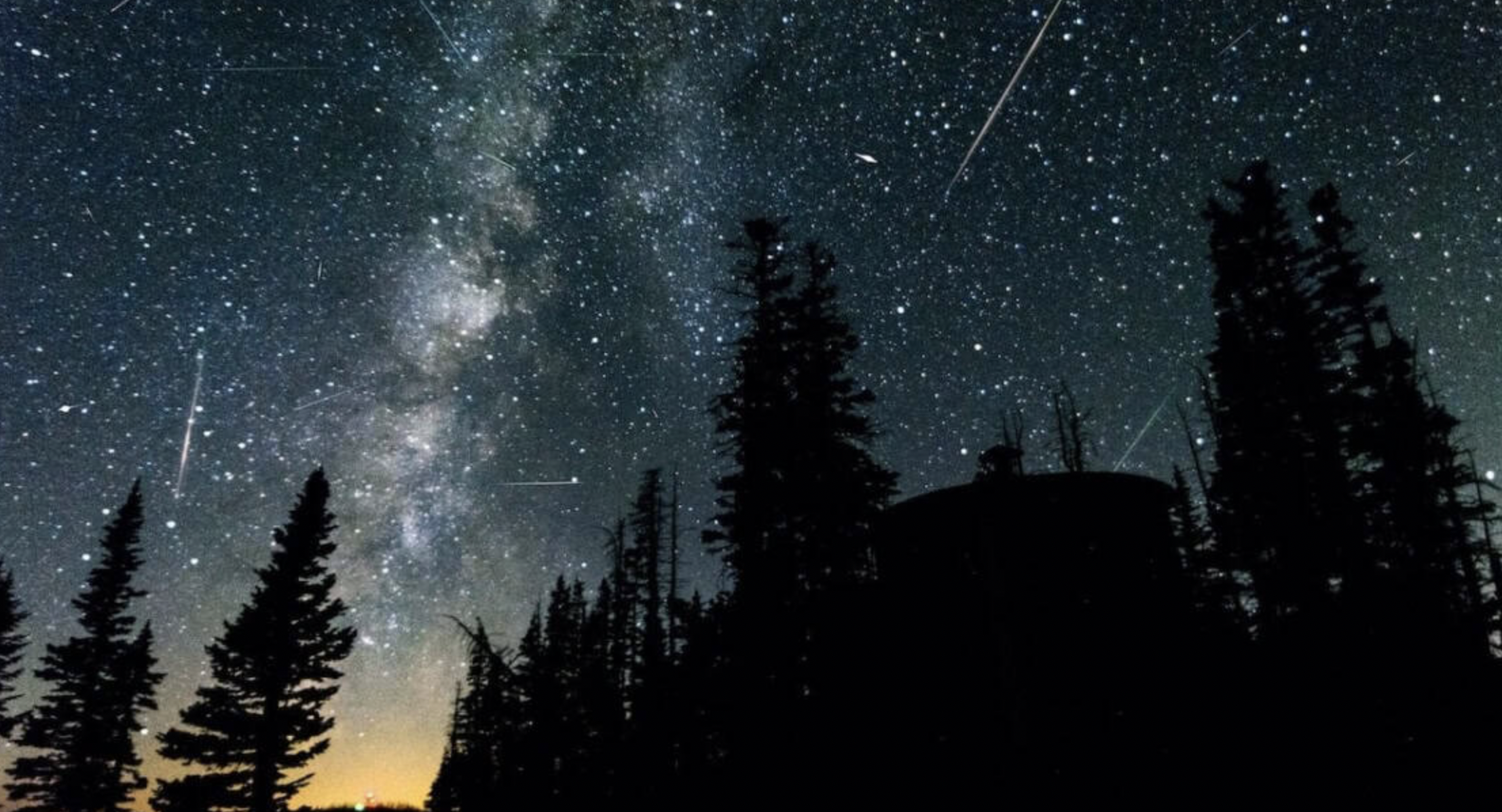
The Geminid meteor shower 2026 peaks overnight on December 13 to 14, and the best viewing hour is around 2 a.m. local time wherever you live. A waxing crescent moon should leave the sky dark, which helps a lot.
In this article, we will explore the exact peak time in US Eastern and Pacific terms, a simple plan for the night, and why you will see fewer meteors than the headline numbers suggest.
Peak Night for the Geminid Meteor Shower 2026
According to an EarthSky guide published in January 2026, the shower is expected to reach its predicted peak at 5:44 UTC on December 14, 2026. That falls in the middle of the overnight window from December 13 into December 14, so the whole night is worth your attention, not one precise minute.
The moon is a point in your favor. EarthSky describes a waxing crescent that will not interfere, and the first quarter moon arrives at 5:43 UTC on December 17, several days after the peak. A bright moon can wash out faint meteors, so a dark sky is the best news a watcher can get.
The radiant, the spot the meteors appear to stream from, sits near the bright star Castor in the constellation Gemini. It climbs into view in mid-evening, which means you can start watching early and keep going through the night. Meteors can appear anywhere in the sky, so you do not need to stare at the radiant itself.
Geminid Meteor Shower 2026 Viewing Window by Time Zone
Here is the peak time converted for the two most common US zones. This is simple arithmetic, not a figure from the guide: in December, US standard time applies, so Eastern is UTC minus 5 hours and Pacific is UTC minus 8 hours.
| Item | UTC | US Eastern (UTC-5) | US Pacific (UTC-8) |
| Predicted peak | 5:44, December 14 | 12:44 a.m., December 14 | 9:44 p.m., December 13 |
| Best viewing hour (guide advice) | not applicable | about 2 a.m., December 14 | about 2 a.m., December 14 |
| Radiant rises | not applicable | mid-evening, December 13 | mid-evening, December 13 |
The 2 a.m. advice is a local-time rule, so it reads the same on every clock. The peak time, by contrast, shifts with your zone, which is why Pacific viewers see it in the evening while Eastern viewers see it just after midnight. Outside the US, subtract or add your own offset from UTC.
A practical reading of the table: the predicted peak and the best hour differ by roughly a day-night shuffle, and the sources do not rank one above the other. If you can only pick one window, the 2 a.m. hour is the one the guide recommends.
Steps for a Good Night Outside
These general tips are not from the guide, so adjust them to your own situation and local weather.
- Check a current astronomy calendar and your local forecast a day or two ahead, because the guide does not cover weather and some of its body lines still refer to 2025.
- Pick a spot away from streetlights and bright buildings. The darker the sky, the more meteors you will notice.
- Dress for cold, with a hat, gloves, a warm base layer and something to sit or lie on. Sitting still in December chills you quickly.
- Give your eyes 20 to 30 minutes to adapt and avoid looking at your phone. If you must, use a dim red light.
- Lie back and take in as much sky as possible. You do not need a telescope or binoculars, and they narrow your view.
- Plan for at least an hour of watching, ideally centered on 2 a.m., and treat the first quiet minutes as normal.
Rates: 120 Versus 100 Meteors per Hour
The guide gives two numbers that look inconsistent. One passage says a zenithal hourly rate of 120, meaning you might catch about 120 meteors per hour under a dark sky with no moon. The bottom line says over 100 per hour under ideal conditions. The source does not explain the gap, so treat it as a rounded difference between two phrasings, not a real disagreement.
The more useful point is what these numbers mean. A zenithal hourly rate is a standardized ideal: a perfectly dark sky with the radiant directly overhead. Real counts are lower under light pollution, haze or cloud, and the guide itself suggests at least 50 or more per hour on a dark night near the peak.
So the sensible expectation is somewhere under the headline figure, with bursts and lulls. No source promises what any one viewer will see, and neither will this article.
Limits of the Data
Everything specific here comes from a single source, the EarthSky article, and the article is an older guide. Some lines in its body still refer to 2025, so confirm the peak time against a current astronomy calendar before you plan around it.
The guide also says nothing about weather, your location beyond the need for a dark sky, or camera settings. Those are up to you and your local forecast. Treat the UTC peak as a prediction and the time conversions above as arithmetic you can verify.
Conclusion
The Geminid meteor shower 2026 gives watchers a dark, moon-free night, with the peak predicted at 5:44 UTC on December 14. Aim for the hours around 2 a.m. local time, bundle up and let your eyes adjust. Expect fewer meteors than the 120 or 100 figures, and check a current calendar and forecast before you go.
Frequently Asked Questions
When Is the Peak of the Geminid Meteor Shower in 2026?
The predicted peak is 5:44 UTC on December 14, 2026, within an all-night window from December 13 to 14. That is 12:44 a.m. Eastern or 9:44 p.m. Pacific on December 13, by simple arithmetic.
What Time Should I Watch the Geminids?
The guide points to around 2 a.m. local time everywhere. The radiant rises in mid-evening, so you can begin earlier and watch through the night.
Will the Moon Interfere With the Geminids in 2026?
According to the guide, a waxing crescent moon will not interfere. The first quarter moon comes at 5:43 UTC on December 17, several days after the peak.
How Many Geminid Meteors per Hour Can I See?
The guide cites a zenithal hourly rate of 120 under a dark, moonless sky and over 100 per hour in its bottom line. It also says at least 50 or more per hour is possible on a dark night near the peak, and real counts drop with light pollution or cloud.
Do I Need a Telescope to See the Geminid Meteor Shower?
No. As a general tip, lie back, let your eyes adapt for 20 to 30 minutes and dress warmly. Binoculars and telescopes narrow your view of the sky.