

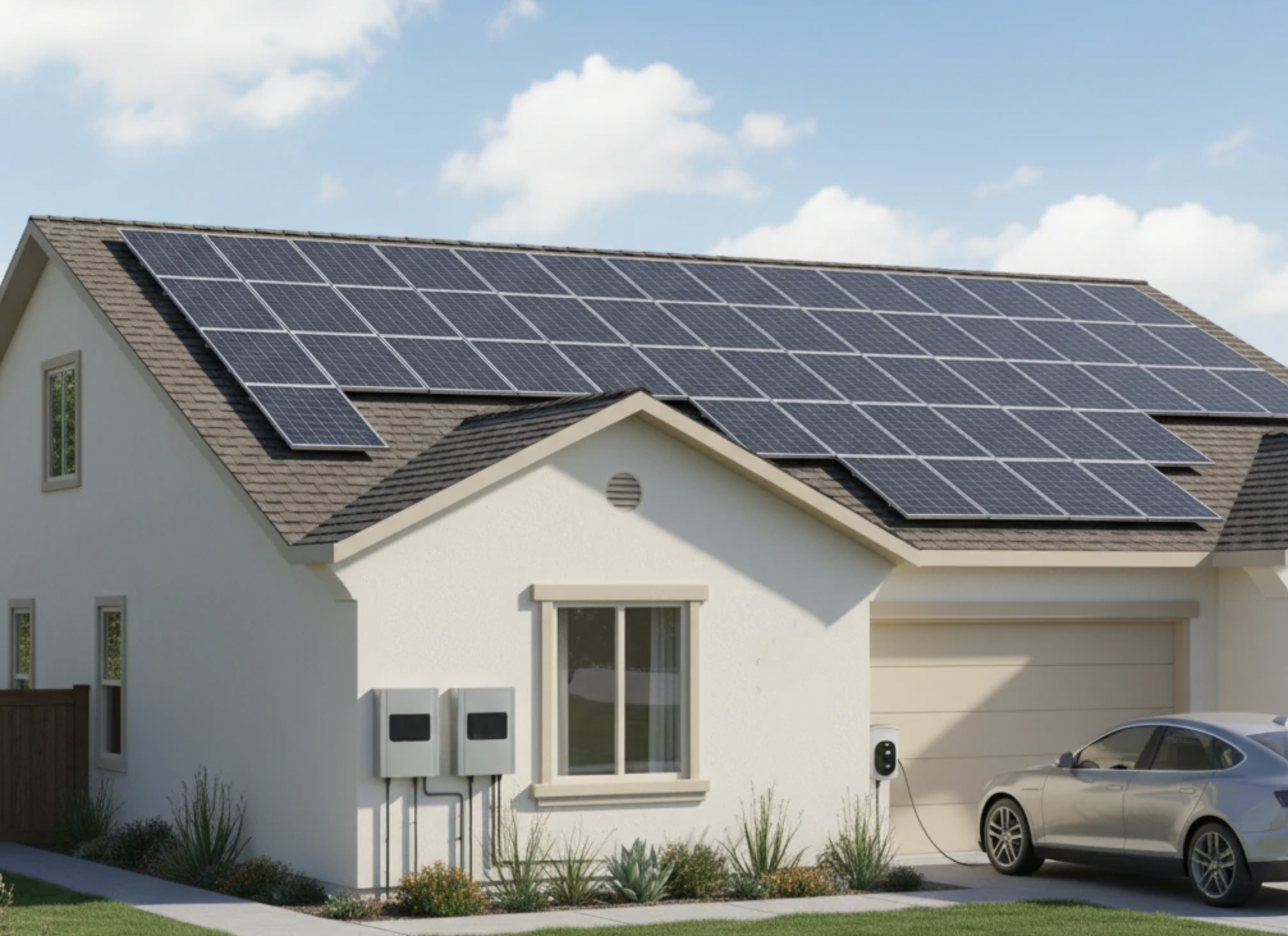
Rooftop solar panels turn sunlight into electricity for your home, and for many households they can lower power bills for decades. They are also a large purchase, so it pays to know what you are buying before a salesperson knocks on the door.
In this article we will explore what a system costs, how payback is worked out, which roofs suit solar, and how to compare quotes without getting lost in jargon.
The main costs of a rooftop system
A rooftop solar system is more than a set of panels. The price covers the panels, an inverter that converts direct current into the alternating current your home uses, mounting rails and hooks, cabling, safety switches, a monitoring device, and the labor to install it all. Permits, inspections and the paperwork to connect to the grid add further charges in many places. Because these pieces vary, the figure on a quote is best read as a bundle of smaller costs rather than a single number.
The most useful way to compare prices is cost per kilowatt of installed capacity. A kilowatt is a measure of the maximum power the panels can produce under standard test conditions, and a typical home system is commonly sized somewhere in the range of a few kilowatts up to around ten, depending on the household and the country. Dividing the total quote by the system size gives you a figure you can set beside other quotes, even when the systems are not the same size. Larger systems usually cost less per kilowatt, because fixed costs such as travel, permits and design are spread over more panels.
Several things push the price up or down. A simple, low-pitched roof with easy access is cheaper to work on than a tall house with a complex roof of many small sections. Premium panels with higher efficiency cost more per panel but produce more power from a limited roof area, which can be worth it when space is tight. Microinverters or power optimizers, which manage panels individually, cost more than a single string inverter but can help when shade or mixed roof angles are a problem. Electrical upgrades to an old fuse board or service panel are an extra that surprises many buyers.
Ongoing costs are small but not zero. Panels have no moving parts and need little care beyond occasional cleaning in dusty or bird-heavy areas, and a visual check after storms. The inverter is the part most likely to need replacement during the life of the system, and many manufacturers commonly offer warranties in the range of ten to fifteen years for it, while panels often carry longer performance warranties. Ask for these terms in writing, and remember that insurance for your home may need updating to cover the new equipment.
It is also worth asking what happens at the end of the system’s life. Panels contain glass, aluminum and small amounts of other materials, and many regions now have collection or recycling schemes for them. Ask the installer whether they offer take-back, and whether removal and disposal are included in any warranty or contract. This is rarely the deciding factor in a purchase, but it is a fair question for a product meant to last for decades.
Payback time depends on a few key numbers
Payback is the time it takes for your savings to equal what you spent. The basic sum is simple: take the net cost of the system after any incentives, then divide it by the amount you save each year. If a system costs a certain amount and saves you a smaller amount every year, the number of years it takes to cross over is your simple payback period. The real challenge is estimating those yearly savings honestly.
Three inputs matter most. The first is how much electricity your system will produce, which depends on its size, your local sunshine, the angle of the roof and any shade. The second is how much of that power you use in your own home instead of sending it to the grid, because every unit you use directly replaces a unit you would have bought at the full retail price. The third is the price you are paid for any surplus you export, which in many places is lower than the price you pay to buy power. A household that is home during the day and runs appliances while the sun shines will usually see a shorter payback than one that is empty until evening.
A good installer will model your expected production month by month and compare it with your past electricity bills. Ask to see the assumptions behind the estimate, including the yearly drop in panel output that is normally included, which is commonly published as a fraction of a percent per year. Be wary of any estimate that assumes electricity prices will rise steeply forever, or that ignores the cost of replacing the inverter. A cautious estimate that uses today’s tariff and a modest annual decline in output is easier to trust than a rosy one.
You can run a rough check yourself with three numbers from your electricity bill and the quote. Multiply the yearly production by the share you expect to use at home and by your price per unit, then add the export income from the remaining units at the lower export rate. Subtract any yearly costs, such as a monitoring fee, and divide the net cost of the system by the result. If your figure is far from the installer’s, ask them to explain which assumption differs.
It also helps to treat payback as a range rather than a single figure. Your result can shift if you change tariff, add an electric vehicle, install a heat pump, or move house. Some people prefer to think about return on investment instead, comparing the yearly saving to the money spent as a percentage, which allows a comparison with other uses of the same money such as paying down debt. Neither measure is perfect, and a licensed financial adviser can help if the purchase is a big part of your savings.
Roof direction, tilt and shading shape output
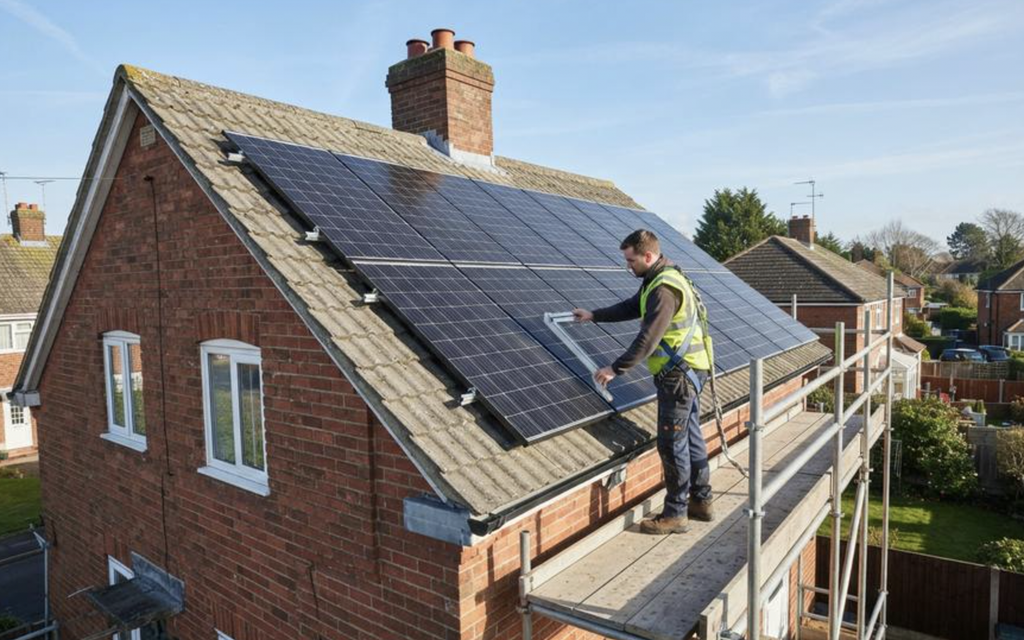
Not every roof is equally suited to solar. In the northern hemisphere, a roof facing south normally gathers the most energy across the year, while in the southern hemisphere the best direction is north. East and west faces still work well and can even suit households that use more power in the morning or the evening. A roof facing directly away from the sun is the hardest case, though it can still be viable when electricity prices are high.
Tilt matters too. A pitch that roughly matches your latitude tends to produce the most power across the year, but modest differences cost surprisingly little output, so most standard roof slopes are acceptable. Flat roofs are often fitted with frames that tilt the panels, which adds cost for the frames but gives the installer freedom to choose a good angle. Very steep roofs can raise safety and labor costs because workers need extra equipment.
Shade is the factor that most often spoils a good plan. Trees, chimneys, neighboring buildings, dormer windows and even satellite dishes can cast shadows that cut production, and on a simple string inverter system a shadow over one panel can drag down the whole row. Shade changes through the day and through the seasons, so a roof that looks clear at noon in summer may be shadowed on winter afternoons. A proper survey should use a tool that records the shading at different times of year, and you should be shown the result rather than being told it is fine.
Here is a simple way to check your roof before inviting anyone over. Look at the roof on a clear day in the morning, at midday and in the late afternoon, and note which sections stay lit. Use a compass app on your phone to find out which way each section faces. Measure the free area, avoiding vents, skylights and the edges, and count the room for panels that are each roughly a meter and a half to two meters long.
Take photos, because a good installer can use them to prepare a rough design before a site visit. Satellite images from free mapping services can also help you sketch the roof outline and count the usable sections. This early homework will not replace a professional survey, but it helps you judge whether a salesperson’s claims about your roof are realistic.
| Roof feature | Usually suitable | Needs a closer look | Often a poor fit |
| Direction | Faces the sun, or east and west | Mixed faces on one roof | Faces directly away from the sun |
| Shade | Little or none across the year | Seasonal tree or chimney shade | Heavy shade most of the day |
| Roof area | Enough clear space for the planned size | Tight space with many obstacles | Very small or broken-up sections |
| Condition | Sound and recently maintained | Aging but not failing | Leaking, sagging or near replacement |
| Access | Safe, straightforward working area | Steep or tall house | Hard access with no safe anchor points |
Structural condition and roof age matter before installation
The strength of the roof is as important as its direction. Solar panels and their mounting hardware add weight, and although the load per square meter is usually modest, the roof structure must be able to carry it along with wind and snow. An installer or a structural engineer should check the rafters, trusses and decking, especially if the house is old, has been altered, or has visible sagging. In some regions a structural check is required by building rules, so ask what applies where you live.
The age and material of the roof covering deserve equal attention. Panels can last for twenty-five years or more, so fitting them to a roof that will need replacing in five years leads to paying twice: once to remove and refit the panels, and again for the roofing work. If your roof is near the end of its life, it is usually cheaper to replace it first, or at the same time, and then install the system. Ask the installer what roof types they handle, because tile, slate, metal sheet, asphalt shingle and membrane roofs each need different fixings.
Weatherproofing is a core concern. Every hole drilled for a mounting hook is a possible leak path, so the installer should use flashing or sealing methods suited to your roof type and offer a workmanship warranty that covers leaks. Roofs with asbestos-containing materials, which exist in some older buildings, need specialist handling and should not be drilled by a general crew. If you suspect asbestos, stop and ask a qualified professional to test before any work starts.
Other practical limits can rule a roof in or out. Heritage listings, conservation areas and homeowner association rules may restrict where panels can go or how they look, and rental or shared buildings require the owner’s consent. Check these points early, because a refusal after you have paid a deposit is far harder to fix.
Fire safety rules in some places require clear pathways around the edge of the array for firefighters. Local authorities, your insurer and your utility can tell you which rules apply, and a reputable installer will usually handle these questions for you. If any approval is needed, ask for the date it was granted before the crew starts, not after. Work done without a required permit can cause trouble later when you sell the home or make an insurance claim.
Incentives, net metering and export rules vary by place
Support for rooftop solar differs enormously around the world and changes over time, so this is the section where national averages are least helpful. Some places offer tax credits, rebates, low-interest loans or grants that cut the upfront price. Others pay you for the power you send to the grid through a feed-in tariff, a net metering arrangement or a retailer buyback plan. A few have reduced support or changed the rules for new customers, so a neighbor’s experience from several years ago may not apply to you.
Net metering generally means that the electricity you export is credited against the electricity you draw, though the details differ widely. In some schemes the credit is at the full retail rate, in others it is at a lower wholesale-style rate, and in others the credit expires or is paid out as cash at a set price. Time-of-use tariffs add another layer, since power exported at midday can be worth less than power bought in the evening. Because these rules decide how much your surplus is worth, they can change the payback more than the choice of panel brand.
Connection rules matter as well. Your utility or network operator may need to approve the system before it is switched on, and some limit the size of a home system or the amount that can be exported. The installer should apply for approval and explain how long it normally takes. Never switch on a grid-connected system before approval is given, because it can be unsafe and may breach your connection agreement.
To find out what applies to you, start with official sources rather than sales material. Visit your government energy agency or consumer energy website, read your electricity retailer’s current export terms, and ask your installer for a written summary of every incentive built into the quote. Check any application deadlines and eligibility conditions, because some incentives require the installer to hold specific accreditation. Keep copies of all paperwork, since you may need it when you claim a credit or sell your house. It is also wise to note the dates of every call or email with the installer and utility, so that any dispute can be settled from your own records.
Batteries, financing and ownership choices
A home battery stores surplus solar energy so you can use it in the evening or during an outage. It can raise your self-use of solar power and offer backup, but it also adds a large cost, and it often lengthens the payback period unless export rates are poor or evening tariffs are high. Not every battery provides backup in a blackout, because that feature depends on the way the system is wired. If backup power is your main reason for buying, say so clearly and ask what circuits it will really supply and for how long.
Financing changes the shape of the purchase. Paying cash gives the best long-run return because there is no interest, but it needs a large sum upfront. A solar loan spreads the cost, and the monthly payment can sometimes be close to the electricity savings, though interest will raise the total you pay. Read the interest rate, the fees, the term and any early repayment charges, and compare them with other borrowing options such as a standard personal loan.
Leases and power purchase agreements are offered in some countries. In these deals a company owns the system on your roof, and you pay a fixed monthly fee or a set price per unit of electricity produced. They reduce the upfront cost to little or nothing, but you usually save less over time than an owner does, and the contract can complicate selling your house. Check whether payments rise every year, who handles repairs, what happens if you move, and what it costs to buy the system out of the contract.
Think about your plans for the next ten to fifteen years. If you expect to move soon, a system may add some value to a sale, but buyers differ in how they treat it, and a leased system may need to be transferred. If you plan to buy an electric car or a heat pump, a larger system can make sense, since your daytime or overnight use will rise. A licensed financial or tax professional can help you weigh these choices, especially where tax credits or depreciation rules come into play.
Quotes from installers should be compared line by line
A written quote should list the make and model of the panels and inverter, the number of panels, the total system size in kilowatts, the expected yearly production, the mounting method, the warranty terms and the full price with taxes. If any of these are missing, ask for them before comparing. Treat a quote that arrives as a single lump sum with a few vague words as a warning sign. Quotes should also say which incentives are included and who applies for them.
Gather at least three quotes from different companies. When you compare them, work out the price per kilowatt, check the quality of the equipment against independent test results and certifications that are recognized in your country, and compare the warranties for both products and workmanship. A low price can hide cheaper hardware, a short warranty or a company that may not exist in five years, while a high price does not always mean better work. Ask how long the company has been trading, how many systems it has installed locally, and whether it uses its own staff or subcontractors.
Be alert to pressure tactics. Common ones include a discount that disappears if you sign today, claims that the offer is a government program when it is a private sale, promises that the system will pay for itself within a fixed short time, and requests for large deposits. A trustworthy installer will give you time to read and compare, and will not ask for the full payment before the work begins. Cooling-off periods exist for some home sales in some countries, so ask what yours is.
Before you sign, check that the installer holds the license or accreditation your country or region requires, and ask for proof of insurance. Look for reviews on independent sites and, if possible, speak to a past customer whose system has been running for a while. Confirm in writing who will arrange permits, who deals with the utility, and who you call if something stops working. Keep the contract, the design drawings, the warranty papers and the commissioning report together in one folder. Photograph the finished installation and the inverter label too, because serial numbers make warranty claims faster.
Conclusion
Start with your electricity bills. Collect twelve months of them, and note how many units you use, what you pay per unit, and whether there are time-of-use rates. This tells you the size of system worth considering, and it gives installers the data they need to model your savings. If your use is very low, solar may take far longer to repay itself, and a simpler step such as an efficiency upgrade may come first.
Next, take a careful look at your roof as described above, and ask a roofer or structural professional about its condition if there is any doubt. Check any homeowner association, heritage or rental restrictions at the same time. Then look up local incentives and export terms from official sources, and write down the ones you may qualify for. This preparation will help you spot unrealistic claims quickly.
Then request at least three quotes and compare them using a simple checklist, such as the one below. Take your time, ask follow-up questions, and have a trusted friend or family member read the contract. If a quote makes promises that sound too good, check them against your own numbers.
| Question to ask | Why it matters |
| What is the price per kilowatt installed? | Lets you compare quotes of different sizes |
| What yearly production do you expect, and how was it calculated? | Shows whether the estimate uses shade and local sunshine data |
| Which incentives are included and who applies for them? | Prevents surprises on the final bill |
| What warranties cover panels, inverter and workmanship? | Protects you if something fails or the roof leaks |
| Who handles permits and grid approval? | Avoids delays and unsafe early connection |
| What happens if I sell the house? | Matters most with loans, leases and power purchase agreements |
Finally, pick the installer you trust, not just the one with the lowest number. Once the system is running, check the monitoring app each month for the first year, and compare real production with the estimate. If the output is well below the forecast, contact the installer promptly, since warranty terms often cover performance problems. A well-chosen system should then quietly do its job for many years.