

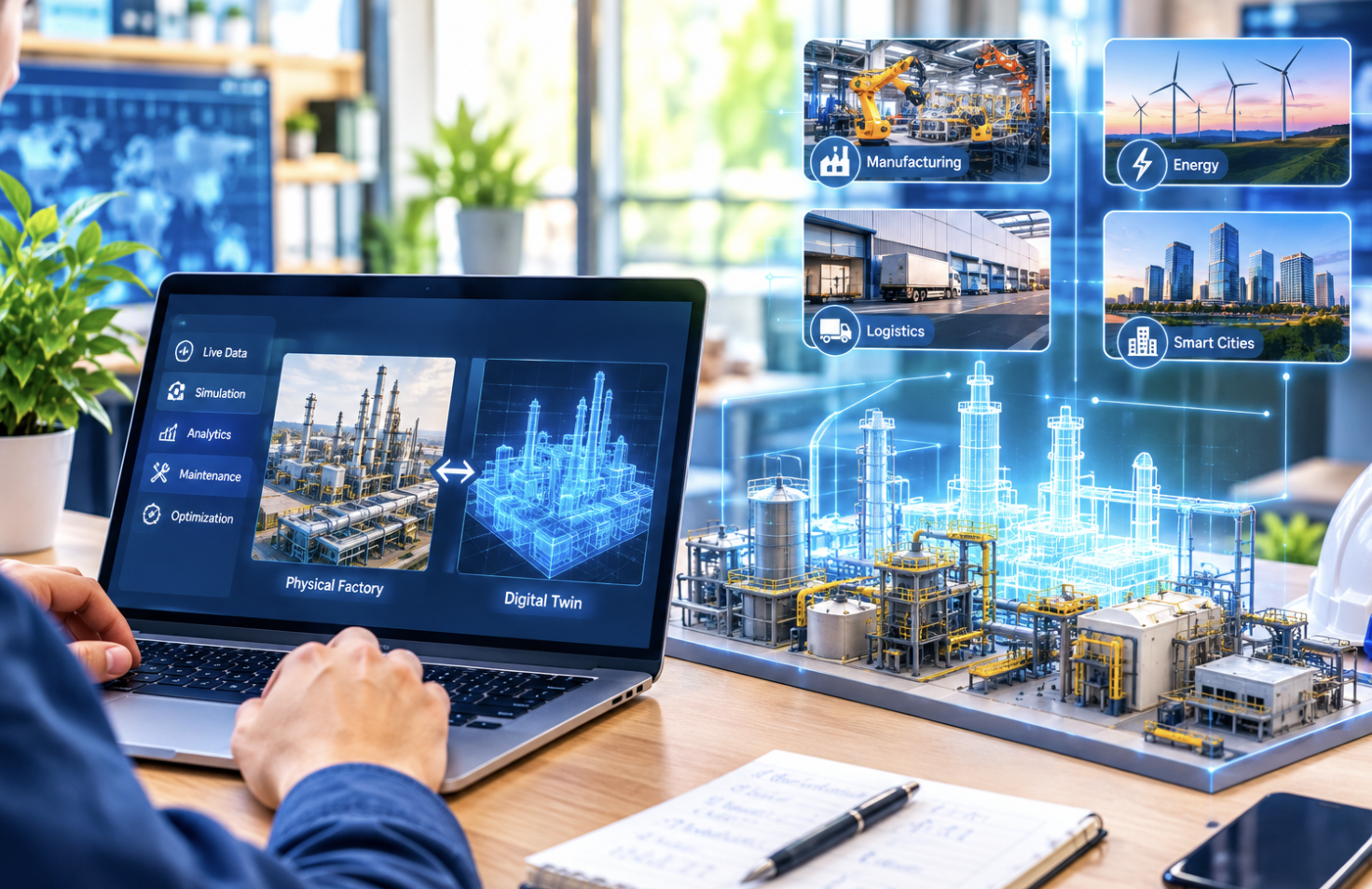
Manufacturing, healthcare, and various other industries increasingly reference digital twin technology as a transformative tool for optimising complex physical systems, yet many people remain uncertain about what this technology actually involves beyond simply recognising the term’s growing prevalence.
What a digital twin actually is, and the practical ways various industries are actually using this technology, provides valuable insight into this increasingly significant technological approach.
What a Digital Twin Actually Means
A digital twin is a detailed, virtual representation of a physical object, system, or process that continuously updates using real-world data, allowing organisations to actually monitor, analyse, and simulate how that physical counterpart behaves. This represents considerably more than simply a static digital model, since a digital twin maintains an ongoing, dynamic connection to its physical counterpart, continuously reflecting real-world conditions and changes.
This continuous, dynamic connection matters, since it distinguishes digital twins from simpler digital models or simulations, given that a digital twin specifically incorporates real-time or near-real-time data from its actual physical counterpart, allowing the virtual representation to reflect current, actual conditions rather than simply representing a fixed, unchanging theoretical model.
The Technical Components Behind Digital Twin Technology
The specific, technical elements that actually comprise working digital twin systems helps clarify how this technology practically functions beneath its sometimes abstract terminology.
- Sensors and data collection systems gather real-world information from the actual physical counterpart
- This collected data feeds into the virtual model, keeping it updated with current, actual conditions
- Sophisticated software processes this data, enabling analysis, simulation, and predictive capabilities
- These combined components helps clarify digital twin technology’s underlying technical foundation
This continuous data feeding deserves particular emphasis, since the value digital twin technology provides depends significantly on this ongoing data connection remaining current and accurate, meaning organisations implementing digital twin systems need reliable sensor infrastructure and data processing capability to ensure their virtual representation actually reflects, current reality rather than becoming an increasingly outdated, less useful representation as actual physical conditions continue changing without corresponding updates to the digital model.
How Manufacturing Industries Use Digital Twin Technology
The specific, practical applications manufacturing organisations have found for digital twin technology helps illustrate this technology’s significant, real-world industrial relevance.
- Manufacturers use digital twins to monitor equipment condition and predict potential maintenance needs
- This predictive capability helps prevent unexpected equipment failures through proactive intervention
- Digital twins allow testing process changes virtually before implementing them on actual physical equipment
- These applications helps illustrate digital twin technology’s value for manufacturing efficiency and reliability
This predictive maintenance application deserves particular emphasis, since traditional maintenance approaches have historically relied either on fixed schedules or reactive repairs after equipment failure, while digital twin technology enables predictive maintenance, using actual, continuous equipment data to identify emerging problems before they cause failures, allowing organisations to schedule maintenance based on actual, equipment condition rather than either overly conservative fixed schedules or considerably more disruptive reactive repairs following unexpected breakdowns.
How Healthcare Organisations Explore Digital Twin Applications
The emerging ways healthcare organisations have begun exploring digital twin technology helps illustrate this technology’s expanding relevance beyond its more established manufacturing applications alone.
- Some healthcare applications explore creating digital representations of individual patients for personalised treatment planning
- This approach could help predict how specific patients might respond to different treatment options
- Healthcare organisations also explore digital twins for optimising hospital operations and resource management
- These emerging applications helps illustrate digital twin technology’s broadening scope across different industries
How Urban Planning Benefits From Digital Twin Technology
How city and urban planning organisations have begun using digital twin technology helps illustrate this technology’s application extending to large-scale, complex systems beyond individual equipment or patients alone.
- Some cities create digital twins representing their entire urban infrastructure and systems
- This city-scale digital twin allows testing the potential impact of proposed infrastructure changes virtually
- Urban planners can use this technology to better understand traffic patterns, energy usage, and other complex systems
- This application illustrates digital twin technology’s scalability across dramatically different levels of complexity
This large-scale application deserves particular emphasis, since digital twin technology’s underlying principles apply across a remarkably wide range of scales, from individual pieces of equipment through entire cities, illustrating this technology’s broad conceptual applicability wherever organisations need to understand and optimise complex systems that would prove difficult, expensive, or risky to directly experiment with in their actual, physical form.
The Business Value Digital Twin Technology Provides
The specific, business advantages organisations realise through digital twin technology implementation helps clarify this technology’s practical value proposition beyond simply technical sophistication alone.
- Organisation reduce costs through more efficient maintenance and optimised operational processes
- Digital twins allow testing changes and innovations without the risk and cost of physical experimentation
- This technology supports more informed decision-making through comprehensive, current data and analysis
- These business benefits helps clarify why digital twin technology has attracted such significant, organisational investment
The Implementation Challenges Organisations Commonly Encounter
The real, challenges organisations commonly face when actually implementing digital twin technology helps provide balanced, honest context for this technology’s practical deployment considerations.
- Implementing comprehensive digital twin systems requires significant sensor infrastructure and data investment
- Ensuring data quality and real-time accuracy presents ongoing, meaningful technical challenges
- Organisations need technical expertise to actually build and maintain effective digital twin systems
- These challenges helps set realistic expectations for organisations considering this technology’s implementation
The Future Trajectory of Digital Twin Technology
The ongoing trajectory of digital twin technology development helps clarify realistic expectations for this technology’s continued evolution and expanding practical application.
- Continued advancement in sensor technology and data processing supports increasingly sophisticated digital twins
- Growing adoption across additional industries suggests continued expansion of practical use cases
- Integration with other advancing technologies promises even more sophisticated future capabilities
- This trajectory helps appreciate digital twin technology’s continued significance moving forward
How Digital Twin Technology Supports Sustainability Goals
How digital twin technology helps organisations pursue meaningful sustainability and efficiency improvements helps illustrate this technology’s relevance to increasingly important environmental considerations.
- Digital twins allow organisations to identify and optimise energy consumption patterns within complex systems
- This optimisation capability supports reduced resource waste through more precise, data-informed operational decisions
- Organisations increasingly use digital twin insights specifically to support broader sustainability initiatives
- This environmental application helps illustrate digital twin technology’s relevance beyond purely operational efficiency alone
The Role of Artificial Intelligence Within Modern Digital Twin Systems
How artificial intelligence enhances digital twin technology’s analytical and predictive capabilities helps clarify an important, complementary technological relationship worth.
- AI algorithms help analyse the substantial data digital twin systems continuously collect
- This analysis supports more sophisticated predictions and recommendations than simple data monitoring alone
- Combining digital twin data with AI analysis produces considerably more actionable organisational insights
- This AI integration helps clarify how digital twin technology continues becoming more sophisticated and valuable
Final Thoughts
Digital twin technology creates dynamic, continuously updated virtual representations of physical systems, providing organisations across manufacturing, healthcare, urban planning, and various other industries with valuable capabilities for monitoring, predictive maintenance, and risk-free experimentation.
This technology’s practical applications and its real implementation challenges helps clarify why digital twin technology has become such a significant, growing area of technological investment across increasingly diverse industry sectors.
As sensor technology continues becoming more affordable and data processing capability continues advancing, digital twin technology seems positioned to extend into increasingly diverse applications, reinforcing its significance as a foundational tool for organisations seeking to better understand and optimise the complex physical systems central to their operations.
Frequently Asked Questions
1. Is digital twin technology only relevant for large, well-resourced organisations?
While comprehensive implementation requires meaningful investment, smaller organisations can benefit from more modest digital twin applications, particularly as this technology becomes increasingly accessible through various available platforms and tools designed for broader adoption.
2. Does digital twin technology require constant, real-time data updates to remain useful?
This depends on the specific application, since some use cases benefit from truly real-time data, while others may function adequately with less frequent, though still regular, data updates depending on how quickly the actual physical system changes.
3. Can digital twin technology be used for systems that do not yet physically exist?
Yes, digital twins can sometimes represent planned systems during design phases, allowing testing and optimisation before actual physical construction or implementation, extending this technology’s value beyond simply monitoring already-existing physical systems.
4. How accurate does a digital twin need to be to provide meaningful practical value?
This varies by specific application, though meaningful value typically requires the digital twin to accurately reflect the aspects of the physical system most relevant to the intended use case, even if perfect, complete accuracy across every possible detail is not practically achievable.
5. Does implementing digital twin technology require replacing existing organisational systems entirely?
Not necessarily, since digital twin implementation often integrates with and builds upon existing organisational systems and data sources rather than requiring complete replacement of previously established, functional infrastructure.
6. Is digital twin technology expected to become more accessible for smaller businesses over time?
Yes, as this technology continues maturing and various providers develop more accessible platforms and tools, industry observers generally expect digital twin technology to become increasingly practical for organisations beyond simply the largest, most well-resourced enterprises.