

For decades, many companies moved jobs and business operations overseas to reduce costs. Outsourcing to distant countries could provide access to lower labor costs and large talent pools. But the global business environment has changed.
Disruptions in Supply chain, increasing shipping expenses, differences in time zones, geopolitical instability, and the demand for quicker communication have all heightened the significance of geographical distance.
This is where nearshoring comes in.
Nearshoring means moving business operations, services, or jobs to a nearby country rather than a distant overseas location. The goal is to keep many of the cost benefits of international outsourcing while making collaboration, communication, and logistics easier.
In 2026, nearshoring is becoming an important strategy for companies that want to balance cost savings with greater control, speed, and resilience.
What Is Nearshoring?
Nearshoring is the practice of outsourcing business activities to a country that is geographically close to the company’s home country.
For example, a company in the United States might move certain software development or customer-support operations to Mexico or another nearby Latin American country instead of sending the work to a faraway market.
A European company might work with teams in Eastern Europe or nearby countries.
The exact definition of “near” depends on the company and region, but the basic idea remains the same:
Move work closer without necessarily bringing every job back to the company’s home country.
Nearshoring vs. Offshoring
Nearshoring and offshoring are related but different.
Offshoring
Offshoring usually means moving work to a distant foreign country, often because of lower operating or labor costs.
Nearshoring
Nearshoring moves work to a nearby foreign country.
The main advantage is that companies can potentially combine international cost savings with easier communication, shorter travel distances, overlapping work hours, and more convenient supply chains.
Why Are Companies Turning to Nearshoring?
Several factors are pushing companies to reconsider how and where work gets done.
1. Supply Chain Disruptions
Recent global disruptions showed companies how vulnerable long and complicated supply chains can become.
When production depends on suppliers located thousands of miles away, transportation problems, border delays, natural disasters, or geopolitical events can create major disruptions.
Nearshoring can shorten parts of the supply chain and potentially make operations more responsive.
2. Time-Zone Differences
Working with a team on the other side of the world can create communication problems.
A question sent at the end of one team’s workday may not receive an answer until the next day.
Nearshoring can provide greater overlap in working hours, allowing teams to collaborate in closer to real time.
3. Faster Communication
Physical and cultural distance can make communication more complicated.
Nearby teams may share similar business practices, languages, holidays, or working schedules.
This does not eliminate communication challenges, but it can make collaboration easier.
4. Rising Global Costs
The cost advantage of traditional offshore outsourcing is not always as large as it once was.
Wages, transportation, energy, compliance, and other operating costs have increased in many markets.
Companies are therefore looking beyond labor costs alone.
They are considering the total cost of operating across borders.
What Jobs Are Being Nearshored?
Nearshoring is not limited to manufacturing.
Companies can nearshore many types of work, including:
- Software development
- IT support
- Customer service
- Accounting
- Data processing
- Engineering
- Manufacturing
- Logistics
- Research and development
- Business process operations
Technology has made it easier for companies to work with teams in nearby countries.
A business might have its headquarters in one country, a software team in another, and manufacturing partners in a third.
Nearshoring in Manufacturing
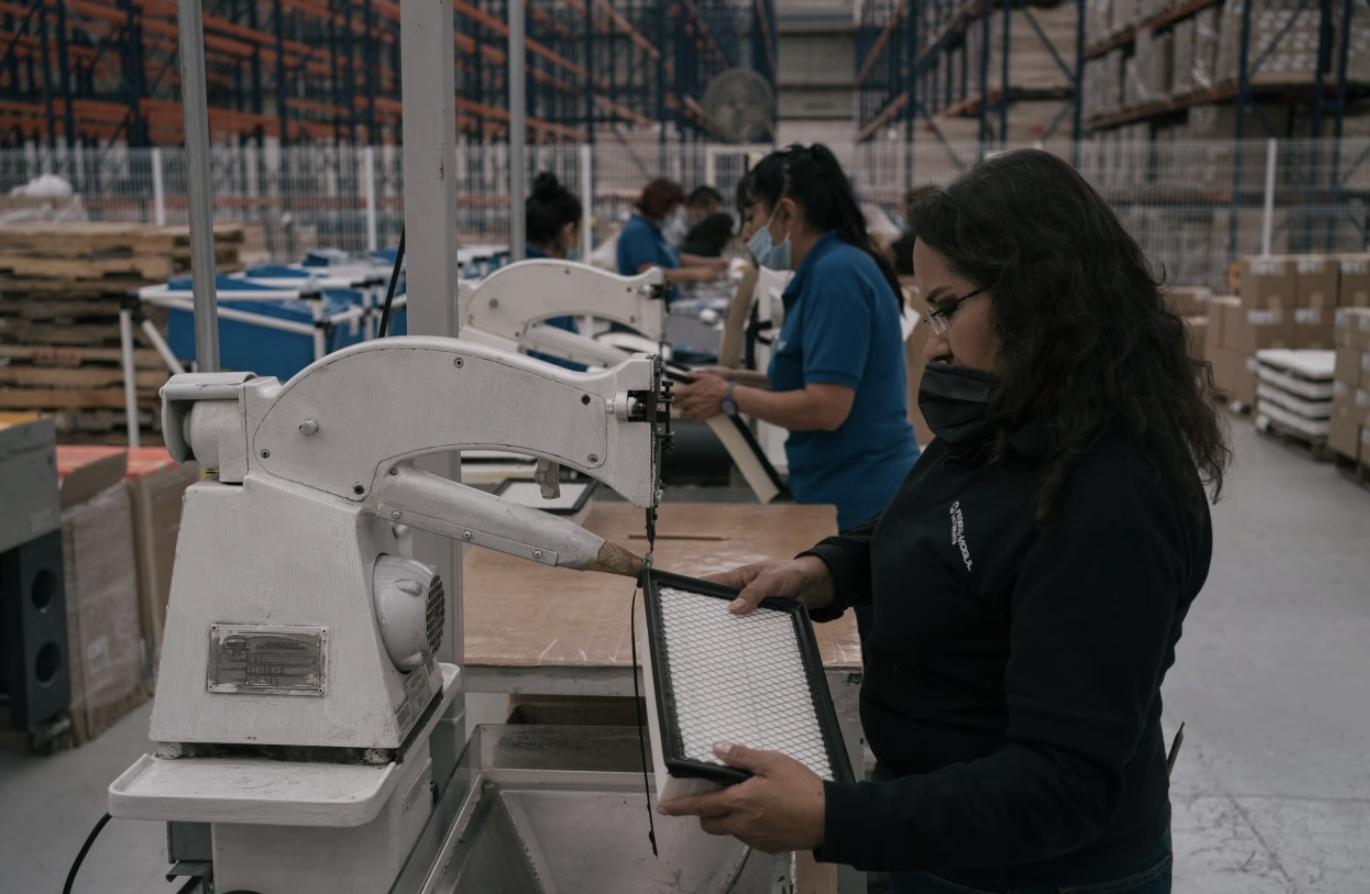
Manufacturing is one of the areas where nearshoring can have a major impact.
Companies that depend on overseas factories may face long shipping times and unpredictable transportation costs.
Moving some production closer to the final market can reduce the distance goods need to travel.
This can help companies respond more quickly when customer demand changes.
For example, a company selling products in North America may find it easier to coordinate production with suppliers located closer to its main customer base than with factories thousands of miles away.
Nearshoring in Technology
Technology companies are also using nearshoring to access skilled talent.
Software development is particularly suitable because teams can collaborate remotely.
A company may hire developers, designers, cybersecurity specialists, or technical support professionals in a nearby country.
The company can potentially access a larger talent pool while maintaining more convenient working hours.
For technology teams, the ability to communicate quickly can be especially valuable when solving technical problems or managing fast-moving projects.
The Benefits of Nearshoring
Nearshoring can offer several advantages.
Lower Operating Costs
Companies may still achieve lower labor or operating costs than they would by hiring entirely in their home market.
Better Time-Zone Alignment
When team members have overlapping working hours, coordinating meetings and collaborating becomes much simpler.
Shorter Supply Chains
Manufacturing and logistics operations can potentially become less dependent on extremely long transportation routes.
Faster Response Times
Being closer to customers and suppliers can make it easier to respond to changes in demand.
Easier Travel
Traveling to a nearby office, supplier, or factory is often more straightforward than making international trips.
Greater Operational Resilience
By expanding their operations into nearby regions, companies can avoid over-reliance on a single remote site.
What Are the Disadvantages?
Nearshoring is not a perfect solution.
There can still be challenges.
Higher Costs Than Some Offshore Markets
A nearby country may have higher labor costs than a distant outsourcing destination.
Companies need to evaluate the complete financial picture rather than focusing only on wages.
Talent Availability
Not every nearshore location has the exact skills a company needs.
Before committing to a significant investment, companies should investigate the local workforce and talent landscape.
Legal and Regulatory Differences
It remains essential for businesses to familiarize themselves with employment legislation, tax policies, regulations, data security laws, and operational guidelines in the country they’re entering.
Management Challenges
Managing international teams requires clear processes, communication, and expectations.
Nearshoring reduces some geographic challenges, but it does not eliminate them.
Nearshoring vs. Reshoring
Another term often discussed alongside nearshoring is reshoring.
Reshoring means bringing business activities back to the company’s home country.
Nearshoring is different because the work remains in another country, but that country is geographically closer.
For example:
Offshoring: United States -> Asia
Nearshoring: United States -> Mexico
Reshoring: United States -> United States
Depending on their objectives, organizations might adopt one or multiple of these approaches.
Why Nearshoring Matters in 2026
In 2026, businesses are increasingly thinking about resilience rather than simply minimizing costs.
Opting for the least expensive solution doesn’t necessarily guarantee the best or most effective outcome.
A company may save money on labor by operating thousands of miles away but lose some of those savings through:
- Long shipping times
- Communication delays
- Travel expenses
- Supply chain problems
- Inventory requirements
- Quality-control challenges
Nearshoring gives companies another option.
Instead of choosing between expensive domestic operations and distant offshore outsourcing, businesses can build a more balanced model.
How Companies Can Decide If Nearshoring Is Right
Companies should evaluate several factors before moving operations.
Calculate Total Costs
Look beyond salaries.
Consider transportation, taxes, technology, management, travel, compliance, inventory, and potential disruption costs.
Compare Talent Markets
Research whether the target region has enough skilled workers.
Evaluate Infrastructure
Reliable internet, transportation, energy, logistics, and business infrastructure are important.
Consider Time Zones
Determine how much working-hour overlap your teams actually need.
Review Regulations
Understand employment, tax, data, and industry-specific requirements before making a decision.
Start Small
Companies can test nearshoring with a limited project before moving a major part of their operations.
The Future of Nearshoring
Nearshoring is likely to remain an important part of global business strategy.
Companies are unlikely to completely abandon international outsourcing. Instead, many may adopt a more flexible approach that combines domestic operations, nearshore teams, offshore partners, automation, and artificial intelligence.
This creates a more diversified operating model.
The future may not be about finding the single cheapest place to perform a task.
It may be about finding the right location for each part of the business.
Conclusion
Nearshoring is the practice of moving jobs, services, production, or business operations to a nearby foreign country.
It offers companies a way to access international talent and potentially lower costs while reducing some of the challenges associated with distant outsourcing.
Supply chain uncertainty, time-zone differences, rising costs, and the need for faster collaboration are making proximity more valuable.
For many companies, nearshoring is not simply about bringing jobs “back home.” It is about bringing important parts of the business closer to customers, suppliers, and employees.
As global businesses rethink their operating models in 2026, nearshoring can provide a middle ground between traditional offshoring and full reshoring.
FAQ’s
1. What does nearshoring mean?
Nearshoring means outsourcing jobs, services, or production to a nearby foreign country instead of a distant overseas location.
2. What is the difference between nearshoring and offshoring?
Offshoring usually involves moving work to a distant foreign country, while nearshoring moves work to a geographically closer country.
3. Is nearshoring cheaper than hiring locally?
It can be, but the savings depend on labor costs, taxes, transportation, management, infrastructure, and other expenses.
4. What industries use nearshoring?
Technology, manufacturing, customer service, accounting, engineering, logistics, and business-process services can all use nearshoring.
5. Is nearshoring the same as reshoring?
No. Reshoring means bringing jobs or operations back to the company’s home country. Nearshoring means moving them to a nearby foreign country.
6. Why is nearshoring becoming popular?
Companies are looking for better supply chain resilience, closer time-zone alignment, faster communication, access to talent, and more predictable operations while still controlling costs.