

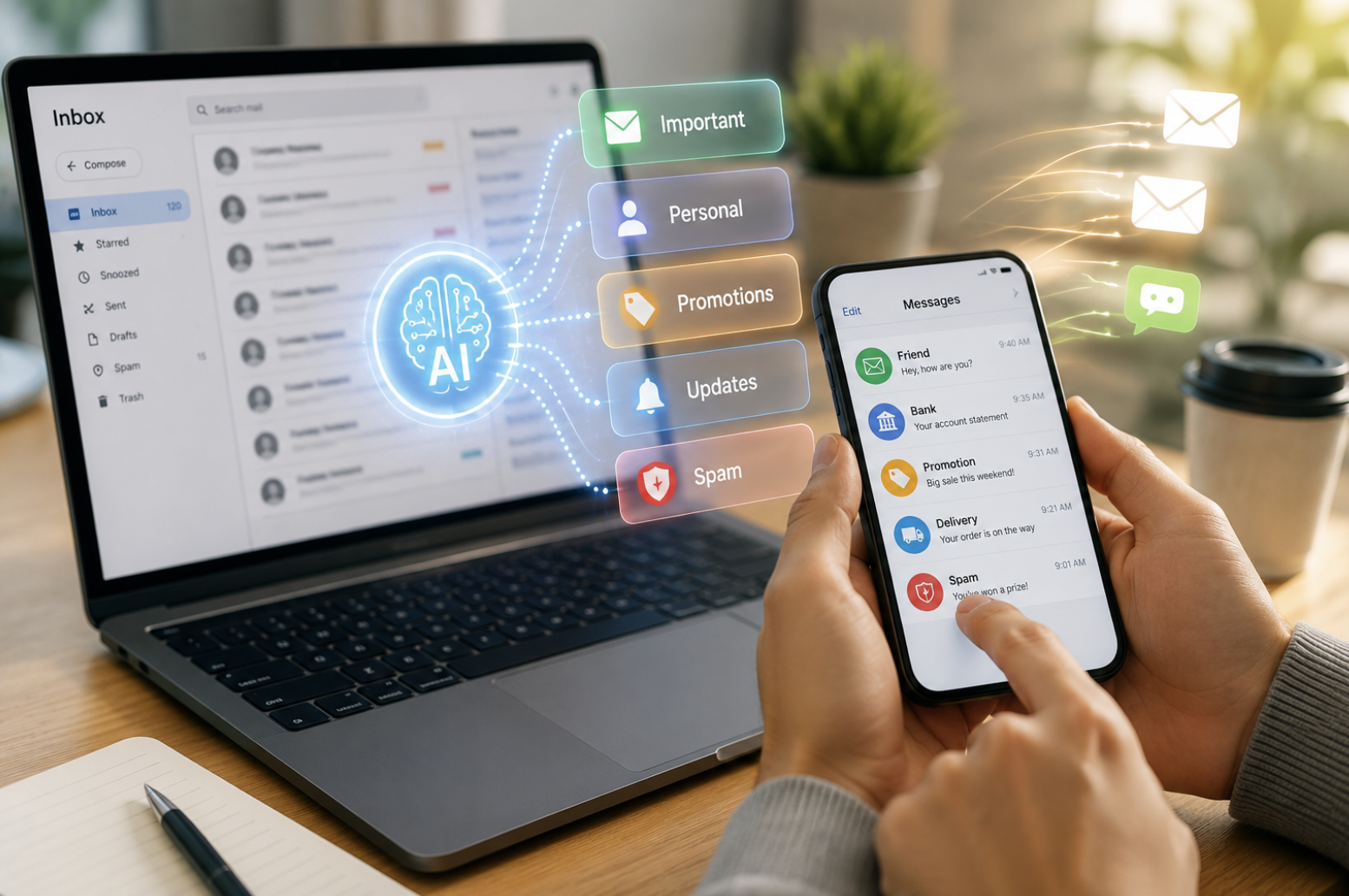
Imagine opening your inbox and instantly finding every important message without scrolling through endless promotions, spam, or notifications. Modern communication moves faster than ever, making it difficult to keep up with hundreds of emails and text messages every week. Fortunately, artificial intelligence has transformed the way people manage digital conversations.
An Intelligent Message Filter works behind the scenes to analyze incoming messages, understand communication patterns, and automatically organize everything into meaningful categories. Instead of relying on outdated manual rules, today’s AI-powered systems continuously learn from user behavior and become smarter over time.
Whether you use email for work, personal conversations, online shopping, or business communication, intelligent filtering helps reduce distractions while ensuring that critical messages receive immediate attention. As AI technology continues to evolve, these systems are becoming more accurate, secure, and personalized than ever before.
This guide explores everything you need to know about Intelligent Message Filters, including how they work, their key features, major benefits, common applications, future developments, and why they have become essential in today’s digital world.
What Is an Intelligent Message Filter?
An Intelligent Message Filter is an artificial intelligence and machine learning system designed to automatically examine, classify, and organize incoming emails or text messages. Rather than depending on fixed filtering rules, these advanced systems evaluate numerous data points before deciding where each message belongs. The software studies message content, sender reputation, communication history, subject lines, attachments, embedded links, keywords, metadata, and behavioral patterns.
After processing this information, it assigns every message to the most suitable category. Common message categories include:
- Primary messages
- Important emails
- Promotional content
- Social updates
- Spam
- Work communications
- Personal conversations
- Notifications
- Security alerts
- Automated system messages
Unlike traditional inbox filters, intelligent message filters constantly improve through continuous learning, making them increasingly accurate with everyday usage.
Why Intelligent Message Filters Matter More Than Ever
Digital communication has expanded dramatically over the past decade. Businesses, educational institutions, government agencies, and individuals exchange thousands of messages every second. Unfortunately, this growth also creates significant challenges. People often receive:
- Marketing emails
- Scam messages
- Phishing attempts
- Promotional newsletters
- Appointment reminders
- Social notifications
- Personal conversations
- Work-related discussions
Sorting these messages manually wastes valuable time. More importantly, important emails can easily become buried beneath unnecessary content. An Intelligent Message Filter solves this problem by organizing communications automatically while reducing clutter and improving overall productivity.
How an Intelligent Message Filter Works
Artificial intelligence performs several advanced processes before placing a message inside your inbox.

Message Content Analysis
Every incoming message undergoes detailed examination. The AI evaluates:
- Subject lines
- Email body
- Keywords
- Writing style
- Sender information
- Attachments
- Embedded URLs
- File types
- Communication frequency
This initial inspection helps the system understand the overall purpose of each message.
Pattern Recognition Through Machine Learning
Machine learning algorithms compare new messages with millions of previously analyzed communications. The software identifies similarities involving:
- Frequently contacted senders
- Spam behavior
- Promotional language
- Business terminology
- Personal conversations
- Transactional notifications
Because AI recognizes these patterns, it predicts the most appropriate destination for every message.
Automatic Message Classification
After completing its analysis, the filter automatically assigns each message to its corresponding category. For example:
- Business emails appear in the Primary or Work folder.
- Shopping discounts move into Promotions.
- Social media alerts enter Social.
- Suspicious emails immediately land inside Spam.
- System-generated alerts remain under Notifications.
- This automatic organization creates a cleaner, more manageable inbox.
Continuous Learning and Improvement
One of AI’s greatest strengths is its ability to learn from user actions. Every time users:
- Mark spam
- Move messages
- Archive conversations
- Flag important emails
- Delete unwanted content
- Reply frequently to specific contacts
the intelligent filter updates its learning model. Consequently, future classifications become even more accurate and personalized.
Core Features of Intelligent Message Filters
Modern intelligent filtering systems include numerous advanced capabilities.
Automatic Inbox Organization
Messages automatically appear inside organized folders without requiring manual sorting. Users spend less time searching for important conversations.
Advanced Spam Detection
Spam continues evolving every year. Fortunately, AI constantly studies new spam techniques and blocks suspicious emails before they reach users. This proactive approach dramatically reduces inbox clutter.
Phishing Protection
Cybercriminals frequently disguise malicious emails as legitimate communications. Intelligent Message Filters identify suspicious:
- Fake websites
- Dangerous attachments
- Fraudulent senders
- Credential theft attempts
As a result, users enjoy stronger protection against cyberattacks.
Priority Message Identification
Not every email deserves immediate attention. AI identifies high-priority communications based on:
- Contact importance
- Previous conversations
- Business relevance
- Urgency indicators
- User behavior
Important messages receive greater visibility while less significant content remains organized elsewhere.
Duplicate Message Detection
Sometimes identical messages arrive multiple times. Intelligent filters recognize duplicates and minimize unnecessary inbox clutter.
Smart Notification Management
Applications generate endless notifications every day. Instead of interrupting users constantly, AI intelligently organizes alerts according to urgency. This approach creates a far less distracting communication experience.
Custom Learning Behavior
Unlike static filtering systems, AI adapts to every user’s habits. If someone regularly reads newsletters from a specific company, future emails from that sender receive higher priority. Over time, inbox organization becomes increasingly personalized.
Major Benefits of Intelligent Message Filters
Businesses and individuals enjoy numerous advantages after implementing AI-powered filtering.
Higher Productivity
Searching through hundreds of emails wastes valuable working hours. Automatic organization allows users to focus on meaningful tasks instead of inbox management. Productivity naturally improves.
Cleaner Inbox
Promotional emails no longer overwhelm important conversations. Everything remains neatly organized inside relevant categories. This structure creates a much more pleasant user experience.
Improved Email Security
Cybersecurity threats continue increasing worldwide. Intelligent filters identify malicious messages before users accidentally interact with them. This significantly reduces security risks.
Better Time Management
Users spend fewer minutes sorting messages manually. Instead, AI completes this work instantly. Even saving a few minutes daily becomes substantial over months and years.
Reduced Spam Exposure
Modern spam campaigns constantly change their appearance. Machine learning adapts much faster than traditional rule-based filtering systems. Consequently, inboxes remain cleaner with minimal effort.
Personalized Communication Experience
No two users communicate exactly alike. AI understands individual preferences through continuous learning. Eventually, inbox organization reflects each person’s unique communication style.
Greater Workplace Efficiency
Businesses receive thousands of customer inquiries every day. Intelligent filtering automatically separates:
- Customer support requests
- Sales inquiries
- Internal discussions
- Vendor communications
- Billing questions
Employees therefore respond faster and more efficiently.
Industries That Depend on Intelligent Message Filters
Artificial intelligence now supports communication across countless industries.
Email Service Providers
Popular email platforms rely heavily on intelligent filtering to organize billions of daily messages. Without AI, inboxes would quickly become unusable.
Business Communication Platforms
Organizations depend on accurate message categorization to maintain smooth collaboration between employees. AI reduces communication delays while improving workflow.
Customer Support Centers
Support teams receive thousands of customer requests every day. Intelligent filtering routes inquiries to appropriate departments, reducing response times significantly.
Healthcare Organizations
Hospitals and clinics exchange sensitive communications regularly. AI helps prioritize urgent patient messages while filtering administrative notifications.
Educational Institutions
Schools and universities manage communications involving students, teachers, administrators, and parents. Automatic filtering improves organization across every department.
Government Agencies
Government organizations process enormous volumes of digital correspondence. AI assists with document organization while reducing manual workloads.
Financial Institutions
Banks receive customer inquiries, fraud alerts, loan requests, and transaction notifications continuously. Intelligent filters help prioritize high-risk communications immediately.
CRM and Sales Platforms
Customer Relationship Management software integrates AI filtering to organize leads, follow-ups, customer requests, and sales opportunities. This organization helps sales teams remain highly productive.
Artificial Intelligence Behind Intelligent Message Filtering
Several AI technologies work together inside these advanced systems. Natural Language Processing understands message content. Machine Learning recognizes communication patterns. Behavioral Analysis studies user interactions. Predictive Analytics forecasts message importance. Neural Networks improve classification accuracy. Data Mining discovers hidden communication trends. Together, these technologies create intelligent systems capable of organizing enormous volumes of digital communication with remarkable accuracy.
Challenges and Current Limitations
Although Intelligent Message Filters offer impressive performance, no AI system remains perfect. Occasionally, important emails may enter the wrong folder. New spam campaigns sometimes bypass existing detection models before AI adapts. Privacy remains another important consideration because message analysis requires careful handling of personal information. Machine learning systems also require continuous updates to maintain excellent performance against evolving cyber threats.
Fortunately, developers regularly improve algorithms, reducing these limitations year after year.
The Future of Intelligent Message Filters
Artificial intelligence continues advancing rapidly. Future message filtering systems will become even smarter. Upcoming innovations may include:
- Better multilingual understanding
- Real-time fraud prediction
- Emotional context recognition
- Personalized communication summaries
- Voice message classification
- Advanced phishing prevention
- Cross-platform message organization
- Context-aware conversation prioritization
- Intelligent reply suggestions
- Enhanced privacy-preserving AI models
As these technologies mature, inbox management will become almost entirely automated. Users will spend less time organizing messages and more time communicating effectively.
Best Practices for Getting the Most from Intelligent Message Filters
Users can maximize filtering accuracy by following several simple habits. Regularly mark spam messages correctly. Flag important conversations whenever necessary. Archive completed discussions instead of deleting everything. Review spam folders occasionally to recover misplaced emails. Avoid opening suspicious attachments from unknown senders. Keep email applications updated with the latest security improvements. Use two-factor authentication alongside intelligent filtering for stronger protection. These small practices help AI learn faster while improving long-term accuracy.
Conclusion
Intelligent Message Filters have revolutionized digital communication by combining artificial intelligence with machine learning to organize emails and text messages automatically. Instead of forcing users to sort overwhelming inboxes manually, these systems recognize communication patterns, classify messages intelligently, reduce spam, strengthen cybersecurity, and continuously improve through user interactions. Businesses benefit from faster workflows, while individuals enjoy cleaner inboxes and greater productivity.
As artificial intelligence continues evolving, Intelligent Message Filters will become even more personalized, secure, and context-aware. They represent one of the most valuable AI innovations for modern communication, helping people stay organized while protecting them from increasingly sophisticated digital threats.
Frequently Asked Questions
1. What is an Intelligent Message Filter?
It is an AI-powered system that automatically organizes emails and text messages into relevant categories.
2. How does an Intelligent Message Filter work?
It analyzes message content, sender information, metadata, and user behavior using machine learning.
3. Can Intelligent Message Filters stop spam?
Yes, they detect and block most spam using advanced AI algorithms.
4. Do Intelligent Message Filters improve over time?
Yes, they continuously learn from user interactions and become more accurate.
5. Can AI detect phishing emails?
Yes, modern filters identify many phishing attempts before users open them.
6. Are Intelligent Message Filters used in businesses?
Yes, businesses widely use them to organize customer and employee communications.
7. Can personal messages be separated automatically?
Yes, AI categorizes personal conversations independently from work or promotional messages.
8. Do Intelligent Message Filters support text messages?
Yes, many messaging platforms use AI filtering for SMS and chat applications.
9. Is user privacy protected during message filtering?
Most modern platforms use security measures to protect analyzed communication data.
10. Can important emails be misclassified?
Yes, although it is uncommon, occasional misclassification can occur.
11. Which industries benefit the most from Intelligent Message Filters?
Healthcare, finance, education, government, customer support, and businesses benefit significantly.
12. Will Intelligent Message Filters become smarter in the future?
Yes, future AI systems will deliver even greater accuracy, personalization, and security.