

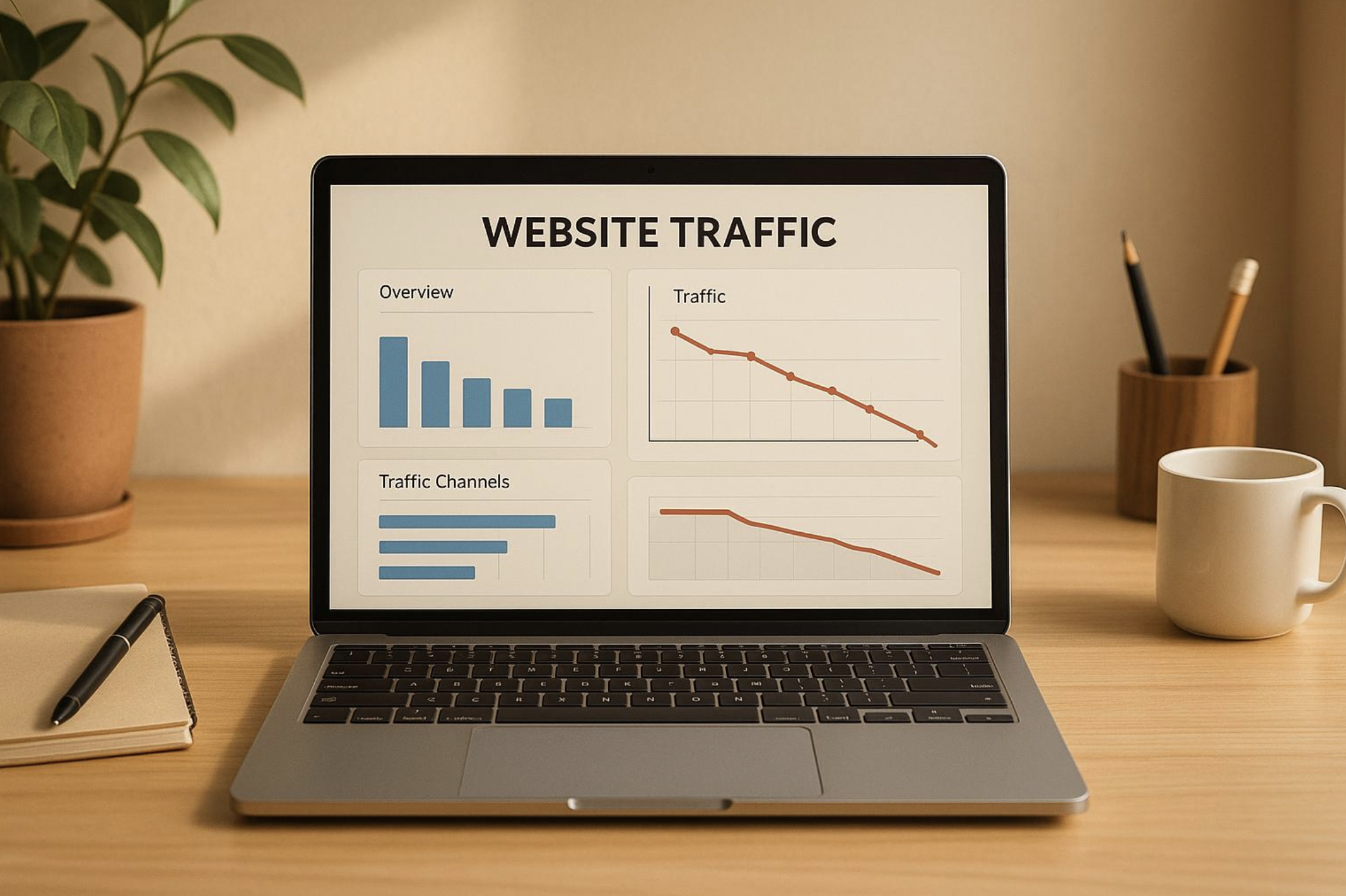
You publish new articles, optimize your pages, and wait for visitors to arrive, but your website traffic remains almost unchanged. This is one of the most frustrating challenges for website owners, bloggers, and online businesses.
The reality is that increasing website traffic is not just about publishing more content. A website can have dozens or even hundreds of pages and still receive very little organic traffic if the foundation is weak.
When website traffic is not increasing, the problem usually comes from a combination of factors: poor SEO, wrong keyword targeting, weak content strategy, technical issues, or a lack of promotion.
The good news is that most traffic problems can be identified and fixed. By understanding what is limiting your growth, you can create a practical strategy to attract more visitors, improve rankings, and build long-term online visibility.
1. Your Website Has Weak SEO Fundamentals
Search engine optimization (SEO) helps search engines understand your website and decide when to show your pages in search results.
If your SEO foundation is weak, even high-quality content may struggle to rank.
Common SEO problems include:
- Missing or poorly optimized title tags
- Weak meta descriptions
- Incorrect heading structure
- Lack of keyword optimization
- Poor URL structure
- Missing image optimization
For example, an article titled “Marketing Tips” provides very little information to search engines or users. A more specific title such as “10 Digital Marketing Strategies for Small Businesses” gives clearer context.
Start by reviewing your important pages and improving their SEO elements. Make sure each page targets a specific topic and matches what users are searching for.
Remember, SEO is not about adding keywords everywhere. It is about helping search engines understand your content while making it useful for real people.
2. You Are Targeting the Wrong Keywords
One of the biggest reasons website traffic is not increasing is choosing keywords that are too competitive or unrelated to your audience.
Many new websites try to rank for broad keywords like:
- SEO
- cryptocurrency
- digital marketing
- AI tools
These keywords may have thousands of monthly searches, but they are also dominated by established websites.
A better approach is targeting long-tail keywords that solve specific problems.
For example:
Instead of targeting:
“SEO tools”
Try:
“best SEO tools for small business websites”
The second keyword may have fewer searches, but visitors searching for it often have stronger intent.
Good keyword research helps you discover what your audience wants, what questions they ask, and what topics your competitors are missing.
3. Your Content Does Not Match Search Intent
Search intent means understanding why someone searches for a specific keyword.
Google’s goal is to provide the most useful answer, not simply the page with the most keywords.
For example, if someone searches:
“best email marketing software”
They are likely looking for comparisons, features, pricing, and recommendations.
Simply describing what email marketing means isn’t enough to meet what the visitor is truly looking for; they need more comprehensive information.
Before writing content, study the pages already ranking on Google.
Ask:
- What information do these pages provide?
- How are they structured?
- What questions do they answer?
- What can I improve?
Creating content that matches search intent increases the chances of ranking and keeping visitors engaged.
4. Your Content Does Not Provide Enough Value
Publishing frequently does not automatically increase website traffic.
Search engines reward content that is useful, accurate, and comprehensive.
Many websites struggle because their articles are:
- Too short
- Generic
- Outdated
- Missing examples
- Repeating information already available elsewhere
A valuable article should solve a problem.
For example, instead of writing “What Is Blockchain?” Using clear, straightforward definitions, develop an in-depth guide that covers the following points:
- How blockchain works
- Real-world applications
- Benefits and limitations
- Examples of companies using it
Adding practical examples, expert insights, data, and step-by-step explanations makes content more valuable.
You should also regularly update older articles. Sometimes improving an existing page can generate faster results than publishing something new.
5. Your Website Has Technical SEO Issues
Technical SEO problems can prevent search engines from properly accessing and ranking your website.
Common technical issues include:
- Broken links
- Slow loading pages
- Duplicate content
- Poor mobile experience
- Indexing problems
- Incorrect redirects
For example, you may publish an excellent article, but if search engines cannot crawl or index it properly, it may receive little or no traffic.
Regular website audits can help identify these problems.
Tools such as Google Search Console can show:
- Pages that are not indexed
- Search performance
- Mobile usability problems
- Technical errors
A technically healthy website gives your content a better chance to succeed.
6. Your Website Loads Too Slowly
Website speed affects both rankings and user experience.
Visitors have limited patience. If a page takes too long to load, many users leave before reading the content.
Slow websites are often caused by:
- Large image files
- Poor hosting
- Too many plugins
- Heavy scripts
- Unoptimized themes
Improving speed can include:
- Compressing images
- Using browser caching
- Removing unnecessary code
- Choosing better hosting
- Optimizing mobile performance
A faster website creates a better experience and encourages visitors to explore more pages.
7. You Are Not Building Quality Backlinks
Backlinks are links from other websites pointing to your content. They help search engines understand that your website has authority and credibility.
However, not all backlinks are valuable.
A link from a trusted industry website is far more useful than dozens of low-quality links.
Effective backlink strategies include:
- Creating original research
- Publishing useful guides
- Writing guest articles
- Building industry relationships
- Creating shareable resources
For example, a detailed research report or free tool is more likely to earn natural backlinks than a basic blog post.
Focus on quality rather than quantity.
8. You Are Not Promoting Your Content
Creating content is only one part of growing traffic.
Even excellent articles may remain invisible without promotion.
After publishing content, consider:
- Sharing it on social media
- Sending it to email subscribers
- Connecting with relevant communities
- Repurposing it into videos or posts
- Reaching out to industry websites
Promotion helps your content reach people who may link to it, share it, or become regular visitors.
However, avoid aggressive promotion. The goal is to provide value, not simply advertise.
9. Your Website Lacks Internal Linking
Internal links connect different pages on your website.
They help visitors discover more content and help search engines understand your website structure.
For example, if you write an article about SEO strategies, you can link to related pages about:
- Keyword research
- Technical SEO
- Content marketing
A strong internal linking structure improves navigation and distributes authority across your website.
Use descriptive anchor text instead of generic phrases like “click here.”
10. You Expect Results Too Quickly
SEO is a long-term strategy.
Many website owners become discouraged because traffic does not increase after publishing a few articles.
However, building organic visibility requires time, especially for new websites.
Search engines need time to understand your content, evaluate your authority, and determine where your pages belong in search results.
Instead of focusing only on traffic numbers, monitor:
- Search impressions
- Keyword rankings
- Click-through rates
- User engagement
- Conversion rates
Small improvements over time can create significant growth.
A Practical Plan to Increase Website Traffic
If your website traffic is not increasing, follow a structured approach:
Step 1: Audit Your Website
Check technical SEO issues, page speed, indexing problems, and mobile performance.
Step 2: Research Your Audience
Understand what problems your visitors are trying to solve.
Step 3: Improve Existing Content
Update old articles, add missing information, and improve readability.
Step 4: Target Better Keywords
Focus on specific, lower-competition keywords with clear search intent.
Step 5: Build Authority
Create valuable resources and earn backlinks from relevant websites.
Step 6: Measure Results
Use analytics tools to understand what works and what needs improvement.
Conclusion
When website traffic is not increasing, you should know that there’s usually no single quick fix to turn things around. Growth depends on several connected factors, including SEO, content quality, technical performance, promotion, and patience.
The most successful websites do not simply publish more content, they create better content, understand their audience, and continuously improve their strategy.
By identifying the real reasons behind slow traffic growth and applying practical solutions, you can build a stronger website that attracts consistent visitors and creates long-term online success.
Frequently Asked Questions
1. Why is my website getting no traffic?
A website may receive no traffic because of poor SEO, weak content, technical problems, incorrect keyword targeting, or lack of promotion.
2. What’s the typical timeframe for seeing a boost in your website’s traffic after implementing new strategies?
The timeline depends on your website age, competition, content quality, and SEO strategy. Many websites need several months of consistent work before seeing significant growth.
3. Does publishing more blog posts increase traffic?
Publishing more content can help, but only if the content is valuable, optimized, and targets topics your audience searches for.
4. Can technical SEO affect website traffic?
Yes. Technical problems such as slow speed, indexing errors, and poor mobile performance can reduce your visibility in search engines.
5. What is the fastest way to improve website traffic?
Improving existing high-potential pages, targeting better keywords, fixing technical issues, and promoting useful content are often the most effective steps.