

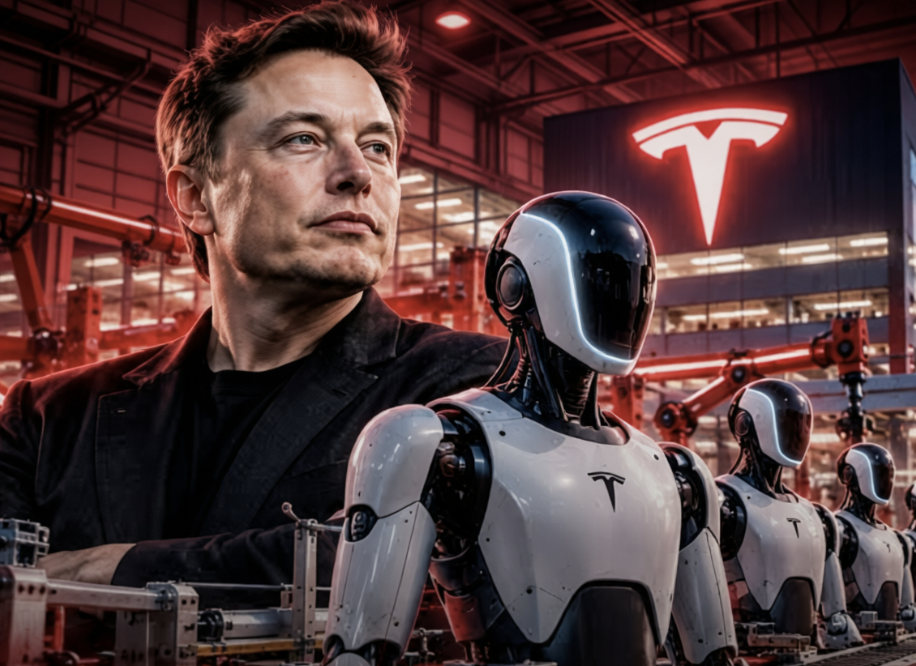
Tesla is pushing forward with its humanoid robot ambitions while facing growing financial pressure. The company’s Optimus project aims to transform manufacturing, automation, and eventually everyday life. However, Tesla’s declining profitability raises questions about the timing of this ambitious investment.
The company wants to expand beyond electric vehicles. Meanwhile, its robotics strategy could become a major part of its future business. Understanding Optimus requires looking at its technology, production plans, financial risks, and long-term potential.
What Is Tesla Optimus?
Tesla Optimus is a humanoid robot designed to perform physical tasks with minimal human intervention. It combines artificial intelligence, cameras, sensors, and robotic movement systems.
Unlike traditional industrial robots, Optimus is designed around a human-like body. Therefore, it could potentially operate in environments built for people.
Tesla has discussed applications such as moving materials, handling repetitive work, and assisting with manufacturing. Eventually, the company hopes to develop robots capable of performing useful tasks outside factories.
However, a successful demonstration does not automatically prove commercial readiness. Reliable performance, safety, operating costs, and maintenance will determine whether customers adopt these machines.
Why Is Tesla Developing Humanoid Robots?
Tesla wants to use its experience in artificial intelligence, batteries, manufacturing, and autonomous systems to build robots. These technologies overlap with several capabilities needed for humanoid machines.
First, Tesla already develops computer vision systems for its vehicles. These systems process camera information and help software interpret the surrounding environment.
Similarly, humanoid robots need to recognize objects, understand spaces, and respond to changing conditions. Tesla hopes to apply its AI expertise to these challenges.
Second, the company operates large manufacturing facilities. Consequently, Tesla could test robots inside its own factories before offering them to external customers.
This approach could help engineers identify practical problems earlier. Nevertheless, adapting software and hardware for reliable physical work remains a significant engineering challenge.
Tesla Optimus Production Plans in California
California plays an important role in Tesla’s engineering and manufacturing operations. However, claims about a specific Optimus production launch require confirmation from current company announcements.
Tesla has previously discussed producing and deploying humanoid robots within its own operations. The company has also outlined ambitions to increase production as the technology matures.
Still, there is an important difference between pilot manufacturing and mass production. A small production run may support testing without proving that a robot can be manufactured profitably at scale.
Before treating a California production report as confirmed, readers should check Tesla’s official announcements and regulatory disclosures. These sources can clarify the facility, production timeline, expected output, and commercial status.
If production expands, Tesla could use its factories as testing grounds. Workers and engineers could evaluate robots on repetitive tasks before wider deployment.
However, production targets remain different from verified deliveries. Investors should distinguish announced ambitions from completed milestones.
Why Tesla’s Falling Profits Matter
Tesla’s robotics ambitions arrive amid financial pressure on its established electric vehicle business. Changes in vehicle demand, pricing, production costs, and competition can affect profitability.
When an automaker reduces prices to attract buyers, revenue may not translate into the same level of profit. Additionally, investments in research, infrastructure, and new products can increase expenses.
This creates a difficult balancing act for Tesla. The company must protect its existing business while funding technologies that may generate future revenue.
Optimus could eventually provide another source of income. However, developing humanoid robots requires substantial engineering, testing, manufacturing, and safety investments.
Therefore, investors need evidence that robotics can become commercially viable. Exciting demonstrations alone cannot guarantee strong margins or meaningful revenue.
Tesla’s financial reports remain essential for understanding the scale of its profitability challenges. Quarterly earnings, operating margins, cash flow, and capital spending offer useful indicators.
How Tesla Optimus Could Change Manufacturing
Humanoid robots could help factories automate tasks that are difficult for conventional machinery. Their human-like design may allow them to work around existing equipment and production layouts.
For example, a robot could potentially transport components, sort materials, or perform repetitive handling tasks. These applications could reduce the need for people to complete physically demanding work.
Moreover, automation may improve consistency across repetitive processes. Companies could also use robots for tasks involving awkward movements or less desirable working conditions.
Nevertheless, factories require dependable performance. A robot that frequently stops, damages products, or needs constant supervision may offer limited savings.
Manufacturers must also consider integration costs, workplace safety, and employee training. As a result, widespread adoption will depend on measurable improvements rather than impressive demonstrations.
Can Tesla Optimus Become a Profitable Business?
The commercial opportunity could be substantial if Tesla develops reliable robots at competitive prices. Businesses might purchase them to reduce repetitive labor and improve operational flexibility.
However, several challenges could slow adoption.
Manufacturing Costs and Reliability
Humanoid robots require motors, sensors, computing hardware, batteries, and sophisticated control systems. Producing these components consistently at scale will take time.
Furthermore, robots must withstand repeated movement and demanding working environments. Expensive repairs or frequent downtime could undermine their financial value.
Competition in Robotics
Tesla is not the only company pursuing humanoid robots. Other robotics developers are also working on machines for factories, warehouses, and commercial applications.
Consequently, Tesla must compete on reliability, cost, usefulness, and production capacity. Brand recognition alone will not guarantee market leadership.
Safety and Real-World Performance
Robots operating near people need reliable movement and appropriate safety controls. They must respond correctly when objects move unexpectedly or working conditions change.
Therefore, extensive testing will remain essential before widespread deployment. Regulatory requirements and customer expectations could also influence adoption timelines.
What Tesla Optimus Means for Investors
Tesla’s robotics strategy creates both an opportunity and a financial risk. If Optimus succeeds, the company could expand beyond its traditional automotive business.
On the other hand, development costs may rise before meaningful revenue appears. Delays, technical setbacks, or weaker customer demand could also reduce expected returns.
Investors should examine measurable progress rather than relying entirely on ambitious forecasts. Production volumes, customer deployments, operating costs, and repeat orders will provide stronger evidence of commercial success.
They should also evaluate Tesla’s core vehicle business independently. Strong robotics prospects cannot automatically offset weaker automotive profitability.
The Future of Tesla Optimus
Tesla Optimus represents a broader shift toward AI-powered machines that can perform physical work. Its potential extends from factory automation to selected tasks in other environments.
However, the road from prototype to profitable mass production remains challenging. Engineering improvements must translate into reliable performance and competitive costs.
Tesla’s financial position will also influence how quickly it can expand the project. The company needs to balance ambitious robotics investments with the demands of its existing business.
Ultimately, Optimus could become an important part of Tesla’s future. Yet confirmed production milestones, practical deployments, and sustainable economics will determine whether that promise becomes a successful business.