


Walk down any grocery store aisle today and the majority of packaged items on the shelf fall into a category nutrition scientists have spent the better part of two decades trying to define, measure, and link to health outcomes: ultra-processed food.
The term has migrated from academic journals into mainstream headlines, government dietary guidelines, and even proposed food labeling policy across several countries, yet the underlying research remains far more contested than the confident tone of many popular news summaries would suggest.
What counts as ultra-processed, how strong the evidence linking it to disease really is, and what mechanism might explain any link are all questions researchers across several fields are actively working through rather than settled facts ready for a simple verdict.
Defining What Counts as Ultra-Processed
The most widely used framework for classifying food by processing level is a system developed by researchers in Brazil, which sorts foods into four groups based on the extent and purpose of industrial processing rather than nutrient content alone. This classification system has become the dominant reference point in the scientific literature worldwide, even as critics argue its categories can be inconsistent when applied in real-world practice.
- Unprocessed or minimally processed foods: items like fresh produce, plain grains, eggs, and meat that have undergone little alteration beyond basic preparation like drying, grinding, or freezing.
- Processed culinary ingredients: substances extracted from whole foods and used in cooking, such as oils, butter, sugar, and salt, rarely consumed on their own.
- Processed foods: items combining the first two categories through methods like canning, fermenting, or simple cooking, including canned vegetables in brine or freshly baked bread made with just a few ingredients.
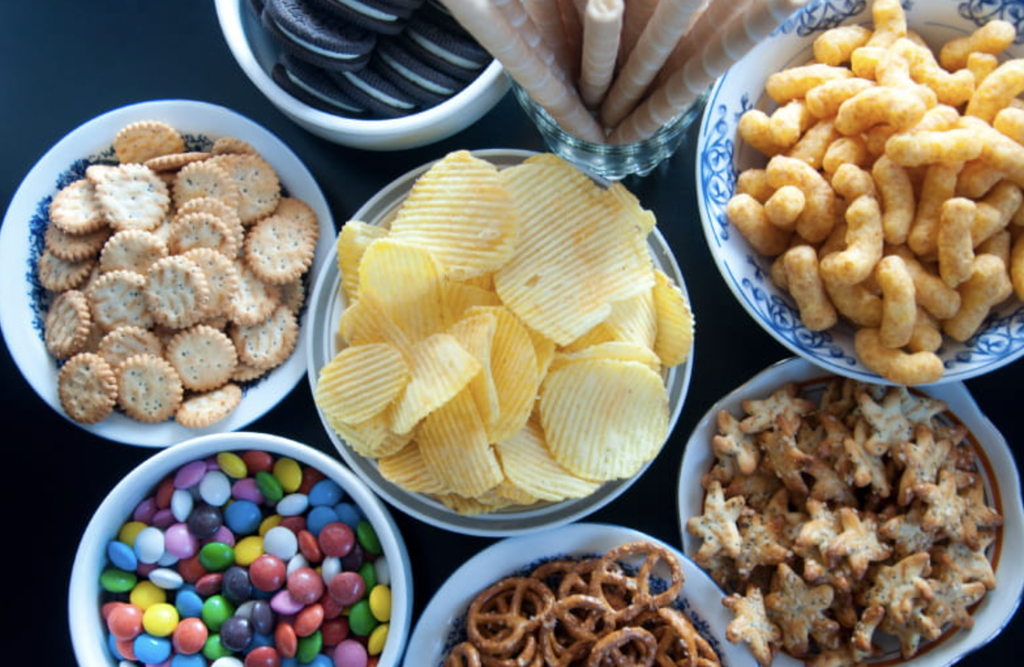
- Ultra-processed foods: industrial formulations typically containing ingredients not found in a home kitchen, such as emulsifiers, flavor enhancers, and modified starches, often combined with only minimal whole food content remaining.
Researchers applying this system to packaged goods have found that classifying a given product is not always straightforward. Two nutritionally similar breads, for example, can land in different categories depending on whether one contains an emulsifier not typically found in home baking, even when the nutrient profiles on the label look nearly identical, a quirk that critics argue makes the framework at least partly dependent on ingredient lists rather than a food’s actual nutritional impact on the body.
Several alternative or supplementary classification systems have been proposed in response to these edge cases, some weighting the degree of industrial transformation more heavily, others incorporating a food’s nutrient density alongside its processing category rather than treating processing as a standalone variable.
None of these alternatives has displaced the original framework as the dominant reference point in published research, partly because consistency across studies matters for comparing results, but the ongoing proposals reflect real dissatisfaction within the scientific community about edge cases the original system handles awkwardly, such as fortified plant milks, whole-grain breads containing a small amount of preservative, or minimally sweetened yogurt products marketed as healthy despite technically qualifying for the ultra-processed category.
Measuring Health Outcomes in Long Studies

The research connecting ultra-processed food consumption to health outcomes comes primarily from two types of studies, each with distinct strengths and limitations that researchers weigh carefully when interpreting results.
Large observational cohort studies, which track thousands or even hundreds of thousands of people over many years of follow-up, have consistently found associations between higher ultra-processed food consumption and increased rates of obesity, cardiovascular disease, type two diabetes, and in some studies, certain cancers and earlier mortality.
These studies are valuable for their scale and long follow-up periods, but they cannot by themselves prove causation, since people who eat more ultra-processed food often differ from those who eat less in other ways too, including income, education, baseline health status, and overall dietary pattern, any of which could independently explain some of the observed health differences.
A smaller but influential body of controlled feeding trials has attempted to address this difficult causation question more directly. The most frequently cited of these studies placed participants in a closely monitored setting and fed them either an ultra-processed diet or a minimally processed diet matched for calories, sugar, fat, fiber, and macronutrient content, then measured what happened.
Participants eating the ultra-processed diet consumed measurably more total calories per day and gained weight over the study period, while those on the matched minimally processed diet ate less and lost weight, despite both diets being designed to look nutritionally similar on paper.
This finding has been influential precisely because it isolates processing itself as a variable, suggesting something about the ultra-processed foods beyond their stated nutrient content may drive increased intake, though researchers caution that a single controlled trial, however well designed, involves a small number of participants over a short period and needs replication before its findings can be treated as definitive for the broader population.
Follow-up studies attempting to replicate and extend this work are underway at several research institutions, testing variations such as longer study durations, different population groups, and specific additive combinations in isolation rather than comparing entire diets at once.
Some of this follow-up research has focused narrowly on emulsifiers, a common additive class used to keep ingredients like oil and water from separating in products such as ice cream, packaged baked goods, and sauces, with early animal studies suggesting certain emulsifiers may disrupt the protective mucus layer lining the gut, though researchers are careful to note that findings in animal models do not automatically translate to the same effect in humans, and dedicated human trials on this specific mechanism remain limited in number and scope.
Open Questions About Additives and Appetite
Scientists studying why ultra-processed foods might affect eating behavior have proposed several competing, and potentially overlapping, mechanisms, none of which has yet been conclusively established as the single primary driver.
- Energy density and palatability: ultra-processed foods are often engineered to be calorie-dense and highly palatable, a combination some researchers argue overrides normal satiety signals, encouraging consumption beyond what the body needs.
- Eating speed and texture effects: soft, easily chewed textures common in many ultra-processed products may allow faster eating, giving the body’s fullness signals less time to register before a meal or snack is finished.
- Additive effects on gut signaling: some researchers are investigating whether specific emulsifiers and other additives alter gut microbiota or gut-brain signaling pathways involved in appetite regulation, though this research remains in earlier stages compared with the dietary pattern studies.
- Loss of food matrix structure: industrial processing can break down the physical structure of whole foods in ways that may change how quickly nutrients are absorbed, a factor some scientists believe affects blood sugar response and subsequent hunger.
None of these mechanisms has been ruled in or out definitively, and multiple could be contributing simultaneously rather than a single explanation accounting for the entire effect. Researchers in this field generally describe the mechanistic question as one of the more active and unresolved areas of current nutrition science.
Brain imaging research adds a further layer to this picture. Some neuroscience studies have found that highly processed, calorie-dense foods activate reward pathways in the brain more strongly than less processed foods with similar calorie counts, a pattern some researchers compare, with caution, to responses seen with other reward-driven behaviors.
This line of research remains contested within the field, with critics arguing that comparing food reward responses to those involved in substance dependence oversimplifies a complex behavioral and biological picture, while proponents maintain that the comparison, even if imperfect, highlights a real difference in how the brain responds to engineered food products compared with whole foods, a difference worth additional study regardless of what label is eventually applied to describe it.
Industry Pushback on the Classification System
Food manufacturers and some industry-funded researchers have pushed back firmly against both the classification framework and the conclusions drawn from it, raising several specific objections that have become recurring themes in the broader scientific debate. Industry critics have raised a consistent set of objections to how the research is framed and applied.
- Counterintuitive category placement: grouping foods primarily by processing method rather than nutrient content can place some fortified or nutritionally beneficial products in the same ultra-processed category as foods with little nutritional merit.
- Confounded observational data: studies linking ultra-processed food to poor health outcomes often cannot fully separate the effect of processing itself from the broader dietary pattern typically associated with high consumption, such as lower fruit and vegetable intake.
- Limited real-world applicability: critics argue the classification system was built mainly for research purposes and translates awkwardly into practical consumer guidance or specific purchasing decisions at the grocery store.
- Funding and framing concerns: some industry groups argue the research agenda itself has been shaped by assumptions about processing that were not neutral from the outset, a claim independent researchers generally dispute.
Independent researchers acknowledge some of these critiques have scientific merit, especially around the classification system’s inconsistencies at the margins, while maintaining that the overall body of evidence, spanning multiple countries, study designs, and research teams, points toward a real association between higher ultra-processed intake and worse health outcomes on average, even if the exact mechanism and the precise role of processing itself remain open to further study.
What Scientists Are Still Debating
Beyond the mechanism question, several broader debates continue to shape how researchers, policymakers, and journalists talk about this topic, and resolving them will likely take years of additional study.
- Whether processing itself is harmful or a marker for something else: some researchers argue ultra-processed status is mainly a proxy for poor nutrient density and high calorie content, rather than processing being independently harmful beyond those nutritional factors.
- How to regulate or label these foods: several countries have introduced or proposed front-of-package warning labels specifically targeting ultra-processed products, a policy approach still being evaluated for its real-world effect on consumer behavior and long-term health outcomes.
- Whether all ultra-processed foods carry equal risk: researchers increasingly question whether a fortified plant-based milk alternative classified as ultra-processed carries the same health implications as a sugary snack cake placed in the very same category, a nuance current classification systems handle imperfectly at best.
- How socioeconomic factors interact with processed food access: cost and availability often make ultra-processed foods the most accessible option for lower-income households, raising equity questions about how dietary guidance should be framed for populations with limited food choices and tighter budgets.
These open debates mean that confident, simple statements either dismissing ultra-processed food concerns entirely or treating the category as uniformly dangerous both go beyond what current research supports, a nuance that gets lost in much popular coverage of the topic.
Dietary Guidelines Under Review
Government dietary guidance bodies in several countries have begun grappling seriously with how to incorporate ultra-processed food research into official recommendations, a process complicated by the same scientific uncertainties researchers themselves are still working through.
Some national guideline committees have added cautionary language encouraging citizens to limit ultra-processed food intake generally, while stopping short of specific quantitative targets, reflecting the current state of evidence as suggestive rather than conclusive enough for precise numerical limits.
Public health researchers advocating for stronger guideline language argue that waiting for perfect causal certainty before acting risks leaving the public without guidance for years while evidence accumulates, pointing to the strength and consistency of the associational data as sufficient grounds for precautionary recommendations even without full mechanistic certainty.
Opponents of this approach counter that overly broad guidance risks oversimplifying a complex category, potentially steering consumers away from fortified or convenient options that offer real nutritional value simply because they fall under the same classification label as less beneficial products.
International comparisons complicate this picture further. Countries with the strongest early guideline language on ultra-processed food tend to be those where the research framework originated, while other nations with equally capable public health institutions have moved more cautiously, citing a preference for waiting on additional replication studies and clearer dose-response data before committing to formal numeric targets in national dietary guidance.
This divergence is itself instructive, since it shows that the same underlying body of evidence can reasonably support different policy conclusions depending on how much weight a given institution places on precaution relative to certainty, a judgment call that sits as much in the realm of public health philosophy as it does in pure science.
Final Thoughts
Ultra-processed food research sits in an active, evolving stage of science where associations are well documented but causal mechanisms and precise risk thresholds remain under investigation across multiple research teams worldwide.
The evidence base is strong enough that multiple national health bodies have begun cautioning against high consumption, yet nuanced questions about which specific foods and additives matter most, and why, are still being worked out by researchers across several disciplines, from nutrition science to neuroscience and gut microbiology.
Consumers navigating this landscape are generally better served by focusing on broad dietary patterns rather than treating every packaged food identically, since the category itself remains more varied in its likely health impact than headlines sometimes suggest.
Frequently Asked Questions
Is all packaged food considered ultra-processed?
No. Many packaged foods, including canned beans, frozen vegetables without additives, and plain yogurt, fall into less processed categories under the standard classification framework used by most researchers. Ultra-processed status depends specifically on the presence of industrial ingredients and formulations not typically used in home cooking, not simply on whether a food comes in a package.
Does eating some ultra-processed food occasionally pose a serious health risk?
Current research generally focuses on patterns of high, regular consumption over time rather than occasional intake, and researchers studying this area have not established a specific safe threshold, making it difficult to give a precise answer about occasional consumption based on existing evidence. Most public health guidance in this area still frames the concern around overall dietary pattern rather than any single meal or snack choice made now and then.
Are plant-based meat substitutes considered ultra-processed?
Many plant-based meat alternatives do qualify as ultra-processed under the standard classification, since they typically involve extensive industrial processing and additives to mimic the texture and flavor of meat, a classification some nutrition researchers argue deserves more nuanced treatment given these products’ generally favorable nutrient profiles compared with traditional processed meat products on the shelf.
Why do some studies seem to contradict each other on this topic?
Differences in study design, population studied, how researchers classified foods, and what outcomes were measured all contribute to seemingly conflicting results across the research literature, which is common in a relatively young and still-developing area of nutrition science rather than evidence that the whole field lacks any reliable findings. Readers are generally better served by looking at how multiple studies taken together point in a consistent direction rather than treating any single study as the final word on the subject.
Is the ultra-processed food classification system used worldwide?
The Brazilian-developed framework has become the most widely cited system internationally and is referenced in guidelines from several national and international health bodies, though some countries and research groups use modified versions or alternative classification approaches, meaning there is not full global consensus on a single standardized system, which also makes direct comparison of statistics between countries more difficult than it might first appear.
Can home cooking from scratch eliminate exposure to the additives in question?
Cooking primarily from whole ingredients at home generally reduces exposure to the specific additives and industrial ingredients found in ultra-processed products, though researchers note that access, time, cost, and skill all affect how feasible this approach is for different households, making it an incomplete solution to a population-level dietary pattern rather than a fix available equally to everyone regardless of circumstance. Some researchers have raised separate concerns about children specifically, since ultra-processed foods make up a substantial share of calories consumed by younger age groups in several national surveys, and dedicated long-term research tracking childhood exposure through to adult health outcomes is still relatively limited compared with adult-focused studies.