

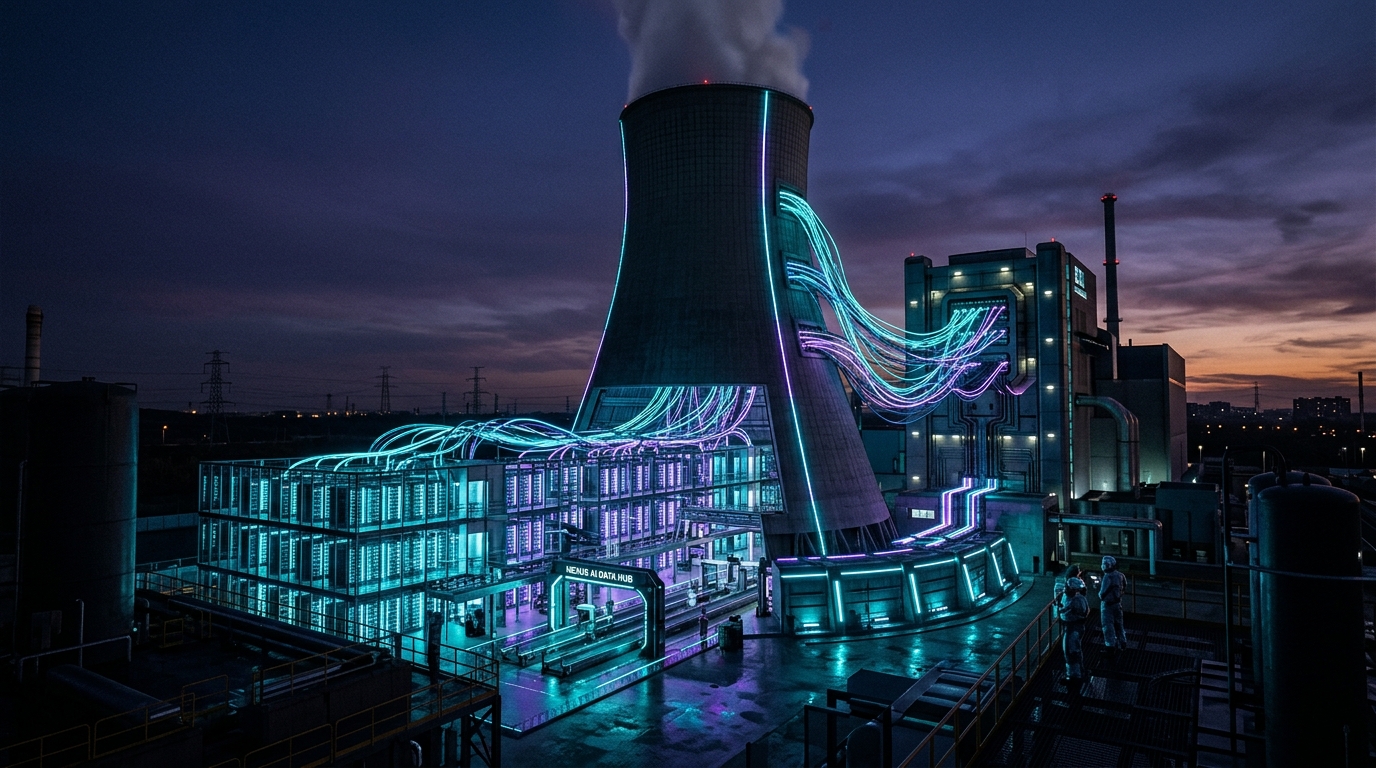
The shocking fact is that major technology companies are signing nuclear power deals because artificial intelligence is creating an electricity problem that solar alone cannot easily solve. Google, Microsoft, Amazon, and Meta are pursuing nuclear energy through existing reactors and new small modular reactors (SMRs). It is becoming part of the infrastructure strategy behind AI.
Nuclear Power Is Becoming an AI Infrastructure Problem
The real reason behind the nuclear push is simple: AI data centers need enormous amounts of electricity, and they need it reliably.
The U.S. Department of Energy says data centers could account for up to 9% of U.S. electricity generation by 2030, compared with about 4% in 2023. AI is one factor driving that growth.
Most people think of AI as software. But behind chatbots, image generators, search systems, and AI agents are servers running around the clock. They need power for computing and cooling.
Here is the catch. Solar and wind can produce large amounts of clean electricity, but their output changes with weather and time of day. Batteries can help, yet long-duration storage at huge scale remains difficult.
Nuclear plants provide steady electricity around the clock, making them attractive for data centers that cannot simply shut down when renewable output falls.
Big Tech Is Not Just Buying Electricity From Nuclear Plants
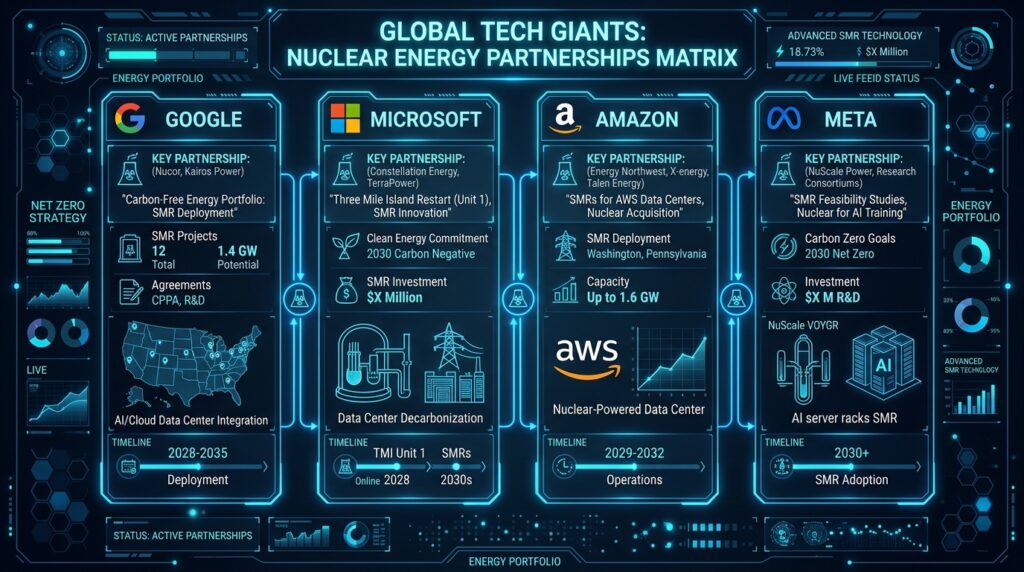
What nobody tells you about this trend is that “building nuclear plants” does not always mean a technology company owns a reactor.
Companies are using several models. Some sign long-term power purchase agreements. Others support reactor companies, invest in SMRs, or arrange access to electricity from existing nuclear facilities.
Google signed an agreement with Kairos Power in 2024 intended to bring multiple SMRs online, with the goal of enabling up to 500 megawatts of new 24/7 carbon-free power. Google later announced a 50-megawatt Kairos project in Tennessee planned to begin operations in 2030.
Microsoft took another route. Its agreement with Constellation supports restarting the Crane Clean Energy Center, formerly Three Mile Island Unit 1, to provide around-the-clock carbon-free electricity for data center needs.
Amazon has pursued both existing and future nuclear capacity. It has invested in X-energy, worked with Energy Northwest on SMRs, and arranged access to power from Talen Energy’s existing nuclear facility in Pennsylvania.
Meta has expanded its nuclear strategy too. In January 2026, it announced agreements involving Constellation, Vistra, TerraPower, and Oklo that it says could support up to 6.6 gigawatts of new and existing nuclear energy by 2035.
The pattern is clear: Big Tech wants dependable power before more AI infrastructure arrives.
Small Modular Reactors Could Change the Nuclear Playbook
The biggest shift may be the push toward small modular reactors.
Why companies are interested in SMRs
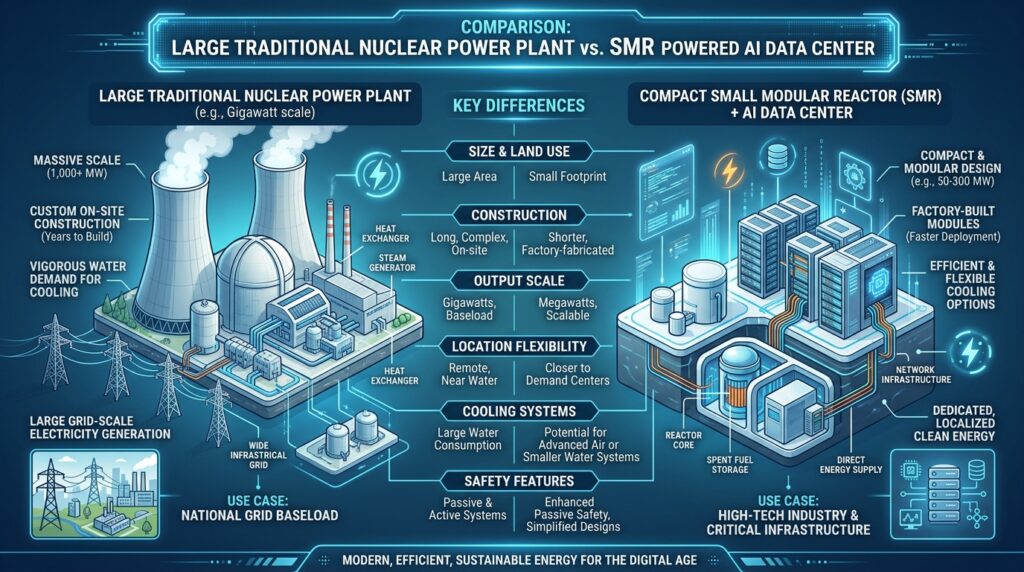
SMRs are smaller than conventional reactors and, in some designs, use modular construction. The goal is easier, staged deployment.
Amazon says its Energy Northwest agreement is designed around an initial 320-megawatt project that could expand to 960 megawatts. Its investment in X-energy is aimed at supporting more than 5 gigawatts of new nuclear capacity in the United States by 2039.
Google’s approach is also designed around multiple reactor deployments rather than one giant project. Google says its Kairos agreement could eventually provide up to 500 megawatts.
But wait. Smaller does not mean simple.
New reactor designs face licensing, financing, construction, supply-chain, fuel, and cost challenges. Many projects are years from commercial operation. The technology must prove itself before becoming repeatable.
The hidden advantage is predictability
For technology companies, the attraction is predictability.
AI data centers are planned years ahead. A long-term nuclear agreement can give companies more visibility into future electricity supply.
In my experience with technology clients, infrastructure discussions focus on servers, cloud regions, and cybersecurity. Energy rarely gets the same attention. That is changing. Electricity is becoming part of the technology stack.
The Nuclear Rush Is Also About Grid Constraints
Most people believe Big Tech can simply build a data center wherever land is available. Actually, electricity availability can become the limiting factor.
A data center needs grid connections, transmission capacity, substations, and enough generation to serve its load. If several large facilities arrive in the same region, the grid may need expensive upgrades.
This is why nuclear agreements can have value beyond a company’s electricity bill. They can support generation while signaling that large customers will commit to future power.
Meta says its 2026 nuclear agreements are intended to support the grid as well as its data center operations, including new capacity and upgrades at existing plants.
That does not mean every nuclear project will lower prices or eliminate grid problems. Construction costs, financing, transmission constraints, regulation, and delays still matter.
The bigger shift is that technology companies are becoming major energy customers, planning power capacity years before computing demand arrives.
Did You Know?
Google’s 2024 agreement with Kairos Power was described by Google as the world’s first corporate agreement to purchase nuclear energy from multiple small modular reactors. Its initial plan targets a first reactor around 2030, followed by additional deployments through 2035.
Nuclear Power Could Become Part of the Tech Stack
The surprising lesson is that the AI race is no longer only about better chips or larger models. It is also about who can secure enough electricity to operate those systems.
For users, this may affect where AI services are built and how quickly data centers expand. For businesses, it could change cloud economics where power is scarce.
Nuclear power is not a magic answer. Existing plants face maintenance and economic challenges. New reactors can take years to license and build. SMRs remain an emerging technology, and promised capacity should not be confused with electricity already flowing to customers.
The bottom line is simple: Big Tech is not secretly becoming a power-plant industry. It is responding to a physical limit. AI needs electricity, and reliable electricity needs infrastructure.
Today, watch the energy side of AI announcements, not just software headlines. Ask where the power comes from, when it will be available, and whether it is operating, under construction, or only planned.
Then ask yourself: If electricity becomes one of the biggest limits on AI growth, how will that change the technology companies you use?
Frequently Asked Questions
1. Why is nuclear power important for AI data centers?
Nuclear power can provide steady electricity around the clock, which fits data centers that operate continuously. AI workloads are increasing electricity demand, while grids face limits on generation and transmission. Nuclear is one option companies are pursuing alongside renewables, storage, geothermal energy, efficiency improvements, and other power sources.
2. Are Google, Microsoft, Amazon, and Meta building nuclear plants?
They are supporting nuclear projects in different ways rather than all directly owning and constructing reactors. Google has agreements involving Kairos, Microsoft supports the restart of an existing nuclear plant, Amazon is backing SMRs and existing nuclear capacity, and Meta has announced several nuclear agreements.
3. Will nuclear power make AI cheaper?
Not necessarily. Nuclear power can provide dependable electricity, but new reactors can involve large construction, financing, regulatory, and supply-chain costs. Long-term energy agreements may improve planning, yet the final economics depend on project design, timing, financing, electricity markets, and grid conditions. Nuclear capacity also takes time to develop.