

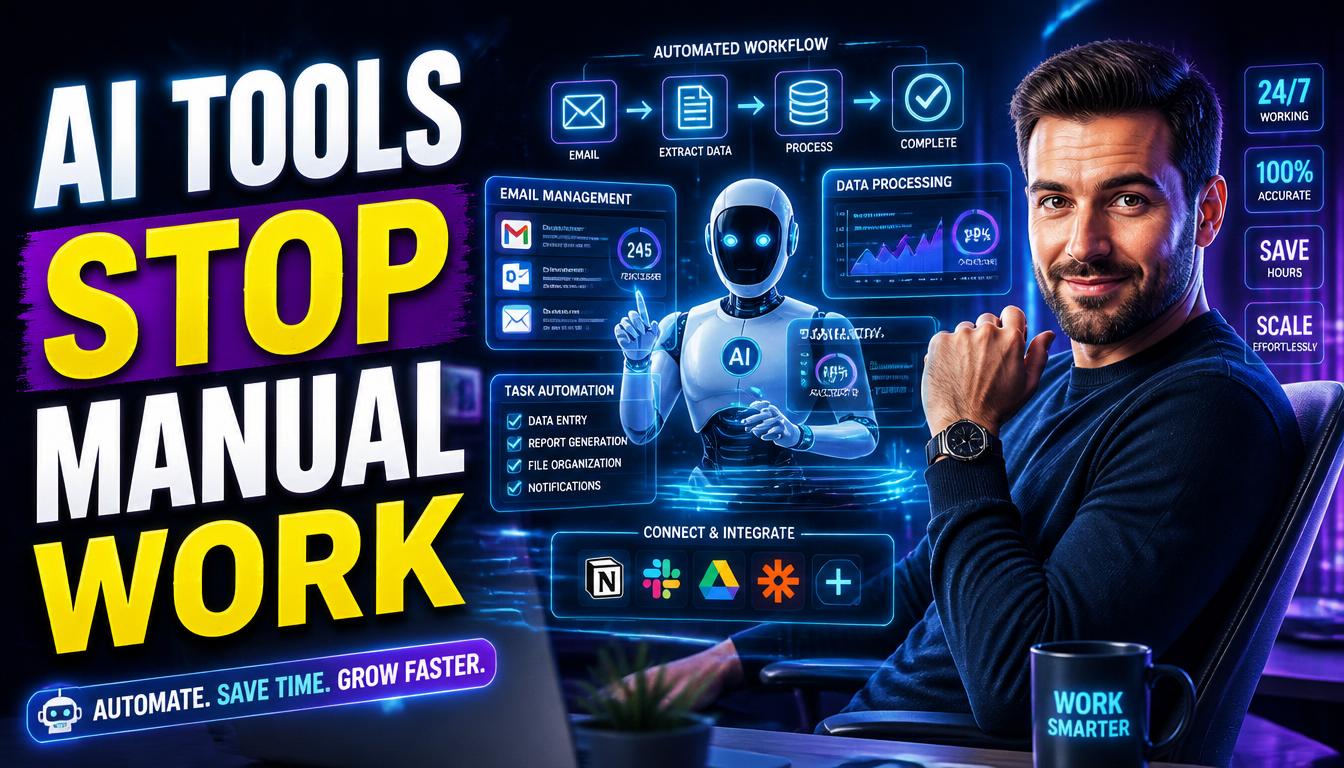
AI tools can reduce the time spent entering information manually. For example, automation platforms can collect data from forms and emails. Then, they can send that information directly to spreadsheets or databases.
As a result, teams can avoid repetitive copying and pasting. Moreover, automated data entry reduces common human errors. Therefore, employees can focus on more valuable work.
Use AI for Email Management
Managing emails can consume several hours every week. Fortunately, AI tools can help organise inboxes and prioritise important messages.
For instance, AI can sort emails based on topics or urgency. It can also suggest replies and summarise long conversations. Additionally, automated filters can move newsletters and low-priority emails into separate folders.
Consequently, employees can spend less time managing their inboxes.
Automate Customer Support Tasks
Customer service teams frequently find themselves responding to the same inquiries over and over again. AI chatbots can handle many common questions instantly.
For example, customers can ask about orders, returns, pricing, or basic services. The chatbot can then provide quick answers using approved information.
Furthermore, complex issues can move directly to human agents. This approach saves time while maintaining a better customer experience.
Create Content Faster With AI
Content creation often involves research, writing, editing, and proofreading. AI tools can simplify several parts of this process.
For example, AI can generate topic ideas and create content outlines. It can also improve grammar and suggest clearer sentences.
However, human review remains important for accuracy and originality. Therefore, businesses should use AI as a productivity assistant rather than a complete replacement.
Automate Meeting Notes and Summaries
Meetings often create another manual task: writing notes. AI meeting assistants can record conversations and create structured summaries.
They can also identify key decisions, action items, and important discussion points. Consequently, team members do not need to write everything manually.
Moreover, automated summaries help employees quickly understand what happened during meetings. This makes follow-up work faster and more organised.
Simplify Social Media Management
Managing several social media accounts can become difficult. AI tools can help businesses create, schedule, and organise social media content.
For instance, marketers can generate captions and content ideas quickly. They can also schedule posts across multiple platforms.
Additionally, AI can help analyse engagement data and identify successful content. As a result, marketing teams can spend more time improving their strategies.
Automate Document Processing
Businesses handle many documents every day. These may include invoices, contracts, applications, and reports.
AI-powered document tools can extract important information from these files. They can also classify documents and organise digital records.
Therefore, employees can avoid manually reviewing every document. Instead, they can focus on information that requires human attention.
Use AI for Scheduling and Calendar Tasks
Scheduling meetings often requires unnecessary back-and-forth communication. AI scheduling tools can simplify this process considerably.
Users can share available time slots automatically. Then, the system can find suitable meeting times for different participants.
Furthermore, automated calendar tools can send reminders and update appointments. Consequently, teams can reduce scheduling delays and avoid missed meetings.
Automate Data Analysis and Reports
Analysing large amounts of data manually can take significant time. AI tools can process information and identify useful patterns much faster.
For example, AI can summarise performance data and highlight unusual changes. It can also help create reports using structured information.
As a result, managers can access useful insights without spending hours reviewing spreadsheets. However, important decisions should still include human judgement.
Automate Routine Workflow Tasks
Many businesses perform repetitive workflows every day. These tasks may involve sending notifications, updating records, or moving files.
AI automation platforms can connect different applications and trigger actions automatically. For example, a new customer form can create a database record instantly.
However, automation systems can sometimes experience technical issues due to coding errors or software problems. Understanding common software bugs and how developers fix them can help teams troubleshoot problems more effectively.
Then, the system can send a welcome email and notify the sales team. Therefore, one automated workflow can replace several manual steps.
How to Choose the Right AI Automation Tools
Choosing the right AI tools requires careful planning. First, identify tasks that consume the most time each week.
Next, look for repetitive processes with clear rules and predictable outcomes. These tasks usually offer the best opportunities for automation.
Also, consider integration options before selecting a tool. Your chosen solution should work smoothly with your existing software.
Finally, check security, pricing, reliability, and ease of use. A powerful tool becomes less useful when employees struggle to use it.
Before adopting any AI automation solution, businesses should also understand basic security practices to protect sensitive data and systems. Following essential cybersecurity tips for beginners can help reduce common security risks when using new technologies.
Benefits of Automating Manual Work With AI
AI automation can improve workplace productivity in several ways. First, it reduces repetitive work and saves valuable employee time.
Moreover, automation can improve consistency across routine processes. It can also reduce mistakes caused by manual data handling.
Additionally, employees can focus more on creative thinking and strategic responsibilities. Therefore, businesses can achieve more without constantly increasing workloads.
Final Thoughts
AI tools for reducing manual work can transform everyday business processes. From email management to data analysis, automation offers many practical benefits.
However, successful automation starts with choosing the right tasks. Therefore, focus first on repetitive work that follows clear processes.
By combining AI with human expertise, businesses can save time and improve productivity. Ultimately, smart automation allows employees to spend more energy on work that truly matters.
Frequently Asked Questions
1. How can AI tools reduce manual work?
AI tools reduce manual work by automating repetitive tasks such as data entry, email management, scheduling, document processing, and reporting. As a result, employees can save time and focus on more important responsibilities.
2. What tasks are best for AI automation?
Repetitive and rule-based tasks are usually the best choices for AI automation. These include customer support questions, data entry, meeting summaries, social media scheduling, and routine workflow processes.
3. Can AI automation replace human employees?
AI automation usually supports employees rather than completely replacing them. It handles repetitive tasks while people focus on creativity, decision-making, communication, and strategic work. Therefore, businesses can improve productivity while keeping human expertise involved.