


Artificial intelligence has become an essential part of modern business operations, helping organizations improve efficiency, reduce costs, and increase productivity. Among the many AI-powered tools available today, ChatGPT stands out as one of the most practical solutions for businesses of all sizes. Whether we manage a startup, run an online store, operate a marketing agency, or oversee a large enterprise, ChatGPT can simplify everyday tasks and help teams accomplish more in less time.
From creating professional content to assisting with customer support, generating marketing campaigns, organizing business documents, and brainstorming new ideas, ChatGPT has transformed the way companies work. Instead of spending hours on repetitive administrative tasks, businesses can use AI to automate routine work while focusing on growth, innovation, and customer satisfaction.
This beginner’s guide explains how to use ChatGPT for business, its practical applications, benefits, best practices, and strategies for maximizing its value across different industries.
What Is ChatGPT?
Understanding ChatGPT
ChatGPT is an advanced conversational AI assistant capable of understanding natural language and generating human-like responses. Users simply type instructions, known as prompts, and the AI responds with detailed, context-aware answers.
Unlike traditional software that relies on fixed commands, ChatGPT adapts to natural conversations, making it easy for beginners to learn and use.
What Can ChatGPT Do?
Businesses can use ChatGPT to perform a wide variety of tasks, including:
- Writing blog articles
- Creating marketing campaigns
- Drafting professional emails
- Producing product descriptions
- Summarizing meetings
- Brainstorming business ideas
- Generating social media content
- Writing reports
- Assisting with coding projects
- Answering customer inquiries
- Translating content
- Organizing workflows
Its flexibility makes it one of the most valuable AI tools available for modern businesses.
Why Businesses Are Using ChatGPT
Increased Productivity
One of the biggest advantages of ChatGPT is its ability to save time. Tasks that previously required several hours can often be completed within minutes. Employees can delegate repetitive writing, planning, and brainstorming tasks to ChatGPT while concentrating on strategic responsibilities.
Lower Operating Costs
Hiring additional staff for every administrative task can become expensive. ChatGPT helps reduce operational expenses by automating routine work such as content creation, customer communication, and documentation.
Better Customer Experience
Businesses can respond more quickly to customer inquiries, prepare accurate support documents, and maintain consistent communication. Faster responses often lead to improved customer satisfaction and stronger brand loyalty.
Improved Creativity
Generating fresh ideas consistently can be challenging. ChatGPT serves as a creative partner by producing marketing ideas, campaign concepts, product names, slogans, and business strategies whenever inspiration is needed.
Getting Started with ChatGPT for Business
Create Your Account
Getting started requires only a ChatGPT account. Once logged in, users can begin asking questions or assigning tasks through simple text prompts.
Examples include:
- Write a business proposal.
- Create a marketing plan.
- Draft a customer support email.
- Generate SEO blog topics.
- Suggest product launch ideas.
The learning curve is minimal, making ChatGPT suitable even for users with no technical experience.
Learn How to Write Effective Prompts
The quality of ChatGPT’s responses depends largely on the instructions provided.
Instead of writing:
“Write a blog.”
Use a more detailed prompt such as:
“Create a 1,500-word SEO-optimized blog article discussing the latest digital marketing trends for small businesses, featuring H2 and H3 headings along with practical, actionable tips.”
Specific instructions help generate more accurate and useful results.
How ChatGPT Helps Different Business Departments
Marketing
Marketing teams can use ChatGPT to produce high-quality content much faster than traditional writing methods.
Common marketing tasks include:
- Blog writing
- Website copy
- Landing pages
- Advertising copy
- Email campaigns
- Video scripts
- Press releases
- Marketing plans
- Content calendars
Instead of starting every project from scratch, marketers can use AI-generated drafts and refine them according to their brand voice.
Sales
Sales professionals spend considerable time preparing emails, proposals, and follow-ups.
ChatGPT assists by creating:
- Cold emails
- Sales pitches
- Proposal templates
- Meeting summaries
- Product comparisons
- Objection-handling responses
- Client follow-up messages
This way, sales teams can spend more time connecting with clients and closing sales, instead of handling routine tasks.
Customer Service
Customer support teams benefit significantly from ChatGPT.
It can help prepare:
- Frequently asked questions
- Customer response templates
- Troubleshooting guides
- Return policy explanations
- Refund responses
- Live chat replies
Using AI-assisted responses helps maintain consistency while improving response times.
Human Resources
HR departments handle numerous repetitive writing tasks every week.
ChatGPT can assist with:
- Job descriptions
- Interview questions
- Employee handbooks
- Company policies
- Training materials
- Performance review templates
- Internal announcements
These capabilities streamline recruitment and employee management processes.
Using ChatGPT for Content Marketing
Writing SEO Blog Posts
Content marketing is one of the strongest applications of ChatGPT. Businesses can quickly create informative, engaging, and search engine-friendly articles that attract organic traffic.
ChatGPT can assist with:
- Blog outlines
- Long-form articles
- Meta titles
- Meta descriptions
- Frequently asked questions
- Internal linking suggestions
- Call-to-action sections
Instead of spending several days writing an article, businesses can produce a quality first draft within minutes and then refine it to match their brand voice.
Creating Website Content
Every business website requires high-quality content that clearly explains products and services.
ChatGPT can generate:
- Homepage content
- About Us pages
- Service pages
- Product pages
- Landing pages
- Contact page content
- Company profiles
Consistent website content helps improve user experience while supporting search engine optimization efforts.
Writing Product Descriptions
E-commerce businesses often manage hundreds or even thousands of products. Writing unique descriptions manually can be time-consuming.
ChatGPT helps generate product descriptions that highlight:
- Features
- Benefits
- Specifications
- Target audience
- Usage instructions
- Frequently asked questions
Unique product descriptions also reduce duplicate content issues that may affect search rankings.
Using ChatGPT for Social Media Marketing
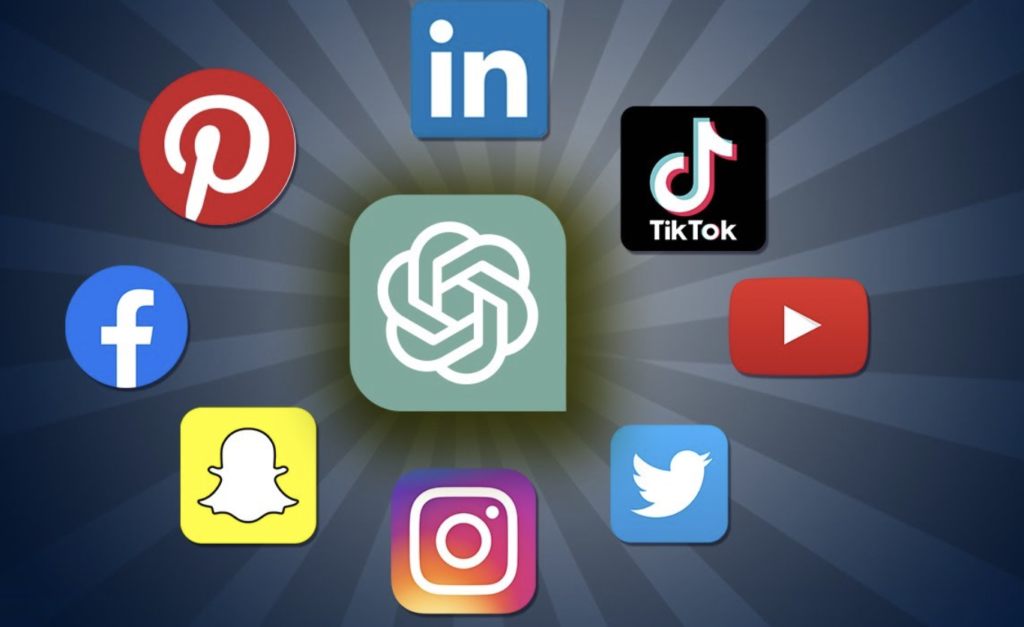
Creating Social Media Posts
To keep your social media active and engaging, you need to regularly share new and interesting content.
ChatGPT can create posts for:
It can generate educational posts, promotional content, product announcements, industry updates, customer success stories, and seasonal campaigns.
Generating Captions
Writing engaging captions often takes longer than expected.
ChatGPT helps create captions that encourage likes, comments, shares, and conversions while matching the desired tone of the business.
Planning Content Calendars
Businesses can also use ChatGPT to organize monthly or quarterly content calendars by suggesting posting schedules, campaign themes, holiday content, and promotional ideas.
Using ChatGPT for Email Marketing
Writing Promotional Emails
Email remains one of the top-performing channels for increasing conversions and engagement.
ChatGPT helps create:
- Product launch emails
- Promotional campaigns
- Discount announcements
- Newsletter content
- Customer retention emails
- Seasonal offers
Businesses can customize emails for different audience segments while maintaining a consistent brand voice.
Creating Automated Email Sequences
Automation saves considerable time.
ChatGPT can draft:
- Welcome sequences
- Abandoned cart emails
- Lead nurturing campaigns
- Follow-up emails
- Re-engagement campaigns
- Thank-you messages
These sequences improve customer relationships while increasing conversions.
Using ChatGPT for Customer Support
Responding to Common Questions
Customer support teams receive many repetitive inquiries every day.
ChatGPT helps prepare responses for questions about:
- Shipping
- Returns
- Refunds
- Product availability
- Account issues
- Payment methods
- Warranty information
Using prepared templates ensures consistency and faster response times.
Creating Knowledge Base Articles
Businesses can build comprehensive help centers by using ChatGPT to write detailed support articles covering common customer issues.
A well-organized knowledge base reduces support tickets and empowers customers to find answers independently.
Using ChatGPT for Business Planning
Conducting Market Research
Before launching new products or services, businesses need reliable market insights.
ChatGPT assists by organizing information about:
- Industry trends
- Customer preferences
- Competitor positioning
- Emerging technologies
- Market opportunities
Although businesses should verify important data through reliable sources, ChatGPT provides an excellent starting point for research.
Creating Business Plans
Entrepreneurs can leverage ChatGPT to help create well-organized business plans that cover:
- Executive summary
- Company overview
- Market analysis
- Marketing strategy
- Sales strategy
- Operational plan
- Financial projections
- Growth roadmap
A clear business plan helps attract investors while guiding long-term decision-making.
Using ChatGPT for E-commerce Businesses
Improving Online Store Content
Online stores constantly require fresh content to remain competitive.
ChatGPT can assist with:
- Category descriptions
- Buying guides
- Product comparisons
- Promotional banners
- Collection pages
- FAQ sections
High-quality content improves both customer experience and search visibility.
Creating Customer Communication
E-commerce stores can use ChatGPT to draft:
- Order confirmation emails
- Shipping updates
- Delivery notifications
- Return instructions
- Customer appreciation messages
Professional communication builds trust and encourages repeat purchases.
Using ChatGPT for Small Businesses
Managing Daily Operations
Small business owners often perform multiple roles every day.
ChatGPT can help with:
- Appointment scheduling
- Document drafting
- Proposal writing
- Business correspondence
- Marketing ideas
- Workflow planning
- Administrative tasks
This allows business owners to focus more on growth and customer relationships.
Supporting Limited Teams
Small teams frequently have limited resources.
Instead of hiring additional employees for every writing task, businesses can use ChatGPT to complete many routine activities efficiently while maintaining quality.
Using ChatGPT for Business Communication
Writing Professional Emails
Professional communication plays an important role in building credibility.
ChatGPT helps create:
- Client emails
- Partnership proposals
- Internal announcements
- Vendor communication
- Project updates
- Meeting invitations
Each message can be customized according to tone, audience, and purpose.
Preparing Meeting Summaries
After meetings, ChatGPT can organize notes into structured summaries that include:
- Key discussion points
- Action items
- Deadlines
- Responsibilities
- Next steps
This improves accountability and keeps projects moving efficiently.
Using ChatGPT for Brainstorming
Generating Business Ideas
Entrepreneurs often use ChatGPT as a brainstorming partner.
It can generate ideas for:
- New products
- Business names
- Marketing campaigns
- Service improvements
- Revenue streams
- Customer loyalty programs
Instead of facing creative blocks, businesses can quickly explore multiple possibilities.
Solving Business Challenges
When facing operational problems, ChatGPT can suggest different approaches for improving efficiency, customer engagement, workflow organization, and team collaboration.
Even when the final decision requires human judgment, AI-generated suggestions often provide valuable starting points.
Best Practices for Using ChatGPT in Business
Write Clear and Detailed Prompts
The quality of ChatGPT’s output depends heavily on the quality of the instructions provided. Instead of asking for a general response, include information about the target audience, preferred tone, desired format, word count, and purpose.
Detailed prompts reduce the need for revisions and produce more accurate content.
Review AI-Generated Content
Although ChatGPT is highly capable, businesses should always review generated content before publishing or sending it to customers.
Human review helps ensure:
- Accuracy
- Brand consistency
- Proper grammar
- Updated information
- Compliance with company policies
Combining AI efficiency with human expertise delivers the best results.
Protect Sensitive Information
Companies must refrain from including sensitive data such as confidential information, customer details, passwords, financial records, or proprietary strategies when using AI prompts.
Maintaining data privacy helps protect both the organization and its customers.
Common Mistakes to Avoid
Using Vague Prompts
Simple instructions often produce generic responses.
Instead of writing:
“Write marketing content.”
Use:
“Write a 1,000-word SEO article for small business owners explaining how email marketing increases customer retention using H2 and H3 headings.”
Clear instructions lead to better results.
Publishing Without Editing
AI-generated content should never be published without review. Businesses should verify facts, improve readability, and ensure the content reflects their unique brand identity.
Editing also helps remove repetitive phrases and improve originality.
Expecting Perfect Accuracy
ChatGPT is an excellent assistant, but it may occasionally provide outdated or inaccurate information.
Always verify:
- Statistics
- Legal information
- Financial advice
- Medical information
- Industry regulations
Fact-checking is an important step before using AI-generated content professionally.
Industries That Benefit from ChatGPT

Healthcare
Healthcare providers can use ChatGPT to craft educational resources, communicate with patients, prepare administrative forms, send appointment reminders, and share health tips.
Education
Teachers and educational institutions use ChatGPT for:
- Lesson planning
- Study guides
- Practice quizzes
- Assignment ideas
- Classroom activities
- Student feedback
Real Estate
Real estate professionals benefit from AI-generated:
- Property descriptions
- Listing summaries
- Buyer emails
- Market reports
- Neighborhood guides
- Follow-up messages
Finance
Financial professionals can use ChatGPT to prepare:
- Client newsletters
- Market summaries
- Investment reports
- Educational content
- Financial planning guides
Hospitality
Hotels, restaurants, and travel companies can generate:
- Guest communication
- Travel guides
- Booking confirmations
- Promotional campaigns
- Customer support content
Retail
Retail businesses can improve customer engagement through:
- Product descriptions
- Promotional emails
- Sales campaigns
- Loyalty program content
- Customer service templates
Limitations of ChatGPT
AI Is Not Always Correct
While ChatGPT produces high-quality responses, it may occasionally generate incorrect or incomplete information. Businesses should verify important facts before relying on AI-generated content.
Human Creativity Still Matters
AI can generate ideas and drafts, but human creativity remains essential for storytelling, branding, emotional messaging, and strategic decision-making.
The most successful businesses combine AI assistance with human expertise.
Professional Advice May Still Be Required
Businesses should consult qualified professionals for:
- Legal decisions
- Tax planning
- Medical guidance
- Financial investments
- Regulatory compliance
ChatGPT serves as an assistant rather than a replacement for licensed experts.
The Future of ChatGPT in Business
Smarter Automation
As artificial intelligence continues to evolve, businesses will be able to automate increasingly complex tasks, allowing employees to focus on innovation and growth.
Future AI systems are expected to improve workflow automation, customer interactions, and decision-making support.
Better Personalization
Future versions of AI will provide more personalized customer experiences by generating customized recommendations, marketing messages, and support responses based on user preferences.
Increased Business Efficiency
Organizations adopting AI technology early are likely to benefit from improved productivity, faster operations, reduced costs, and stronger competitiveness in the digital marketplace.
As AI capabilities continue to advance, ChatGPT will become an even more valuable tool for businesses across every industry.
Conclusion
ChatGPT has transformed the way businesses create content, communicate with customers, organize workflows, and improve productivity. Whether managing marketing campaigns, writing professional documents, responding to customer inquiries, or brainstorming new ideas, this AI-powered assistant helps organizations complete tasks faster and more efficiently.
Businesses of every size can benefit from integrating ChatGPT into their daily operations. By combining clear prompts, careful human review, and responsible AI usage, companies can improve efficiency, reduce costs, strengthen customer relationships, and support long-term growth.
As artificial intelligence continues to evolve, businesses that embrace ChatGPT today will be better prepared to adapt, innovate, and compete in an increasingly digital world.
Frequently Asked Questions
1. Can beginners use ChatGPT for business?
Yes. ChatGPT is designed with a simple conversational interface, making it easy for beginners to create content, write emails, brainstorm ideas, and automate routine business tasks without technical expertise.
2. Is ChatGPT suitable for small businesses?
Absolutely. Small businesses can use ChatGPT for content creation, customer communication, marketing campaigns, administrative work, and business planning, helping save time and reduce operating costs.
3. Can ChatGPT write SEO-friendly content?
Yes. ChatGPT can generate SEO-friendly blog posts, landing pages, product descriptions, meta titles, meta descriptions, and FAQs when provided with detailed prompts and target keywords.
4. Can ChatGPT improve customer service?
Yes. Businesses can use ChatGPT to create customer support responses, FAQs, troubleshooting guides, refund policies, and live chat scripts, allowing support teams to respond more efficiently.
5. Is ChatGPT a replacement for employees?
No. ChatGPT works best as a productivity assistant. It automates repetitive tasks and supports decision-making, while employees continue to provide creativity, expertise, and strategic thinking.
6. What are the best business tasks for ChatGPT?
Some of the most effective uses include content writing, email marketing, social media management, customer support, business planning, document creation, brainstorming, workflow organization, and research assistance.
7. Is ChatGPT safe for business use?
ChatGPT is useful for business purposes, but organizations should avoid sharing confidential customer information, financial records, passwords, or proprietary business data within prompts. Human review should always be performed before publishing AI-generated content.