

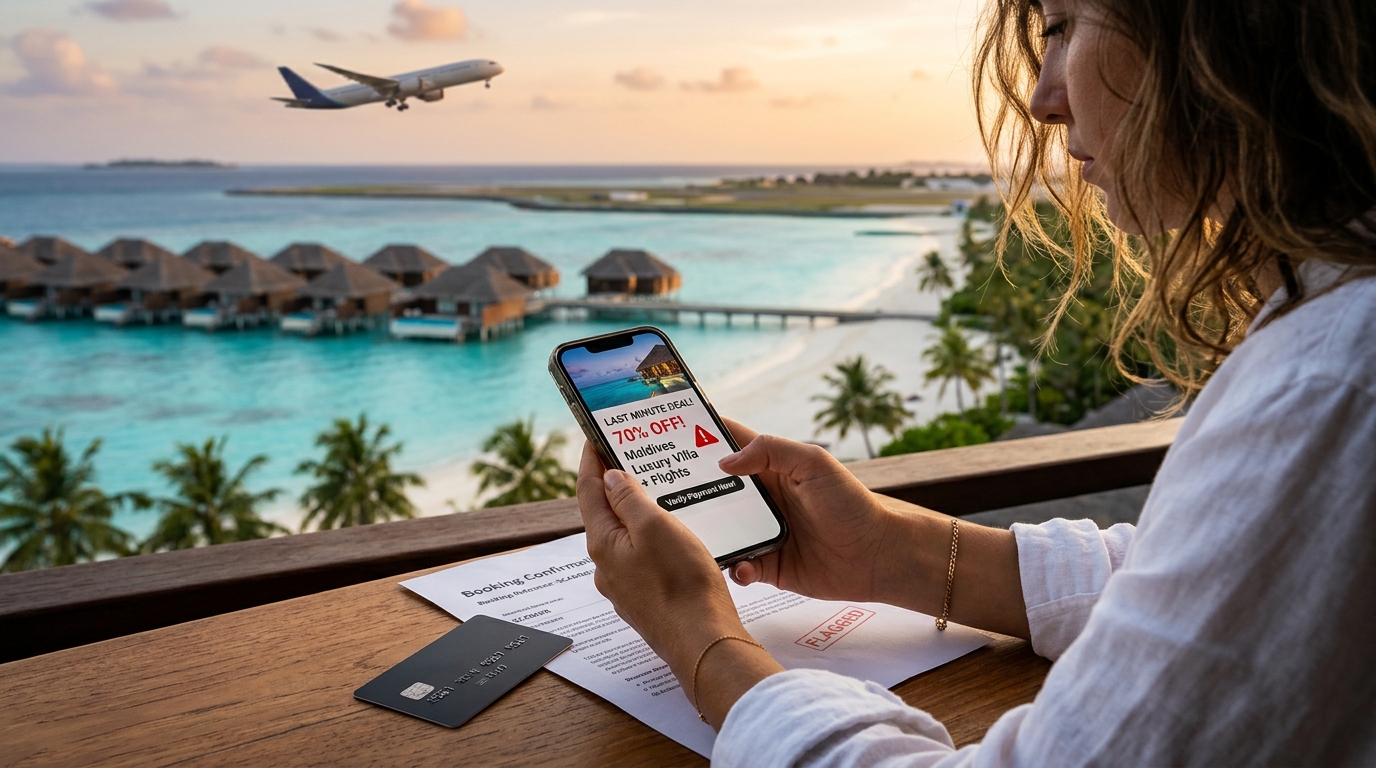
The holiday season brings exciting travel opportunities. However, it also attracts scammers targeting people planning vacations. Fake travel deals can turn an exciting trip into an expensive mistake.
Scammers create convincing websites, advertise unrealistic discounts, and send fraudulent booking confirmations. Therefore, travelers must recognize warning signs before making payments.
This guide explains how to identify fake travel deals and avoid booking scams. Follow these practical tips to protect your money and travel plans.
Be Careful With Travel Deals That Look Too Cheap
Unusually low prices often indicate potential travel scams. Fraudsters advertise luxury hotels, international flights, and holiday packages at unbelievable prices.
For example, a five-star resort might advertise rooms at 70% below normal rates. Such offers deserve careful investigation.
However, genuine discounts do exist. Therefore, compare prices across several trusted booking platforms before purchasing.
Check the Travel Booking Website Carefully
Fake booking websites often copy the appearance of legitimate travel companies. They may use similar logos, colors, and website layouts.
Nevertheless, small details can reveal fraudulent websites.
Before booking, check these elements:
- Website spelling and domain name.
- Secure HTTPS connection.
- Working customer support details.
- Clear cancellation and refund policies.
- Genuine company information.
- Consistent branding and contact details.
Additionally, search the website’s name alongside words like “scam” and “reviews.”
Never Trust Pressure-Based Booking Offers
Scammers frequently create urgency to stop travelers from thinking carefully.
Messages might claim that only one hotel room remains. Others demand immediate payment to secure a limited-time discount.
Although legitimate travel platforms sometimes display limited availability, pressure should never replace verification.
Take your time, compare prices, and confirm booking details. A genuine travel opportunity should withstand basic checks.
Verify Hotels and Vacation Rentals Before Paying
Fake accommodation listings remain a common travel risk. Scammers steal property photographs and advertise places they do not own.
Consequently, travelers may pay deposits for nonexistent apartments or unavailable hotel rooms.
Use these steps to verify accommodation:
- Search the property name independently.
- Compare photographs across different websites.
- Check recent guest reviews.
- Confirm the exact property address.
- Contact the hotel through its official website.
- Avoid sending deposits to unknown personal accounts.
Furthermore, reverse-image searches can help identify stolen property photographs.
Watch Out for Fake Flight Booking Confirmations
Some scammers send convincing flight confirmations without purchasing actual tickets.
These documents may include airline logos, passenger information, and fake booking references.
Therefore, never assume an email confirms your reservation.
Visit the airline’s official website and check your booking reference. Confirm that your ticket appears in the airline’s reservation system.
If the airline isn’t able to find your reservation, get in touch with the travel agency right away.
Avoid Unusual Payment Methods
Payment methods can reveal important warning signs.
Fraudsters often request wire transfers, cryptocurrency, gift cards, or direct payments to personal accounts. These methods can make recovering stolen money difficult.
Instead, use reputable booking platforms and payment methods offering buyer protection.
Additionally, check the merchant’s name before confirming transactions. Never share card details through suspicious links or unsecured messages.
Research Travel Agencies Before Making Reservations
Not every online travel agency operates legitimately. Some websites advertise attractive packages without having genuine travel arrangements.
Before booking, investigate the company’s background.
Check its registration details, business address, customer reviews, and contact information. Also, look for complaints about missing refunds or cancelled reservations.
Most importantly, contact the company using independently verified information.
Recognize Fake Holiday Giveaway Scams
Holiday giveaways often attract travelers looking for affordable vacations.
Scammers advertise free flights, hotel stays, and luxury holiday packages. However, winners must supposedly pay processing fees or provide personal information.
These promotions may also request credit card details.
Therefore, verify giveaways through the company’s official social media accounts or website. Never pay unexpected fees to claim an unverified prize.
Protect Your Personal and Financial Information
Fake travel websites may collect sensitive information through fraudulent booking forms.
Criminals can misuse passport details, payment information, and personal identification documents.
To reduce these risks:
- Use trusted booking websites.
- Enable two-factor authentication.
- Avoid public Wi-Fi during payments.
- Never share verification codes.
- Use strong, unique passwords.
- Monitor your bank transactions regularly.
Additionally, avoid opening unexpected booking links received through messages.
Read Cancellation and Refund Policies Before Booking
A cheap travel package becomes expensive when cancellation rules are unclear.
Some fraudulent websites advertise flexible bookings without offering genuine refund options.
Therefore, read the complete cancellation policy before paying.
Check refund deadlines, cancellation charges, travel date changes, and additional fees. Also, save screenshots of important booking terms.
Written confirmation can help resolve disputes later.
Use Trusted Platforms and Official Travel Websites
Established booking platforms generally provide clearer customer support and reservation processes.
However, even recognizable platforms can contain fraudulent third-party listings.
Always verify the actual service provider before confirming reservations.
For flights, check directly with the airline. For hotels, confirm reservations through the property’s official contact channels.
This extra step can prevent unnecessary booking problems.
Know What to Do If You Encounter a Travel Scam
Quick action can reduce financial losses when a booking scam occurs.
If you suspect fraud, follow these steps:
- Contact your bank or card provider immediately.
- Request a payment dispute or transaction reversal.
- Change passwords for affected accounts.
- Save emails, receipts, and booking screenshots.
- Report the suspicious website or advertisement.
- Contact the legitimate airline or hotel if impersonated.
Additionally, report suspected fraud to the relevant consumer protection or cybercrime authority in your country.
Final Thoughts
Fake travel deals and booking scams become especially tempting during the holiday season. However, careful research can protect your travel budget.
Always compare prices, verify booking websites, and investigate accommodation providers. Furthermore, avoid suspicious payment requests and unrealistic discounts.
Most importantly, never let booking pressure influence your financial decisions. A few minutes of verification can save you money, time, and holiday disappointment.