

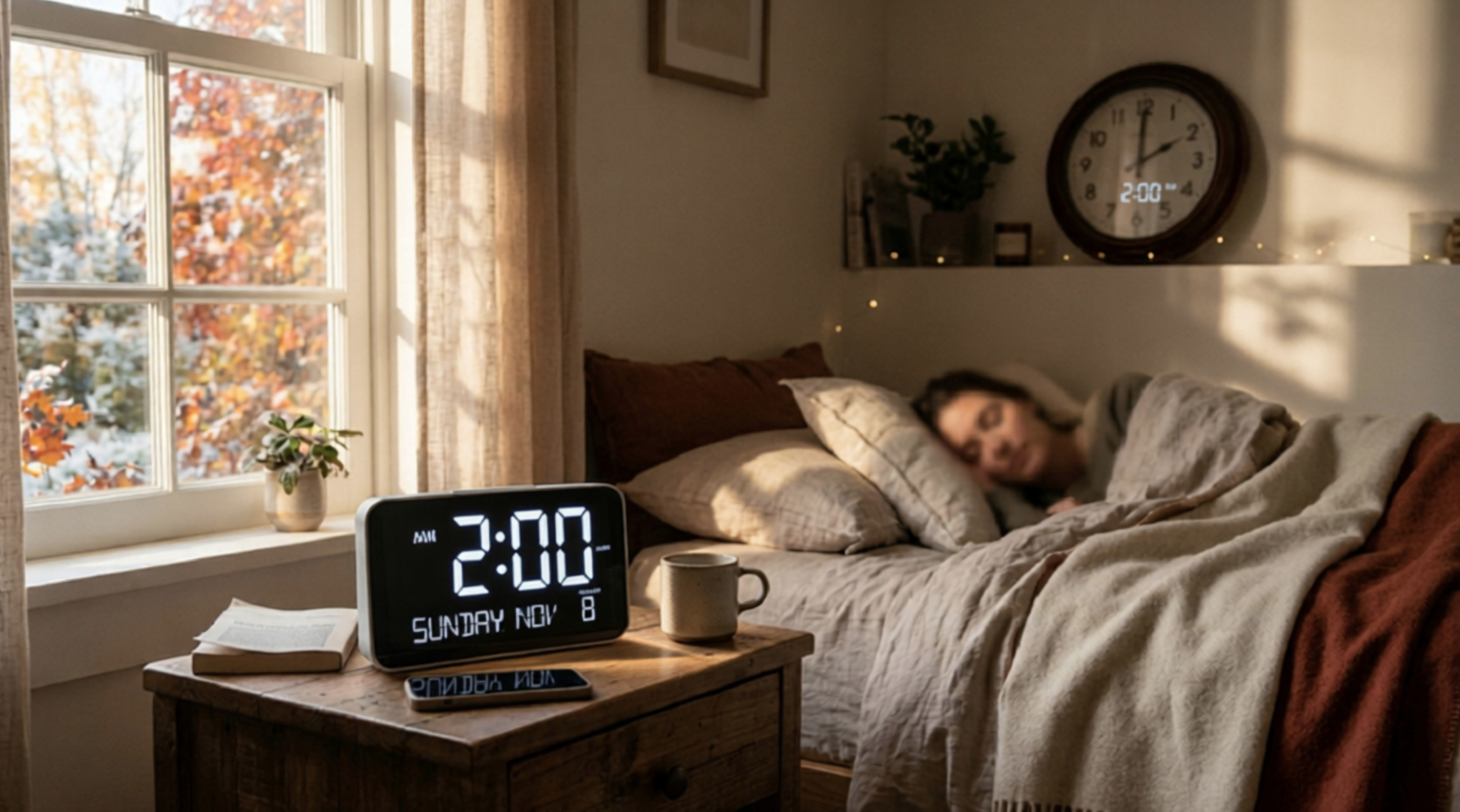
Daylight Saving Time ends in November across most of the United States. People turn their clocks back one hour, gaining an extra hour overnight. However, this seasonal change affects more than daily schedules.
The time shift also influences sleep patterns, energy levels, and morning routines. Although gaining an hour sounds beneficial, your internal body clock needs time to adjust. Understanding these changes can help you protect your sleep and maintain better health.
Why Does Daylight Saving Time End in November?
Daylight Saving Time shifts the clocks at certain times of year so people can make more use of daylight. During warmer months, clocks move forward one hour. This change provides more daylight during evening activities.
However, shorter autumn days bring earlier sunsets. Therefore, most participating US regions return to standard time in November. People move their clocks backward by one hour.
Across the United States, clocks go back when Daylight Saving Time ends on the first Sunday in November. In 2026, that date falls on November 1.
The change gives people more morning daylight. However, evenings become darker earlier. This shift affects work schedules, outdoor activities, and sleeping habits.
What Happens When Clocks Fall Back One Hour?
When clocks fall back, 2:00 a.m. becomes 1:00 a.m. This creates an additional hour on the clock.
Consequently, people may feel they have more time to sleep. However, the body does not immediately recognize the clock change.
Your circadian rhythm controls your natural sleep-wake cycle. It responds to daylight, darkness, meals, and daily activities.
Therefore, changing the clock can temporarily disrupt this internal schedule. Some people wake earlier than usual, while others feel sleepy sooner.
How Daylight Saving Time Affects Your Sleep
1. Your Body Clock Needs Time to Adjust
Your internal clock follows a natural 24-hour rhythm. It helps regulate sleep, alertness, and hormone production.
However, the November time change can temporarily shift this rhythm. Your usual bedtime may suddenly feel different.
As a result, you might experience difficulty falling asleep. The time change can leave some people waking up earlier than they’d like.
2. Morning Light Changes Your Sleep Pattern
Standard time brings daylight earlier in the morning. This additional morning light helps regulate your circadian rhythm.
Moreover, natural light supports the body’s sleep-wake signals. It helps your brain understand when to feel alert.
However, darker evenings can encourage earlier sleepiness. Your body may begin preparing for bedtime sooner.
3. You May Experience Temporary Sleepiness
The time change can affect your energy during the first few days. Some people experience daytime tiredness or reduced concentration.
Additionally, changes in sleep timing can affect mood. You might feel less energetic during your normal activities.
Fortunately, many people adjust within several days. Maintaining a consistent routine can make this transition easier.
Why Sleep Quality Matters After the November Time Change
Getting enough sleep supports physical and mental health. Adults generally need at least seven hours each night.
However, sleep quality matters alongside total sleeping time. Frequent interruptions can leave you feeling tired the following morning.
Poor sleep can also affect concentration and decision-making. Therefore, protecting your nighttime routine becomes especially important during seasonal changes.
Furthermore, consistent sleep supports immune function and emotional well-being. A stable schedule helps your body maintain its natural rhythm.
How to Adjust Your Sleep Schedule After Clocks Fall Back
1. Maintain a Consistent Bedtime
Go to bed at approximately the same time every night. Also, wake up consistently throughout the week.
This routine helps your body maintain a predictable sleep schedule. Avoid making unnecessary changes during the adjustment period.
2. Get Natural Morning Sunlight
Spend some time outside after waking up. Morning sunlight helps regulate your internal body clock.
Even a short outdoor walk can support this process. Additionally, natural light can improve daytime alertness.
3. Limit Screen Time Before Bed
Phones, tablets, and computers can interfere with bedtime routines. Bright screens may also delay your body’s preparation for sleep.
Therefore, reduce screen exposure before going to bed. Consider reading or enjoying another relaxing activity instead.
4. Avoid Late-Day Caffeine
Coffee, tea, and energy drinks contain caffeine. Consuming them late can make falling asleep more difficult.
Try limiting caffeine during the afternoon and evening. This simple adjustment can support better nighttime rest.
5. Create a Comfortable Sleeping Environment
Keep your bedroom quiet, dark, and comfortably cool. Also, choose bedding that supports comfortable sleeping.
Avoid unnecessary noise and bright lighting. A relaxing environment makes it easier to maintain healthy sleep habits.
Who May Experience Greater Sleep Disruption?
Not everyone responds to the November clock change equally. However, certain groups may notice stronger effects.
People with irregular work schedules can experience additional challenges. Shift workers often struggle to maintain consistent sleeping hours.
Children may also need time to adjust. Their established bedtime routines can become temporarily disrupted.
Furthermore, people with existing sleep difficulties may notice changes. Maintaining consistent daily habits can help reduce unnecessary disruption.
Does the November Time Change Improve Sleep?
The November time change offers an extra clock hour. However, this does not guarantee better sleep.
Some people enjoy the additional morning rest. Others experience earlier waking or changes in nighttime sleepiness.
The biggest benefit comes from adjusting your routine consistently. Natural morning light and regular bedtimes support healthier sleep patterns.
Ultimately, your body’s internal clock matters more than the number displayed on your clock.
Final Thoughts
Daylight Saving Time ends in November, bringing earlier morning daylight and darker evenings. Although the change provides an extra clock hour, your body still needs time to adjust.
Fortunately, simple habits can make the transition easier. Maintain consistent bedtimes, enjoy morning sunlight, and limit caffeine before sleep.
Most importantly, prioritize sufficient and consistent rest. These small adjustments can help you maintain energy, concentration, and better sleep throughout November.