

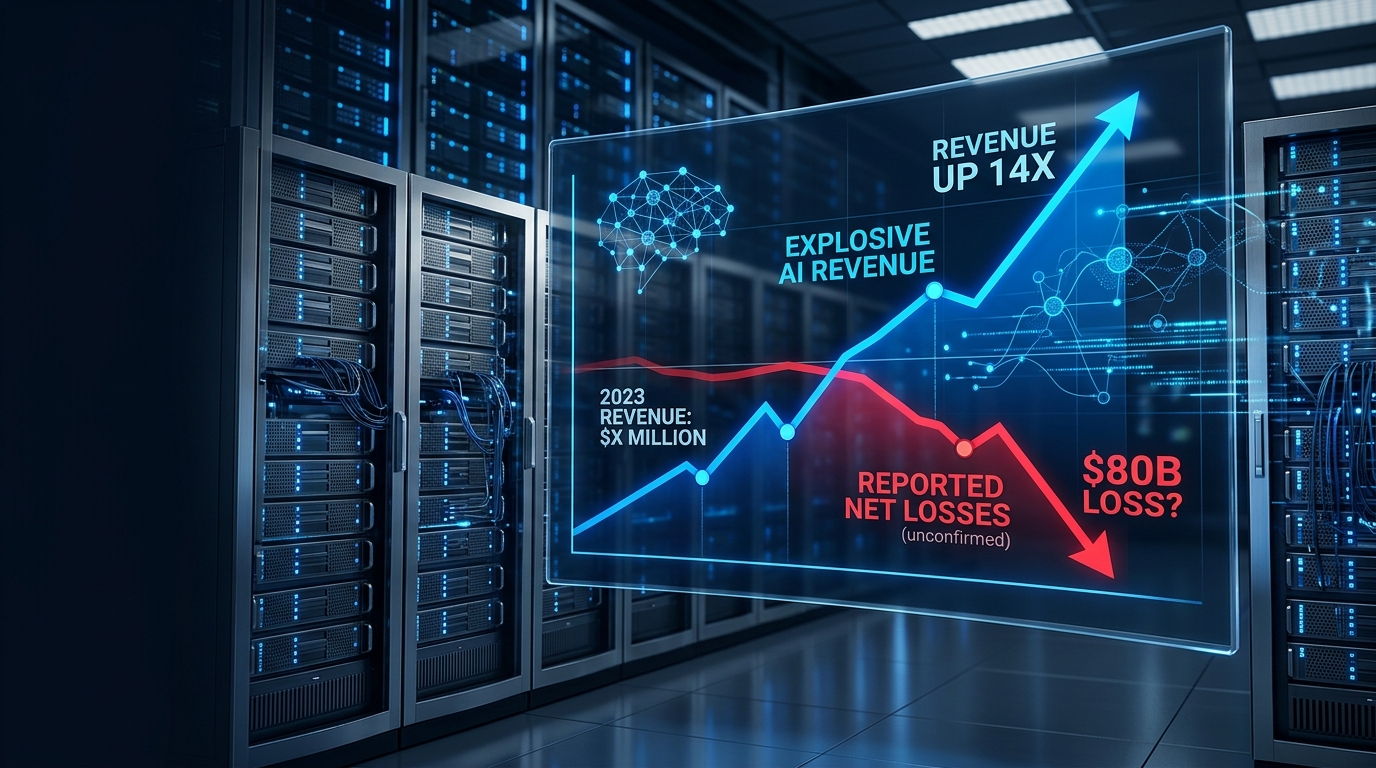
Anthropic’s reported financial figures highlight the enormous costs of competing in artificial intelligence. The company has attracted attention for its rapid revenue growth and substantial spending. However, its reported losses raise important questions about the economics of advanced AI.
Revenue growth can signal strong demand, but it does not guarantee profitability. Meanwhile, developing powerful AI models requires expensive computing infrastructure, specialized talent, and continuous research. Together, these factors reveal the financial challenges facing leading AI companies.
Anthropic’s IPO S-1 Puts AI Economics Under the Spotlight
An S-1 registration statement provides investors with detailed information about a company preparing to go public. It typically includes financial statements, business risks, operating expenses, and management disclosures.
If Anthropic’s filing reports approximately $80 billion in losses, investors will want to understand the underlying numbers. Specifically, they will examine whether those losses represent accumulated deficits, operating losses, or another financial measure.
These distinctions matter because each figure tells a different story. Therefore, readers should examine the reporting period and accounting definitions before drawing conclusions.
How Revenue Could Grow 14-Fold
A 14-fold increase in revenue would represent extraordinary growth. It would suggest that customers are adopting Anthropic’s AI products at a much faster pace.
The company serves customers through products such as Claude, its family of AI models. Businesses can use these models for coding, research, customer support, writing, and workflow automation.
Moreover, companies increasingly want AI tools that improve productivity. This demand can create new opportunities for providers offering reliable, capable models.
However, rapid growth does not automatically produce healthy margins. A company can generate substantially more revenue while spending even more to support its expansion.
Why Developing AI Models Costs So Much
1. Computing Infrastructure
Training and operating advanced AI models requires substantial computing resources. Companies need specialized processors, data centers, networking equipment, and electricity.
Furthermore, inference costs continue whenever customers interact with an AI model. As usage increases, providers must manage these expenses carefully.
Consequently, rising demand can increase both revenue and operating costs. The financial outcome depends on how efficiently a company serves its customers.
2. Research and Engineering Talent
Anthropic competes for experienced researchers, engineers, and infrastructure specialists. These professionals help develop models, improve safety, and maintain reliable systems.
However, recruiting and retaining specialized talent can be expensive. Compensation, research programs, and infrastructure teams can place considerable pressure on operating budgets.
At the same time, competitors are investing heavily in similar capabilities. Therefore, reducing spending too aggressively could weaken a company’s position.
3. Product Development and Safety
Advanced AI systems require extensive testing, evaluation, and ongoing improvements. Companies also need security measures and safeguards to reduce harmful outputs.
In addition, enterprise customers expect dependable performance and strong privacy protections. Meeting these requirements takes time, expertise, and financial resources.
These investments may support long-term growth. Nevertheless, they can delay profitability when expenses rise faster than revenue.
Why Revenue Growth Does Not Guarantee Profit
Revenue is the income a business brings in through the products or services it provides. Profit reflects what remains after the relevant expenses are deducted.
For example, imagine an AI company generates $10 billion in annual revenue. If its operating costs and other expenses exceed that amount, it can still report a loss.
Similarly, a 14-fold revenue increase would not guarantee success if infrastructure, research, and other costs grew even faster.
Investors therefore examine gross margins, operating expenses, cash flow, and spending commitments. These metrics help reveal whether growth is becoming financially sustainable.
What an $80 Billion Loss Figure Could Mean
A headline figure can be misleading without its accounting context. Accumulated losses over several years differ significantly from losses recorded during one reporting period.
For instance, an accumulated deficit reflects historical losses that have built up over time. An annual operating loss instead measures the shortfall from operating activities during a specific period.
Additionally, cash spending and accounting losses are not identical. Noncash expenses and investment timing can affect reported results.
Therefore, investors should verify the precise figure, reporting period, and accounting category. Without those details, the $80 billion headline cannot establish Anthropic’s current financial position.
Can Anthropic Turn Rapid Growth Into Profitability?
Anthropic could improve its financial performance through several strategies. First, it could reduce the computing cost associated with each customer interaction.
Second, the company could focus on enterprise customers with recurring demand. Predictable contracts may help improve revenue visibility and resource planning.
Third, Anthropic could optimize its models for different workloads. Smaller or more efficient models may handle routine tasks at lower costs.
Finally, disciplined spending could help the company prioritize commercially valuable research. However, these improvements would need to outpace continued investment and competitive pressure.
What Investors Should Watch Before an Anthropic IPO
Investors should evaluate more than headline revenue growth. Several financial indicators can help explain the company’s underlying performance.
- Revenue growth: Is customer demand continuing to expand?
- Gross margin: Is each dollar of revenue becoming more profitable?
- Operating expenses: Are research and infrastructure costs growing sustainably?
- Cash flow: How fast is the business spending the cash it has on hand?
- Customer concentration: Does a large share of the company’s income come from just a few customers?
- Capital requirements: Will future expansion require additional funding?
Together, these indicators provide a clearer picture of financial health. They also help investors distinguish commercial momentum from sustainable profitability.
Conclusion: Anthropic’s Growth Story Needs Financial Context
Anthropic illustrates the tension between rapid AI adoption and the high cost of building advanced technology. Strong revenue growth can demonstrate market demand, but it cannot guarantee financial success.
If the reported 14-fold revenue increase and $80 billion loss figure are accurate and comparable, investors will need detailed disclosures to understand their implications. The exact accounting definitions remain essential.
Ultimately, Anthropic’s long-term prospects will depend on revenue quality, computing efficiency, competitive strength, and spending discipline. Until its figures are verified against reliable filings, investors should treat the headline cautiously.