

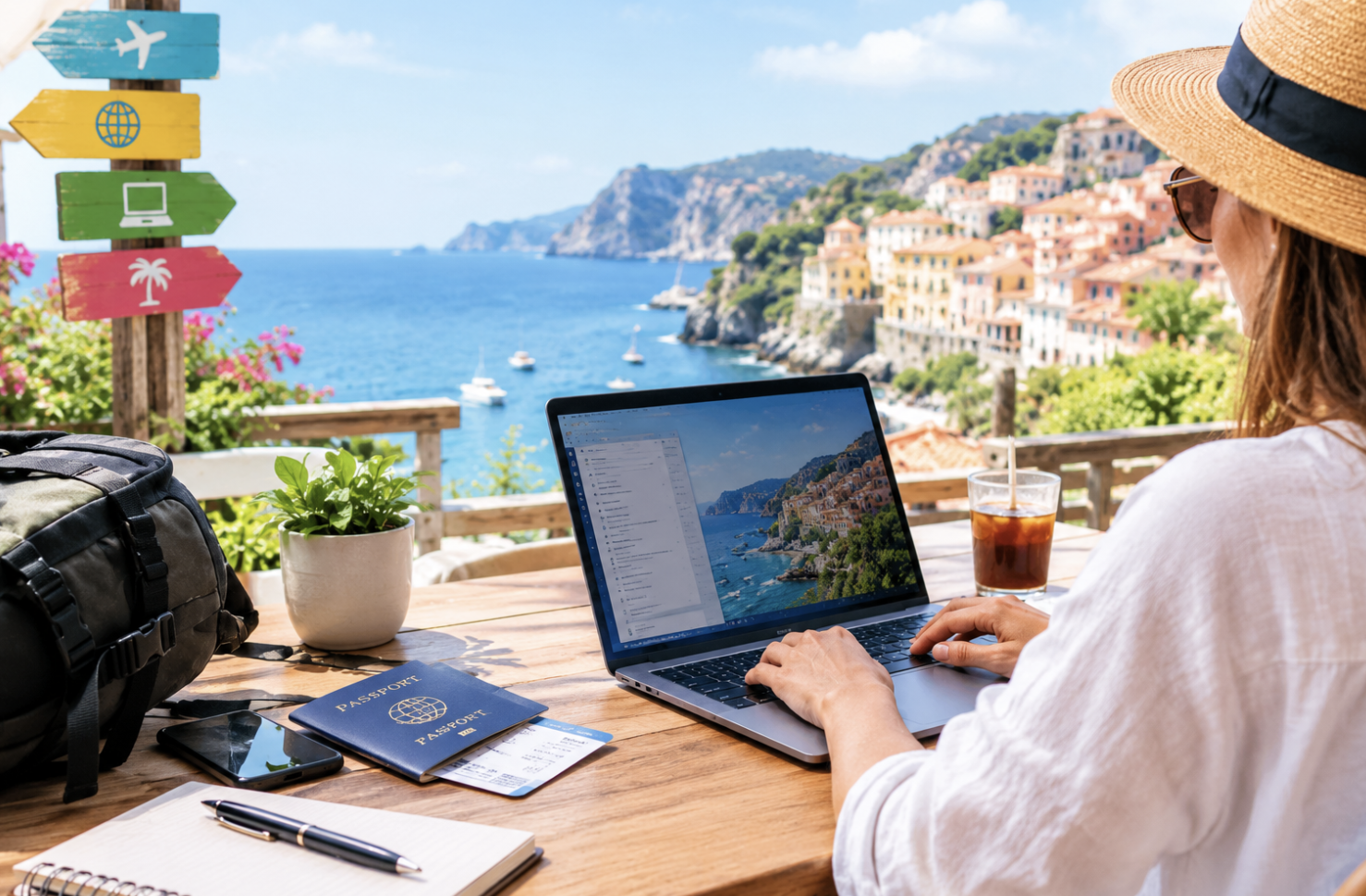
A software developer spent two years working remotely from a series of short-term tourist visas, constantly worried about overstaying and unable to sign a proper lease or open a local bank account. When her chosen country introduced a dedicated digital nomad visa, she finally had legal clarity to settle in for a full year, rent an apartment properly, and stop watching the calendar anxiously. This guide explains how these visas work and what to consider before applying.
What a Digital Nomad Visa Allows
A digital nomad visa permits someone to legally live in a country for an extended period while working remotely for an employer or clients based elsewhere, distinct from a standard tourist visa that typically prohibits any form of work, even fully remote work for a foreign employer.
- Legal residency for an extended period, often six months to several years
- The right to work remotely for foreign employers or clients
- Sometimes includes access to local banking and other essential services
- Usually doesn’t grant the right to work for a local employer within that country
Common Eligibility Requirements Across Different Countries
- Proof of remote employment or sufficient freelance income from outside the host country
- A minimum income threshold, varying by country and cost of living
- Valid health insurance covering the full duration of the stay
- A clean criminal background check from the applicant’s home country
How Digital Nomad Visa Programmes Vary by Country
Different countries have designed their digital nomad visa programmes with distinct income requirements, application processes, and permitted stay lengths, reflecting each country’s own economic goals and tolerance for temporary foreign residents. Some countries specifically designed their programme to attract higher-earning remote professionals, while others have set more accessible income thresholds to attract broader participation.
Tax Implications Many Applicants Overlook
- Spending too long in a country can trigger local tax residency regardless of visa type
- Many countries define tax residency based on days physically spent within the country
- Some digital nomad visas include specific tax exemptions or reduced rates
- Consulting a tax professional familiar with both the home and host country matters
Practical Challenges of the Digital Nomad Lifestyle
Beyond the visa process itself, living as a digital nomad involves practical challenges including reliable internet access, appropriate time zone alignment with employers or clients, and the social difficulty of building community while frequently relocating or living far from established support networks. Many long-term digital nomads eventually settle in one location for an extended period specifically to address these accumulating practical difficulties.
How Employers Are Adapting to Remote Global Workforces
Companies increasingly employ workers spread across multiple countries, requiring updated policies around international payroll, tax compliance, and legal employment status that didn’t exist when most remote work happened within a single country. Some companies now use specialised employer-of-record services specifically to handle the legal complexity of employing digital nomads compliantly across many different jurisdictions.
Choosing the Right Destination for Your Situation
- Cost of living relative to your remote income
- Time zone compatibility with your employer or clients
- Visa application complexity and processing time
- Quality of local internet infrastructure and coworking options
How Digital Nomad Visas Have Affected Local Housing Markets
The influx of relatively high-earning digital nomads into certain popular destinations has, in some cases, contributed to rising local housing costs, creating tension between attracting international talent and spending, and protecting affordability for long-term local residents. Some cities have begun implementing policies specifically aimed at managing this tension, such as limiting short-term rental conversions in residential areas popular among digital nomads.
Building a Sustainable Remote Income Before Applying
Most digital nomad visa programmes require proof of stable, sufficient remote income, making it important for prospective applicants to establish reliable income streams well before beginning the application process, rather than assuming approval based on uncertain or highly variable freelance income. Financial advisors familiar with remote work arrangements often recommend building several months of demonstrated stable income specifically to strengthen a visa application’s chances of approval.
How Healthcare Access Works for Digital Nomad Visa Holders
Healthcare arrangements for digital nomad visa holders vary by country, with some programmes requiring comprehensive private health insurance covering the entire stay, while others allow limited access to public healthcare systems under certain conditions. Understanding a specific country’s healthcare requirements and actual coverage options in practice, rather than assuming standard travel insurance is automatically sufficient, matters before committing to an extended stay.
How Some Countries Use Digital Nomad Visas for Economic Development
Several countries have specifically designed digital nomad visa programmes as part of broader economic development strategies, aiming to attract foreign spending into local economies, in regions with strong tourism infrastructure but historically limited longer-term visitor spending. Early data from some of these programmes suggests meaningful positive economic impact, though measuring the full long-term effect remains an ongoing area of study for researchers and policymakers.
Common Application Mistakes That Delay Approval
- Submitting incomplete financial documentation that fails to clearly demonstrate required income
- Applying for a country’s programme without carefully checking specific eligibility nuances
- Underestimating processing times and applying too close to an intended travel date
- Failing to secure adequate health insurance meeting the specific programme’s requirements
How Remote Work Insurance Products Have Emerged Alongside Visas
As digital nomad visas have grown more common, specialised insurance products designed specifically for remote workers living abroad long-term have also emerged, offering more comprehensive coverage than standard travel insurance typically provides for extended international stays. These products often include coverage for work equipment, extended medical care, and evacuation coverage tailored to someone living and working abroad for months or years rather than taking a short holiday trip.
How Coworking Spaces Have Adapted to Digital Nomad Demand
The growth of digital nomad visa programmes has fuelled significant expansion in the coworking space industry within popular destination countries, with many spaces specifically marketing amenities and community events aimed at attracting this specific, often long-staying demographic. This symbiotic relationship between visa programmes and local coworking infrastructure has become an important factor in why certain destinations have become popular among digital nomads compared to others with similarly attractive visa terms.
How Digital Nomad Communities Have Formed Around Specific Destinations
Popular digital nomad destinations have developed vibrant, self-sustaining communities, complete with regular networking events, shared accommodation arrangements, and informal support networks that help new arrivals navigate local logistics more easily than they could manage entirely independently. These communities have become a draw in their own right, with some digital nomads choosing a specific destination primarily because of its established community rather than purely for its visa terms or cost of living.
How Remote Work Legislation Continues Evolving Globally
Beyond dedicated digital nomad visas, broader remote work legislation continues evolving globally, with some countries updating tax treaties and labour laws specifically to address the growing number of people working remotely across international borders. This broader legislative evolution suggests digital nomad visas represent just one part of a larger, ongoing global adjustment to remote work’s growing prevalence across many different types of employment arrangements.
How Visa Sponsorship Differs From Digital Nomad Programmes
Digital nomad visas differ from traditional employment-based visa sponsorship, since they don’t require a local employer relationship and instead verify income from foreign sources, making them accessible to freelancers and remote employees who wouldn’t qualify for conventional work visa sponsorship at all. Understanding this distinction helps clarify why digital nomad visas have opened international mobility opportunities for a broader range of remote workers than traditional employment-based immigration pathways ever accommodated.
How Currency Fluctuations Affect Digital Nomad Financial Planning
Digital nomads earning income in one currency while spending in another face ongoing currency fluctuation risk that can affect their real purchasing power and financial planning, during periods of significant exchange rate volatility. Experienced digital nomads often maintain financial buffers specifically to weather unfavourable currency swings, and some deliberately choose destinations where their home currency maintains strong purchasing power as part of their overall financial strategy.
Building Professional Networks While Living as a Digital Nomad
Maintaining and building professional networks while living as a location-independent digital nomad requires more deliberate effort than it would for someone working within a single stable professional community, since the usual opportunities for organic in-person networking are more limited during frequent international relocation. Many digital nomads address this by actively participating in coworking space communities and industry-specific online communities specifically designed to help maintain professional connections despite geographic instability.
How Digital Nomad Visa Programmes Compare to Retirement Visas
Digital nomad visas share some structural similarities with retirement visas offered by various countries, both providing extended residency without requiring local employment, though retirement visas typically require proof of pension income or savings rather than active remote work income. Countries offering both programme types sometimes see different demographic profiles between the two visa categories, with implications for local economic impact and community integration that policymakers continue studying.
The Long-Term Career Implications of Extended Digital Nomad Life
Extended periods of digital nomad life can affect long-term career trajectory in ways that vary depending on someone’s specific field and role, with some professionals finding the experience enhances their perceived adaptability and cultural competence, while others in more traditionally structured career paths report difficulty explaining employment gaps or unconventional work arrangements to future employers. Professionals considering an extended digital nomad period should weigh these potential long-term career implications alongside the more immediate lifestyle benefits the arrangement offers.
How Digital Nomad Visas Interact With Existing Immigration Systems
Digital nomad visa programmes typically operate as a distinct category within a country’s broader immigration system, requiring careful legal design to avoid unintended interactions with existing work permit or residency categories. Countries introducing these programmes have generally worked to keep application and renewal processes reasonably streamlined compared to traditional immigration pathways, recognising that excessive bureaucratic complexity would undermine the programme’s core goal of attracting mobile, otherwise easily discouraged remote professionals.
How Digital Nomad Visa Costs Compare Across Popular Destinations
Application fees and ongoing costs associated with digital nomad visas vary between countries, ranging from relatively modest one-time fees to more substantial costs when factoring in required health insurance, proof-of-funds requirements, and any mandatory local registration fees. Comparing the full cost picture, rather than just the headline application fee, helps prospective applicants budget more accurately before committing to a specific country’s programme.
How Digital Nomad Visa Renewal Processes Typically Work
Most digital nomad visa programmes require periodic renewal, involving updated proof of income and sometimes additional documentation, and understanding a specific programme’s renewal timeline and requirements well in advance helps avoid an unwelcome gap in legal status. Some programmes cap total renewal periods, eventually requiring a nomad to either transition to a different visa category or leave the country for a period before reapplying, details worth understanding fully before building longer-term plans around a specific destination.
How Digital Nomads Manage Retirement and Long-Term Savings
Living as a digital nomad can complicate traditional retirement savings approaches, for those working as independent freelancers without access to employer-sponsored retirement accounts common in more traditional employment arrangements. Financial planners familiar with location-independent work increasingly help clients navigate this gap, often recommending self-directed retirement accounts and international tax planning strategies tailored specifically to sustained cross-border remote work arrangements.
How Local Communities Respond to Growing Digital Nomad Populations
Local community reactions to growing digital nomad populations have varied, with some communities welcoming the economic activity these visitors bring while others express concern about rising costs and cultural friction between long-staying foreign visitors and established local residents. Destinations experiencing the most successful long-term digital nomad integration tend to be those that have proactively addressed these community concerns rather than pursuing visa programmes purely for their economic upside without broader community engagement.
Digital Nomad Visa Application Processing Times
Processing times for digital nomad visa applications vary by country, ranging from a few weeks to several months, making it important for prospective applicants to begin the process well ahead of any planned relocation date rather than assuming rapid approval across every programme.
Digital Nomad Visas and Local Language Requirements
Most digital nomad visa programmes don’t require local language proficiency, unlike many traditional immigration pathways, though practical daily life and community integration in a non-English-speaking destination generally benefits from at least basic local language effort regardless of formal visa requirements.
Digital Nomad Visas and Property Ownership Rights
Digital nomad visa holders generally don’t gain automatic property ownership rights in their host country, and those interested in purchasing property while living abroad should research the specific, often more restrictive foreign ownership rules that apply separately from the digital nomad visa itself.
Digital Nomad Visas and Pet Relocation Considerations
Digital nomads planning to bring pets abroad face separate import requirements distinct from their own visa application, often including vaccination records, quarantine periods, and specific documentation that varies by destination country and should be researched well ahead of any planned relocation date.
Digital Nomad Visas and Banking Access Abroad
Opening a local bank account as a digital nomad visa holder can simplify daily financial life, though requirements vary by country, and some banks require proof of local address or a minimum deposit that prospective applicants should research before arrival to avoid unexpected delays.
Final Thoughts
Digital nomad visas have created a legal, sustainable path for remote workers to live abroad for extended periods without the constant uncertainty of stretching a tourist visa’s limits. Understanding each country’s specific requirements, around tax residency, helps remote workers choose a destination and visa programme that fits their financial and lifestyle situation.
Frequently Asked Questions
How long does a typical digital nomad visa last?
Duration varies by country, ranging from six months to several years, with many programmes offering renewal options for those wanting to stay longer.
Can digital nomad visa holders bring family members with them?
Many programmes allow family members to be included as dependents, though specific requirements and any additional income thresholds vary by country.
Do digital nomad visa holders pay local income tax?
This depends on the specific country’s rules and how long someone stays, since exceeding certain thresholds can trigger local tax residency regardless of the visa’s original intended purpose.
Is a digital nomad visa the same as a standard work visa?
No, a digital nomad visa specifically permits remote work for foreign employers or clients, while a standard work visa typically authorises employment with a local employer within that country.
What happens if someone’s remote income drops below the required threshold?
Requirements vary by country, though most require maintaining the minimum income threshold throughout the visa period, and a significant drop could potentially affect visa renewal eligibility.
Which countries currently offer the most accessible digital nomad visas?
Accessibility varies based on income requirements and application complexity, with several countries actively marketing relatively low barriers specifically to attract remote workers and boost local economic activity.