

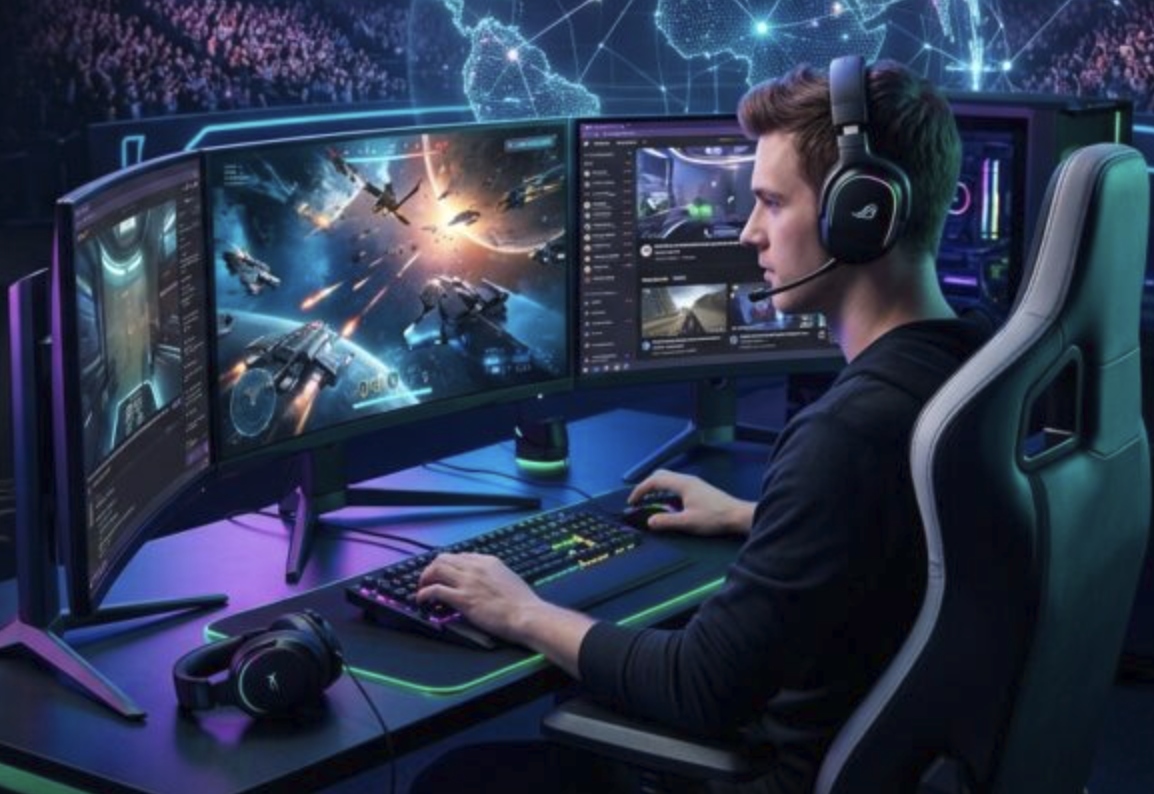
For years, music and movies were treated as the biggest forms of entertainment. However, gaming has quietly grown into a massive global industry, attracting billions of players and generating enormous revenue across consoles, PCs, and mobile devices.
What makes gaming different is that it is not limited to watching or listening. Players actively participate in the experience. They can compete, create, communicate, explore virtual worlds, and build long-term communities around individual games.
This shift has changed the economics of entertainment. A successful game can continue earning money for many years through downloadable content, subscriptions, virtual items, expansions, and live-service updates. A movie, by comparison, generally depends on a much shorter release and distribution cycle.
How Big Is the Gaming Industry?
The global gaming market has expanded far beyond traditional consoles. Today, it includes mobile gaming, PC gaming, console gaming, cloud gaming, esports, game streaming, virtual economies, and gaming-related digital content.
Mobile devices have played a particularly important role. Billions of people already carry smartphones, meaning they do not need to purchase a dedicated gaming system to become players.
Games such as Fortnite, Minecraft, Roblox, League of Legends, and Call of Duty have also demonstrated that gaming can become more than a single product. They can develop into long-running platforms with communities, creators, merchandise, events, and entertainment ecosystems.
This makes the industry difficult to measure using the same framework used for movies or music.
Why Gaming Generates So Much Revenue
One of the biggest advantages of gaming is the ability to monetize players over a long period.
A traditional movie usually earns most of its direct revenue around its theatrical release and subsequent home-entertainment and streaming windows. Music can generate income for years, but individual purchases and streams generally produce relatively small amounts per listener.
Gaming offers multiple revenue opportunities from the same audience.
A player might download a free game and later purchase:
- Cosmetic items
- Battle passes
- Expansion packs
- Downloadable content
- Character upgrades
- Virtual currency
- Subscription services
- Special editions
- Merchandise
The free-to-play model has been particularly influential. Instead of requiring every player to pay upfront, developers can attract enormous audiences and monetize a smaller percentage of highly engaged users.
Mobile Gaming Changed Everything
The smartphone may be one of the most important devices in the history of gaming.
Before smartphones became widespread, gaming often required expensive hardware. Today, almost anyone with a modern phone can access thousands of games.
This has dramatically expanded the potential gaming audience.
Mobile games also benefit from extremely convenient distribution. Players can discover a game through an app store, advertisement, social media post, or recommendation and start playing within minutes.
The result is a gaming market that reaches people who may never consider themselves traditional gamers.
Gaming Is Also a Social Experience
Another reason gaming has become so powerful is that modern games are increasingly social.
Games are no longer necessarily solitary experiences. Players can communicate through voice chat, text, communities, guilds, clans, and social platforms.
Games such as Roblox demonstrate how virtual environments can become places where people socialize and create experiences rather than simply consume a finished product.
This distinction matters because gaming can combine entertainment with communication.
A group of friends might spend several hours playing together while talking about school, work, sports, relationships, or everyday life. The game becomes the environment in which the social interaction happens.
Esports Turned Games Into Spectator Entertainment
Gaming has also moved beyond participation.
Competitive gaming has created professional players, teams, tournaments, sponsors, broadcasters, and dedicated audiences. Major esports competitions can attract large online and in-person audiences.
This creates an unusual entertainment cycle.
A person can:
- Play a game.
- Watch professional players compete.
- Follow a favorite team.
- Watch gaming creators discuss strategies.
- Purchase related products.
- Return to the game and participate personally.
Traditional entertainment generally separates the audience from the performers. Gaming can blur that boundary.
Gaming Creators Expanded the Industry
YouTube, Twitch, TikTok, and other social platforms have created another layer around gaming.
Gaming creators can build enormous audiences without working directly for a traditional television network, movie studio, or music label.
A creator might produce:
- Gameplay videos
- Reviews
- Tutorials
- Live streams
- Game news
- Challenge videos
- Esports commentary
- Gaming podcasts
- Entertainment content
This creator economy increases the visibility and lifespan of games.
A game does not necessarily disappear after launch. Popular creators can continue producing content around it years later.
Why Movies and Music Still Matter
The growth of gaming does not mean that movies and music have become irrelevant.
Both remain enormous global entertainment industries with powerful cultural influence.
Movies can create shared cultural moments, establish global franchises, and combine storytelling with visual spectacle. Music has an even broader presence because it accompanies everyday activities such as commuting, exercising, working, relaxing, and socializing.
The important difference is that gaming combines many entertainment functions inside one medium.
It can provide storytelling like movies, music like albums, competition like sports, social interaction like social networks, and creator participation like online video platforms.
That combination helps explain its extraordinary growth.
The Rise of Gaming Franchises
Some gaming franchises have developed into global entertainment brands.
A successful game can generate movies, television adaptations, toys, clothing, books, merchandise, theme-park attractions, and other products.
Minecraft is a strong example of gaming’s ability to become a cultural phenomenon. Its influence extends far beyond the original game because players can create their own worlds, videos, communities, and experiences.
Other franchises have similarly expanded into multiple forms of entertainment.
This creates a powerful feedback loop: successful games generate communities, communities create content, content attracts new players, and new players increase the commercial value of the franchise.
Why People Underestimate Gaming
One reason gaming’s size is sometimes overlooked is that its revenue is spread across thousands of companies and millions of transactions.
People easily recognize major movie releases or popular music albums. Gaming is more fragmented.
There are console manufacturers, publishers, independent developers, mobile studios, esports organizations, streaming platforms, creators, hardware manufacturers, accessory companies, and digital storefronts.
The industry therefore looks less like a single entertainment category and more like an enormous ecosystem.
Another factor is perception. Gaming was once associated primarily with children and teenagers. That stereotype no longer accurately represents the modern gaming audience.
Adults make up a major part of the market, while many people who grew up playing games have continued playing throughout their lives.
Gaming’s Future Could Be Even Bigger
The next stage of gaming could expand the industry further.
Cloud gaming may reduce the importance of expensive hardware by allowing users to access games through internet-connected devices. Artificial intelligence could change how games are developed, personalize experiences, and create more dynamic characters and environments.
Virtual and augmented reality could also introduce new forms of interactive entertainment.
At the same time, game developers are experimenting with persistent virtual worlds, user-generated content, cross-platform multiplayer, and increasingly sophisticated online communities.
These developments could make gaming even more integrated into everyday digital life.
The Bigger Picture
Gaming’s growth is not simply about people spending more money on video games. It represents a broader change in how people consume entertainment.
Audiences increasingly want experiences that are interactive, social, personalized, and available whenever they want them.
Gaming naturally fits those expectations.
Instead of sitting back and consuming a finished product, players can influence what happens. They can choose how they play, who they play with, what they purchase, and how they participate in the surrounding community.
That level of participation gives gaming a unique position within modern entertainment.
Conclusion
Gaming has evolved from a niche hobby into a global entertainment ecosystem involving games, creators, esports, communities, streaming, mobile platforms, virtual economies, and major media franchises.
Music and movies remain culturally important, but gaming has developed an unusually broad business model and an exceptionally engaged audience.
The most important part of this transformation is that gaming no longer exists in isolation. It increasingly overlaps with social media, entertainment, technology, sports, and digital culture.
That is why the rise of gaming deserves attention. It is not simply another entertainment trend. Gaming has become one of the central ways people around the world play, communicate, compete, create, and consume digital entertainment.