

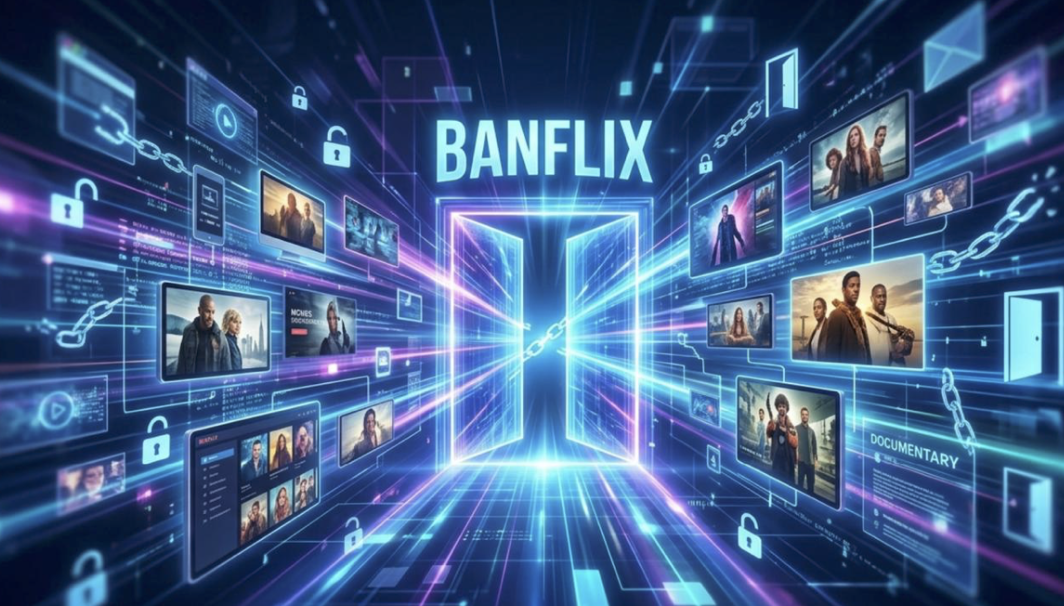
Streaming has completely taken over how people consume movies, shows, and documentaries. Giants like Netflix, Amazon Prime Video, and Disney+ control most of what reaches our screens, and they do so within tight legal, cultural, and corporate boundaries. But as these platforms expand, so does a growing argument about censorship and what gets left out. That’s where the idea of Banflix comes in, a hypothetical platform built specifically around content that’s been pulled, blocked, or never allowed onto mainstream services in the first place.
Banflix isn’t just “another streaming app.” It’s a provocative idea at its core: what if there was a home for everything that got removed elsewhere? Films pulled for political reasons, shows yanked over cultural disputes, copyright-tangled projects, or media that simply doesn’t fit today’s community standards, Banflix imagines a space where all of that could still reach an audience. In my view, this is precisely what makes the concept so polarizing, it directly questions who gets to decide what we’re allowed to see.
What Banflix Is Actually Proposing
At its heart, Banflix is built around two ideas: openness and transparency. Right now, algorithms and corporate policy quietly determine what shows up in your feed and what doesn’t. Banflix flips that, proposing a platform that strips away (or at least loosens) those invisible filters, hosting material that’s been flagged or banned elsewhere.
Picture controversial documentaries, indie films that never got distribution, politically charged projects, boundary-pushing art, or older titles that got buried as standards shifted. Banflix would essentially function as a library of “the stuff nobody else will show you.”
Of course, that raises some heavy questions immediately. Who gets to label something as “banned” versus genuinely harmful? How do you keep illegal content off a platform built on openness? And where exactly does free expression end and responsibility begin?
Free Speech vs. Platform Accountability
This is where Banflix gets genuinely interesting and genuinely messy. Supporters see it as a check against the wave of content moderation sweeping the internet. The argument goes that people deserve access to a wide range of viewpoints and should be trusted to form their own conclusions.
On the flip side, critics point out that content doesn’t always get removed for arbitrary reasons. Misinformation, hate speech, and legal violations are often legitimate grounds for takedowns. Without solid moderation, a platform like Banflix could end up amplifying exactly the kind of harmful material that got it banned in the first place.
According to my experience following these debates, this tug-of-war between openness and safety isn’t unique to Banflix, even massive, well-funded platforms struggle with it daily. For something built specifically around “banned” content, though, the stakes are amplified, and how it’s governed would make or break the whole project.
The Tech That Would Have to Power It
For Banflix to actually work, it would need serious infrastructure behind it. Smart categorization, viewer-controlled filters, and clear labeling would be non-negotiable. Rather than simply deleting anything controversial, the platform could lean on warning labels, age gates, and added context so viewers can decide for themselves.
AI could play a role too, not for censorship, but for organization. Tagging and sorting sensitive material so users know what they’re getting into before they click play.
Blockchain is another piece that could fit here. Storing content records on a decentralized ledger would make it harder for any single entity to quietly pull or alter what’s available, reinforcing the platform’s whole “no centralized control” philosophy.
Who Would Actually Use This?
Realistically, Banflix would carve out a small but devoted user base, researchers, journalists, documentary filmmakers, and people genuinely curious about perspectives they can’t find anywhere else.
Mainstream viewers, though, might keep their distance. Being associated with “banned content” comes with baggage, especially in countries with stricter media laws.
And that’s the other wrinkle: what’s banned varies wildly by region. A documentary that’s fine in one country might be completely illegal in another. Every global platform deals with this to some degree, but for Banflix, it’s baked into the platform’s entire identity.
The Legal Minefield
This is probably the biggest obstacle. Hosting content that’s been banned or pulled elsewhere opens the door to copyright disputes, defamation claims, and regulatory headaches across multiple jurisdictions.
To survive long-term, Banflix would need real licensing deals, user verification systems, and serious legal compliance work. Skip any of that, and the platform risks getting shut down fast.
There’s also an ethical dimension. Giving controversial material a platform can spark valuable conversations, but it can just as easily give harmful ideas more oxygen if there’s no responsible framework in place.
Could It Actually Change Anything Culturally?
If it pulled this off, Banflix could genuinely shift how digital culture works. Giving suppressed or marginalized creators a real outlet could open the door to more experimental, unconventional storytelling that mainstream platforms wouldn’t touch.
Even people who disagree with the entire premise might find the conversations it sparks, about bias, censorship, and who controls what we watch, worthwhile.
How It Stacks Up Against Netflix, YouTube, and the Rest
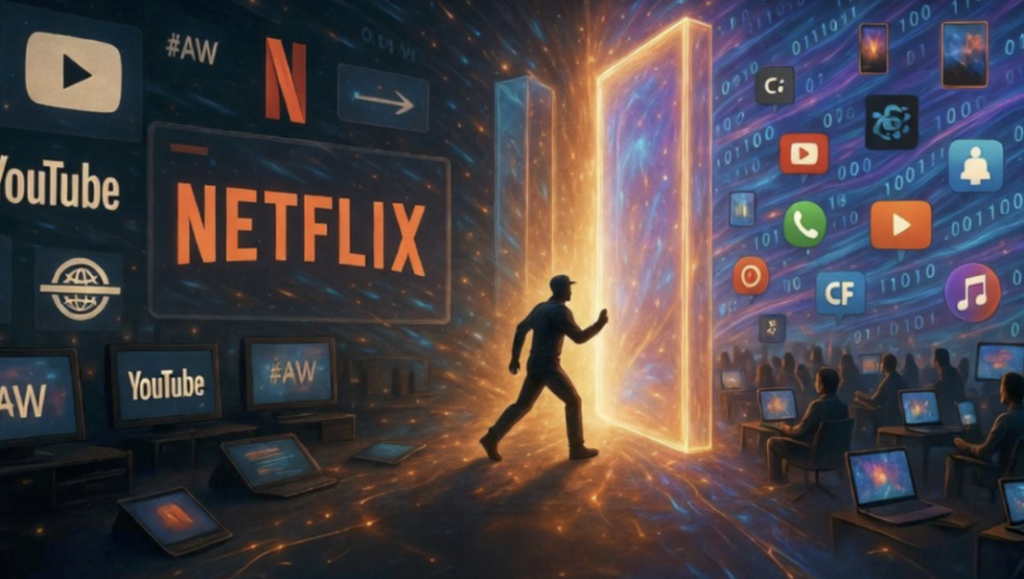
Traditional platforms are built around advertiser-friendly, brand-safe curation. Banflix would flip that script entirely, not by having zero rules, but by applying them differently. Instead of “remove first,” it’s “add context and let the viewer choose.”
That difference is what makes Banflix stand out, but it also puts it under a microscope. Credibility would be everything.
Where Does This Go From Here?
Banflix taps into a bigger movement toward decentralization and giving users more control over what they see. As more people become aware of how curated their media diets really are, the appetite for alternatives like this could keep growing.
Done right, it could become a genuinely influential platform. Done wrong, it becomes a case study in why these ideas are so hard to pull off.
Final Thoughts
Banflix is a bold, messy, and honestly fascinating concept. By centering itself on banned and restricted content, it forces a conversation about censorship, access, and who really controls what we get to watch, questions that aren’t going away anytime soon.
Frequently Asked Questions
1. Is Banflix a real streaming platform right now?
No, Banflix is a conceptual idea rather than an existing, launched service. It represents a discussion around what a platform built for banned or restricted content could look like.
2. How would Banflix decide what counts as “banned” content?
This remains one of the biggest open questions. A working version would likely need clear, transparent criteria along with labeling and contextual information rather than blanket bans.
3. Would Banflix be legal to use?
Legality would depend heavily on licensing agreements, regional laws, and how the platform handles copyright and regulatory compliance, it’s a major hurdle for any such project.
4. Who would be most interested in a platform like Banflix?
Likely a niche audience, journalists, researchers, documentary makers, and viewers seeking perspectives that mainstream platforms don’t carry.
5. Could AI and blockchain actually make Banflix work?
They could help with organization, tagging, and decentralization, but technology alone wouldn’t solve the legal and ethical challenges, those would require real-world policy and oversight.
Read more about Metapushs