

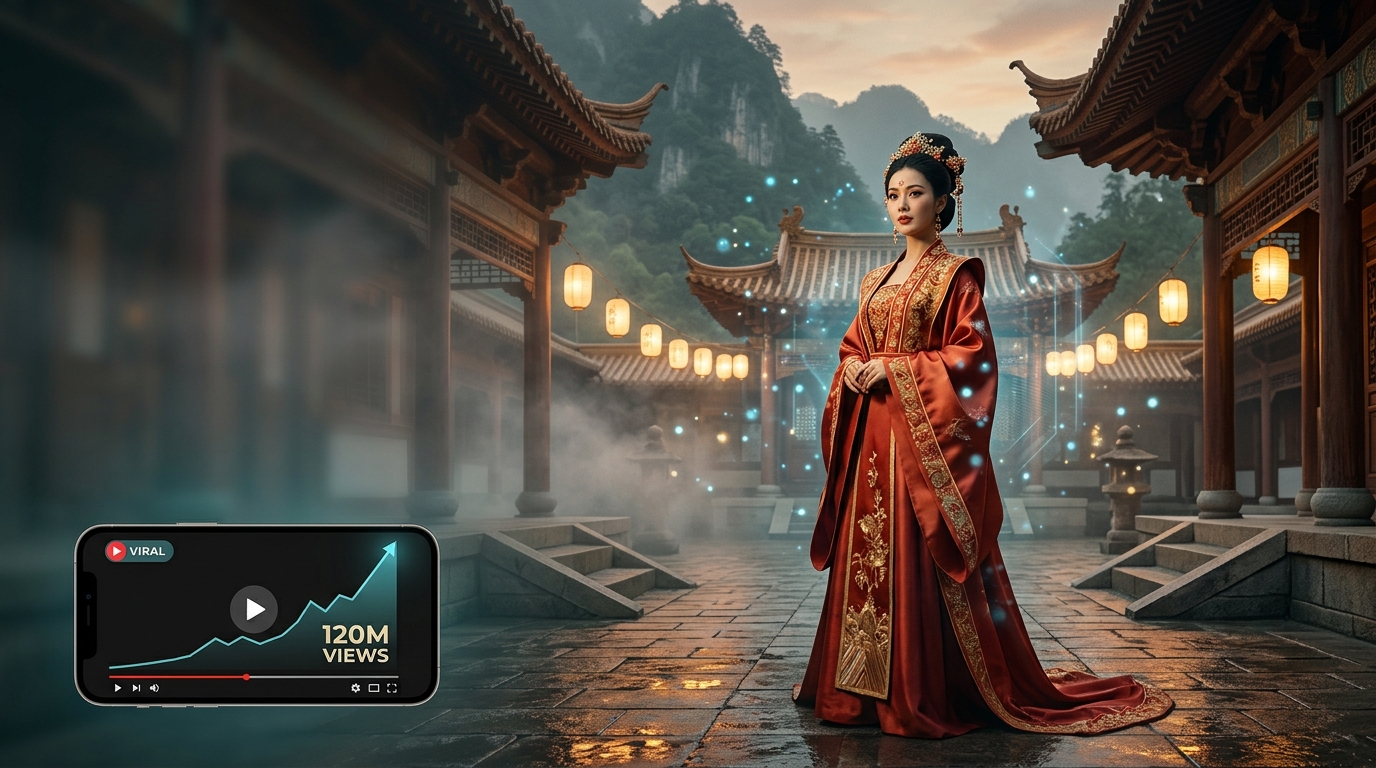
An AI-generated Chinese music video has captured worldwide attention by attracting 120 million views on an almost nonexistent budget. The achievement highlights how artificial intelligence is changing music production, digital storytelling, and online entertainment.
Traditionally, creating a visually impressive music video required expensive cameras, professional crews, locations, and complex editing. However, AI tools are changing that equation. Today, creators can turn simple ideas into cinematic experiences with fewer resources.
Moreover, this viral success raises an important question. Can artificial intelligence help independent creators compete with major entertainment companies?
How AI-Generated Music Videos Are Changing Entertainment
Artificial intelligence has transformed the way creators develop visual content. Instead of relying entirely on traditional filming, they can generate characters, environments, and cinematic scenes using AI-powered tools.
For example, a creator can describe a historical Chinese village, a dramatic mountain landscape, or a futuristic city. An AI video generator can then help turn those ideas into visual sequences.
Consequently, creators can experiment with concepts that would otherwise require significant budgets. They can also produce multiple versions of a scene without organizing another filming session.
However, AI does not automatically create successful content. Creators still need artistic direction, storytelling skills, and a clear understanding of their audience.
Why the Chinese Music Video Attracted 120 Million Views
A viral video rarely succeeds because of one factor alone. Instead, several elements can combine to attract attention and encourage viewers to share the content.
1. Visually Stunning Scenes Grab Attention
First, strong visuals can make viewers stop scrolling. AI-generated environments can feature dramatic lighting, intricate costumes, and imaginative landscapes.
These details can create a cinematic atmosphere that feels different from ordinary social media content. As a result, viewers may watch longer or share the video with friends.
Nevertheless, impressive visuals need a purpose. When every scene supports the music, the overall experience becomes more memorable.
2. Chinese Cultural Elements Create a Distinct Identity
Chinese music and visual traditions offer creators a rich source of inspiration. Traditional clothing, historical architecture, folklore, and distinctive landscapes can give a video a recognizable identity.
Furthermore, cultural details can attract viewers beyond the creator’s home market. International audiences often explore content that introduces them to unfamiliar artistic styles.
However, cultural representation requires care. Creators should research historical details and avoid presenting inaccurate stereotypes as authentic traditions.
3. Music Makes the Visual Experience More Emotional
Music plays a major role in how audiences experience video content. A memorable melody can establish a mood before viewers understand the story.
Meanwhile, carefully timed visuals can strengthen the emotional impact of a song. A dramatic scene during a musical climax, for instance, can make the entire sequence more powerful.
Therefore, successful creators should treat music and visuals as connected elements rather than separate products.
4. Social Media Can Multiply Organic Reach
Platforms such as YouTube, TikTok, and Instagram allow audiences to distribute content through shares, recommendations, and reactions.
When viewers respond positively, a video may reach people beyond its original audience. This creates opportunities for independent creators who lack large advertising budgets.
Additionally, short clips can introduce new audiences to a longer music video. If those clips generate curiosity, viewers may search for the complete version.
Still, viral distribution is unpredictable. No AI tool or publishing strategy guarantees millions of views.
How AI Reduced the Cost of Music Video Production
Traditional music videos can require multiple specialists and expensive equipment. AI tools can reduce several of these expenses by supporting different production stages.
AI Visual Generation Replaces Some Filming Requirements
Creators can generate backgrounds, characters, and individual scenes without visiting physical locations. This approach can reduce travel, location rental, and set construction costs.
Moreover, digital environments allow creators to explore unusual visual ideas. They can create fantasy worlds without building expensive physical sets.
AI Editing Speeds Up Post-Production
AI-assisted editing tools can help creators remove backgrounds, improve footage, generate subtitles, and organize visual sequences.
As a result, smaller teams can complete certain tasks faster. However, professional editing decisions still require human judgment.
Creators must review generated footage for inconsistent faces, unnatural movement, and visual errors. Otherwise, technical problems can weaken the final result.
Smaller Teams Can Produce More Content
AI can help one creator manage tasks that previously required several specialists. For example, a small team might use separate tools for concept development, image generation, video animation, and editing.
Consequently, creators can test different artistic approaches without rebuilding their entire production process.
Even so, AI subscriptions, computing resources, music rights, and revision time can create costs. Almost no budget does not necessarily mean zero expenses.
What Content Creators Can Learn From This Viral Success
The biggest lesson is that expensive production is not the only path to audience attention. A clear creative idea can sometimes outperform a much larger production.
First, creators should develop a recognizable concept before choosing their AI tools. A strong visual identity makes content easier to remember.
Second, they should create an opening that immediately attracts attention. The first few seconds can influence whether viewers continue watching.
Third, creators should match the visuals to the music’s emotional direction. Consistent storytelling helps audiences connect with the experience.
Finally, they should study audience behavior after publishing. Watch time, completion rates, comments, and shares can reveal which elements resonate most strongly.
Can AI-Generated Music Videos Become a Major Industry Trend?
AI-generated music videos are likely to remain an important area of creative experimentation. They offer independent musicians and emerging filmmakers new ways to express ideas.
Furthermore, these tools may make visually ambitious projects more accessible. Artists without access to major studios can explore styles that once required substantial financial resources.
However, the technology also introduces challenges. Copyright ownership, permission to use an artist’s likeness, training-data concerns, and disclosure practices remain important considerations.
Creators must also compete in an increasingly crowded digital environment. As AI-generated content becomes more common, originality and emotional storytelling may become even more valuable.
The Future of Low-Budget Music Video Production
The reported 120 million views demonstrate the attention that an AI-generated Chinese music video can attract. However, the exact production cost and reasons for its success require independent verification.
The broader lesson remains clear. AI is giving creators more options for producing ambitious visual content without traditional production budgets.
Ultimately, technology provides the tools, but creative decisions shape the experience. A compelling song, distinctive visual direction, and effective distribution strategy can work together to reach a global audience.
For independent artists, that combination offers an exciting opportunity to compete in the modern entertainment industry.