

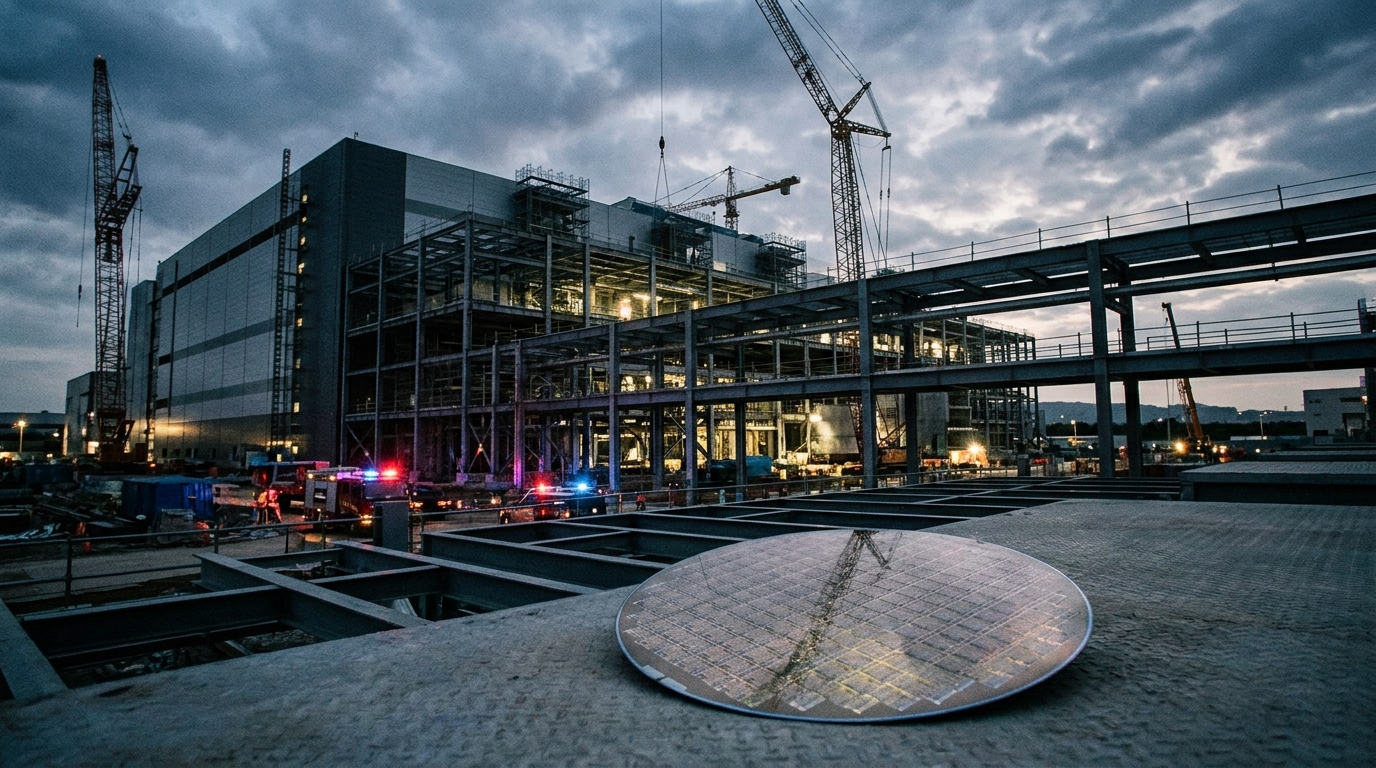
Chipmakers worldwide are under growing pressure to increase output. However, building advanced chip factories involves significant risks, costs, and technical challenges. A fatal accident at a new Taiwan Semiconductor Manufacturing Company (TSMC) plant raises serious questions about industrial safety and expansion plans.
TSMC plays a crucial role in supplying advanced chips to the world. Therefore, any major incident at one of its facilities attracts attention across the technology industry. It also highlights the challenges companies face while racing to meet growing demand for artificial intelligence (AI) chips.
Why TSMC’s New Chip Plant Matters
TSMC is one of the world’s leading semiconductor manufacturers. The company produces chips for major technology businesses, including companies developing smartphones, computers, and AI accelerators.
Moreover, TSMC supports much of the advanced chip supply chain. Its manufacturing capabilities help power data centers, cloud computing services, and next-generation consumer electronics.
Consequently, new factories represent more than ordinary industrial investments. They help determine how quickly chipmakers can expand capacity and serve global customers.
However, these facilities require complex construction, specialized equipment, and strict operating procedures. Even small disruptions can create challenges for contractors, engineers, and production teams.
How a Fatal Accident Could Affect Chip Manufacturing
A fatal workplace accident can trigger investigations, safety reviews, and operational changes. Depending on the circumstances, authorities may examine equipment, construction procedures, training, and contractor practices.
Nevertheless, the impact on semiconductor production depends on where the incident occurred. An accident during construction does not automatically mean that chip manufacturing has stopped.
If investigators identify serious safety concerns, affected work areas could face temporary restrictions. Such measures might delay construction milestones or equipment installation.
Furthermore, contractors may need additional inspections before resuming certain activities. These precautions can increase costs and complicate project schedules.
However, it would be premature to assume that the incident will significantly reduce TSMC’s chip output. Verified information about the accident, its location, and any operational restrictions is essential.
The Growing Pressure of the Global Semiconductor Race
The semiconductor industry is experiencing rising demand for powerful computing hardware. AI companies need advanced processors to train models and operate increasingly complex applications.
Meanwhile, cloud providers continue investing in data centers and specialized computing infrastructure. As a result, manufacturers face pressure to increase capacity while maintaining high quality.
TSMC competes in an industry where manufacturing technology and production scale offer major advantages. Its ability to deliver advanced chips helps determine how quickly customers can introduce new products.
At the same time, competitors and governments are investing in alternative manufacturing capacity. These projects aim to strengthen supply chains and reduce dependence on limited production locations.
Therefore, delays at major chip facilities can attract attention beyond the company itself. Customers, suppliers, and investors all monitor developments that might affect future capacity.
Could the Incident Delay TSMC’s Expansion Plans?
The answer depends on the accident’s severity and its connection to the factory’s construction schedule. A localized incident may have limited consequences if the company can continue unaffected work.
However, a serious event involving critical infrastructure could require broader inspections. In that situation, construction teams might need additional time to meet regulatory and safety requirements.
New semiconductor factories already face demanding technical requirements. They need reliable power, advanced cooling systems, cleanroom environments, and highly specialized manufacturing equipment.
Additionally, installing and calibrating chipmaking tools takes considerable time. Any interruption during these stages can complicate coordination between construction teams and equipment suppliers.
Still, the actual consequences cannot be determined without confirmed details. Readers should distinguish verified project delays from speculation about possible disruptions.
Why Workplace Safety Matters in Semiconductor Manufacturing
Semiconductor facilities combine advanced technology with demanding industrial environments. Construction and manufacturing activities can involve heavy equipment, electrical systems, chemicals, and complex machinery.
Consequently, companies must maintain strong safety procedures throughout every project stage. Effective training, hazard assessments, and equipment inspections can reduce workplace risks.
Contractor management also plays an important role. Major building projects typically require several firms to coordinate their work while meeting demanding schedules.
Therefore, clear communication and consistent safety standards are essential. Companies must ensure that workers understand hazards and know how to report unsafe conditions.
Although rapid expansion is commercially important, safety cannot become secondary to project schedules. Preventing serious incidents protects workers and supports reliable long-term operations.
What the Accident Could Mean for Investors
Investors typically examine semiconductor companies through several factors. These include capital spending, production capacity, customer demand, operating costs, and future revenue.
An accident could become financially relevant if it causes meaningful delays or additional expenses. However, a single incident does not automatically undermine a company’s competitive position.
Investors should look for confirmed information about production interruptions, construction schedules, regulatory findings, and financial implications. Company statements and official investigation updates can help clarify the situation.
Moreover, the wider semiconductor market depends on several interconnected factors. AI demand, export restrictions, competition, and customer spending may have a greater financial impact than an isolated construction incident.
Accordingly, investors should avoid making decisions based solely on dramatic headlines. Reliable information and the incident’s actual consequences matter far more than speculation.
Could Chipmakers Learn From This Incident?
Major semiconductor projects require a balance between speed, technical precision, and worker protection. When an incident occurs, companies may reassess their practices and look for gaps that need attention.
For example, manufacturers may strengthen contractor training or improve coordination between construction teams. They may also introduce additional inspections for equipment and hazardous work areas.
Furthermore, transparent reporting can help workers and the public understand what happened. Thorough investigations can identify contributing factors and support practical corrective measures.
However, improvements should follow evidence rather than assumptions. The specific lessons depend on the confirmed circumstances and findings of the investigation.
The Bigger Picture for the Semiconductor Industry
TSMC’s expansion plans matter because advanced chips support an increasingly digital global economy. From AI data centers to smartphones, many products depend on reliable semiconductor manufacturing.
Nevertheless, production growth requires more than investment and sophisticated equipment. Companies must also manage workplace safety, regulatory compliance, and complex construction schedules.
A fatal accident deserves serious attention because human safety matters independently of its financial consequences. Any potential impact on production should be assessed separately using verified evidence.
Ultimately, the incident’s significance for the semiconductor race will depend on its confirmed effects. Until those details emerge, claims about major supply disruptions or competitive shifts should remain cautious.
The industry must continue expanding capacity responsibly. Reliable manufacturing, strong safety standards, and transparent investigations are all essential to its long-term success.