

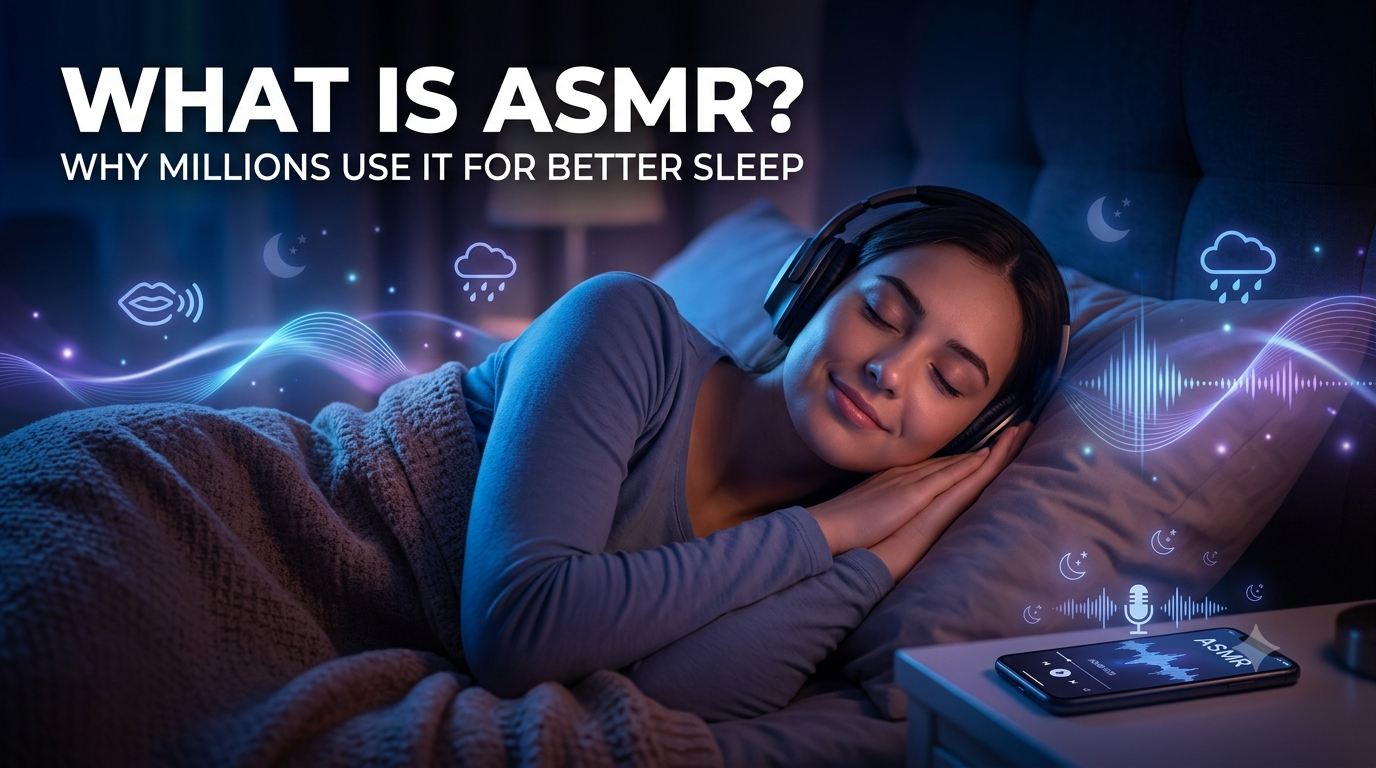
Millions of people around the world listen to whispering voices, tapping sounds, and gentle background noises before going to bed. For some, these sounds create a relaxing sensation that helps them fall asleep faster and reduce stress. This experience is known as ASMR.
Over the last few years, ASMR videos have become one of the most popular categories on platforms like YouTube and TikTok. From soft-spoken stories to the sound of rain and keyboard typing, millions of viewers use ASMR as part of their nighttime routine.
But what exactly is ASMR, and why do so many people believe it helps them sleep better? In this article, we’ll explore the science behind ASMR, its benefits, and why it has become a global trend.
What Is ASMR?
ASMR stands for Autonomous Sensory Meridian Response. It describes a tingling sensation that usually starts on the scalp and moves down the neck and spine.
Many people experience ASMR when they hear certain sounds or watch specific actions.
Common ASMR triggers include:
- Whispering
- Tapping sounds
- Page turning
- Typing on a keyboard
- Rain sounds
- Hair brushing
- Soft speaking
- Crinkling paper
For some people, these sounds create a feeling of calmness and relaxation.
How Does ASMR Work?
Scientists are still studying ASMR, but experts believe it affects the brain in ways that promote relaxation.
ASMR may help by:
- Lowering stress levels
- Reducing anxiety
- Slowing the heart rate
- Creating feelings of comfort
- Improving mood
Many people describe the experience as similar to meditation or mindfulness.
Why Do Millions of People Watch ASMR to Sleep Better?
One of the main reasons people watch ASMR videos is to improve sleep quality.
Here are some possible reasons.
1. It Reduces Stress
Stress is one of the biggest causes of sleep problems. Gentle ASMR sounds may help calm the mind after a busy day.
2. It Creates a Relaxing Environment
Soft whispers and repetitive sounds can create a peaceful atmosphere that makes falling asleep easier.
3. It Blocks Background Noise
ASMR can mask distracting sounds such as traffic, neighbors, or household noise.
4. It Encourages Mindfulness
Listening to ASMR encourages people to focus on the present moment instead of worrying about daily problems.
Popular Types of ASMR Content
ASMR creators produce many different types of content.
Whispering Videos
Creators speak softly to create a calming effect.
Tapping Sounds
Objects such as glass, wood, and keyboards produce satisfying tapping sounds.
Role-Play Videos
Creators pretend to be doctors, teachers, or barbers to create immersive experiences.
Nature Sounds
Rain, ocean waves, and forest sounds are popular ASMR triggers.
Eating Sounds
Some people enjoy videos featuring chewing and food preparation sounds.
Does Everyone Experience ASMR?
No. Not everyone experiences the tingling sensation associated with ASMR.
Some people feel strong relaxation, while others feel nothing at all.
Factors that may influence ASMR include:
- Personality
- Stress levels
- Environment
- Personal preferences
- Sensitivity to sound
Researchers are still trying to understand why ASMR affects some people more than others.
The Science Behind ASMR
Although ASMR research is still developing, several studies suggest that it may have measurable effects on the body.
Possible effects include:
- Lower heart rate
- Reduced anxiety
- Improved mood
- Increased relaxation
However, scientists continue to study how ASMR works and whether its benefits vary from person to person.
Can ASMR Improve Mental Health?
Many people use ASMR to manage stress and anxiety, but it should not replace professional medical treatment.
Some users report that ASMR helps them:
- Feel calmer
- Sleep more easily
- Reduce everyday stress
- Improve concentration
If you struggle with serious mental health issues, it is important to seek advice from a qualified healthcare professional.
Why Has ASMR Become So Popular?
Various elements have played a role in the increasing popularity of ASMR.
Easy Access
Thousands of ASMR videos are available for free online.
Better Audio Technology
High-quality microphones make sounds more realistic and immersive.
Increased Stress Levels
A lot of individuals seek easy and effective methods to unwind after their daily routines.
Social Media Influence
Platforms like YouTube, TikTok, and Instagram have helped ASMR reach millions of viewers.
Common ASMR Triggers
Different people respond to different sounds.
Popular ASMR triggers include:
- Whispering
- Tapping
- Scratching
- Water sounds
- Page turning
- Keyboard typing
- Hair brushing
- Soft breathing
- Crinkling paper
- Pen writing
Experimenting with different triggers can help you discover what works best for you.
Is ASMR Safe?
For most people, ASMR is completely safe.
However, some individuals may find certain sounds annoying or uncomfortable.
To have the best experience:
- Keep the volume at a safe level.
- Use comfortable headphones.
- Avoid listening for long periods at high volume.
- Choose sounds that help you relax.
How to Get Started With ASMR
If you want to try ASMR for sleep, follow these steps:
- Find a quiet place.
- Use headphones for better sound quality.
- Search for different ASMR triggers.
- Listen before bedtime.
- Experiment with different creators and sounds.
You may need to try several types before finding your favorite.
The Future of ASMR
ASMR continues to grow as technology evolves.
Future trends may include:
- Virtual reality ASMR experiences
- AI-generated ASMR sounds
- Personalized sleep content
- Interactive relaxation apps
- Advanced audio technology
As more research becomes available, we may learn even more about how ASMR affects the brain and sleep.
Conclusion
ASMR has become a global phenomenon because millions of people believe it helps them relax and sleep better. Through whispering, tapping, and other soothing sounds, ASMR offers a simple way to reduce stress and create a peaceful bedtime routine.
Although scientists are still studying its effects, many people already consider ASMR an important part of their daily lives. If you struggle to relax at night, experimenting with ASMR might help you discover a new way to unwind.
FAQ’s
1. What does ASMR stand for?
ASMR stands for Autonomous Sensory Meridian Response.
2. Can ASMR help you sleep?
Many people believe ASMR helps them relax and fall asleep faster.
3. Does everyone experience ASMR?
No. Some people experience tingling sensations, while others do not feel anything.
4. Is ASMR scientifically proven?
Research is still ongoing, but some studies suggest that ASMR may reduce stress and promote relaxation.