

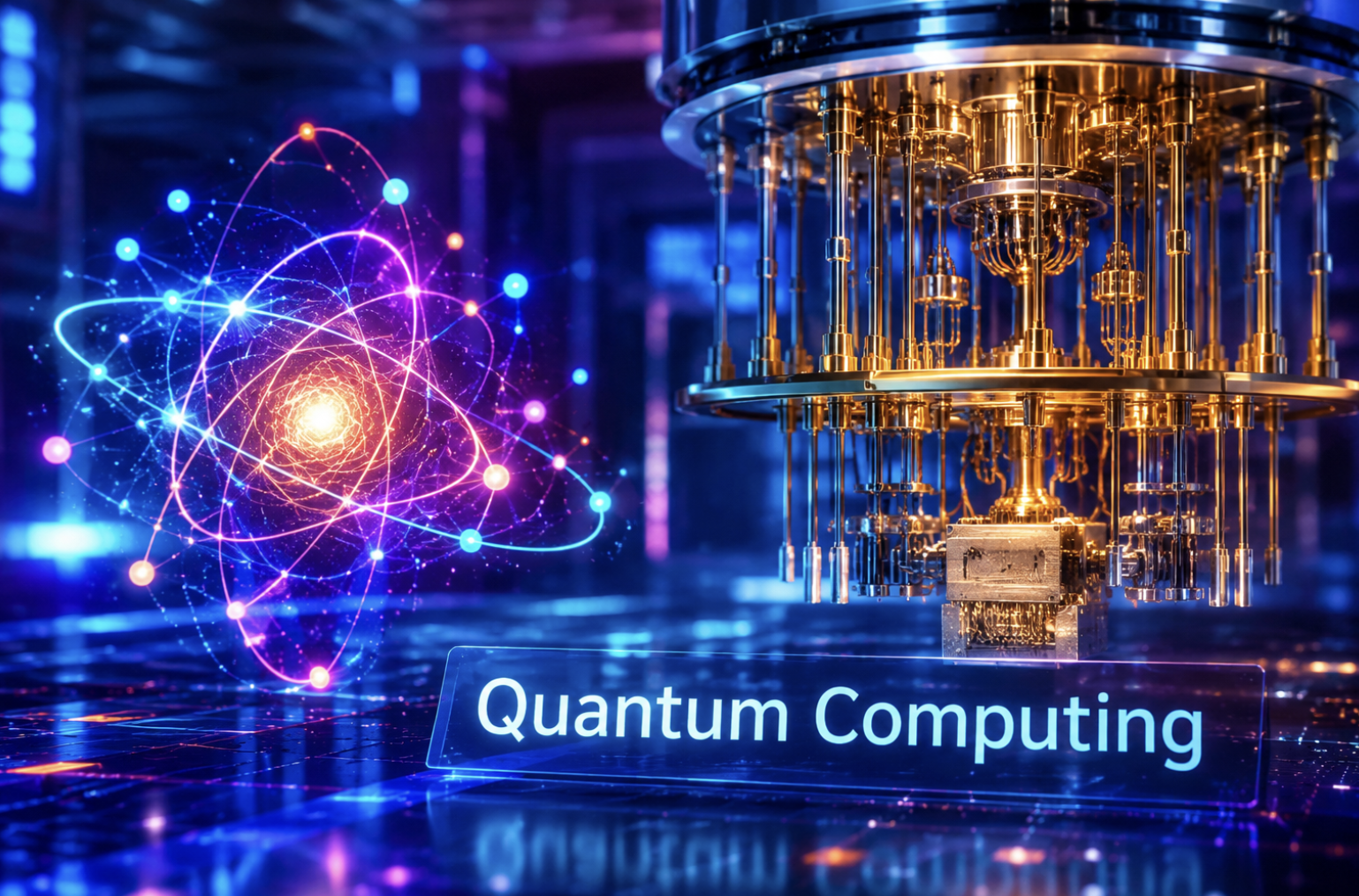
Imagine a computer so powerful that it can solve problems in minutes that would take today’s fastest supercomputers millions of years. It sounds like science fiction. However, this technology already exists. Scientists, governments, and technology giants are investing billions to unlock its full potential.
Quantum computing is rapidly moving from research laboratories into the real world. While most people have heard the term, very few understand what it actually means. Yet this technology could transform medicine, cybersecurity, artificial intelligence, finance, transportation, and scientific discovery.
The most exciting part is that quantum computing is still in its early stages. Therefore, understanding it today could help you stay ahead of one of the biggest technological shifts of the century.
The History of Quantum Computing
The history of quantum computing began in the early 1980s when scientists started exploring how quantum mechanics could improve computation. Researchers realized that traditional computers faced limitations when solving highly complex problems.
As a result, new theories emerged that combined physics with computer science. Over the following decades, advancements in quantum hardware and algorithms accelerated development.
Today, quantum computing has evolved from a theoretical concept into a rapidly growing technological field.
What Is Quantum Computing?
Quantum computing is an advanced form of computing that uses the laws of quantum mechanics to process information. Unlike traditional computers, quantum computers solve certain complex problems in completely different ways.
Conventional computers use bits as their smallest unit of information. Every bit can only hold a value of either 0 or 1. Quantum computers, on the other hand, use quantum bits known as qubits.
A qubit can represent 0, 1, or a combination of both states simultaneously. As a result, quantum computers can explore multiple possibilities at the same time instead of examining them one after another.
This unique capability allows quantum systems to tackle problems that remain extremely difficult for classical machines.
How Quantum Theory Inspired Modern Computing
Quantum theory revealed that particles behave differently at microscopic scales than previously understood. Scientists discovered phenomena such as superposition and entanglement, which challenged classical ideas about information processing.
These discoveries inspired researchers to imagine computers that could use quantum properties for calculations.
Consequently, the foundation for quantum computing was established. Modern quantum systems now rely on these principles to process information in entirely new ways.
How Traditional Computers Process Information
Every smartphone, laptop, gaming console, and server relies on binary code. These devices use billions of tiny transistors that constantly switch between on and off states.
Because of this structure, all information is represented through combinations of zeros and ones. Modern computers are incredibly fast. Nevertheless, some problems become overwhelmingly complex as the number of possible outcomes increases.
For example, finding the fastest route between a few locations is relatively simple. However, adding dozens of destinations creates trillions of possible combinations. Consequently, even the most powerful supercomputers can struggle with these calculations.
This limitation is one reason researchers began exploring quantum computing.
Why Quantum Computers Are Different
Quantum computers do not rely solely on binary logic. Instead, they take advantage of unusual quantum behaviors that occur at extremely small scales.
These quantum effects allow qubits to process information differently from ordinary bits. Therefore, quantum machines can evaluate many possibilities simultaneously rather than sequentially.
This does not mean quantum computers are better at every task. Instead, they excel in specialized areas where enormous numbers of variables must be analyzed quickly.
That distinction is important because quantum systems are designed to complement classical computers rather than replace them.
The Scientists Who Shaped Quantum Computing
Several pioneering scientists played critical roles in the development of quantum computing. Richard Feynman proposed that quantum systems could simulate physical processes more efficiently than classical computers.
David Deutsch later introduced the concept of a universal quantum computer. Their groundbreaking ideas inspired generations of researchers to expand the field.
Today, scientists worldwide continue building on their work to advance quantum technologies and practical applications.
Qubits: The Foundation of Quantum Computing
The qubit is the building block of every quantum computer. Without qubits, quantum processing would not exist.
Unlike traditional bits, qubits can occupy multiple states before measurement. Consequently, a collection of qubits can represent vast amounts of information at once.
Researchers create qubits using different technologies. Some systems rely on superconducting circuits. Others use trapped ions, photons, or emerging topological approaches.
Each method offers unique advantages. However, all of them aim to maintain stable quantum states long enough to perform useful calculations.
Understanding Superposition in Simple Terms
Superposition is one of the most fascinating concepts in quantum mechanics. It allows a qubit to exist in multiple possible states simultaneously.
Think about a spinning coin. While it spins, it is neither strictly heads nor tails. Instead, it represents both possibilities until it lands.
Similarly, a qubit remains in a combination of states until it is measured. Once observed, it collapses into a definite value.
Because of superposition, the computational possibilities increase dramatically as more qubits are added. Therefore, quantum computers can potentially solve highly complex problems much faster than traditional systems.
The Power of Quantum Entanglement
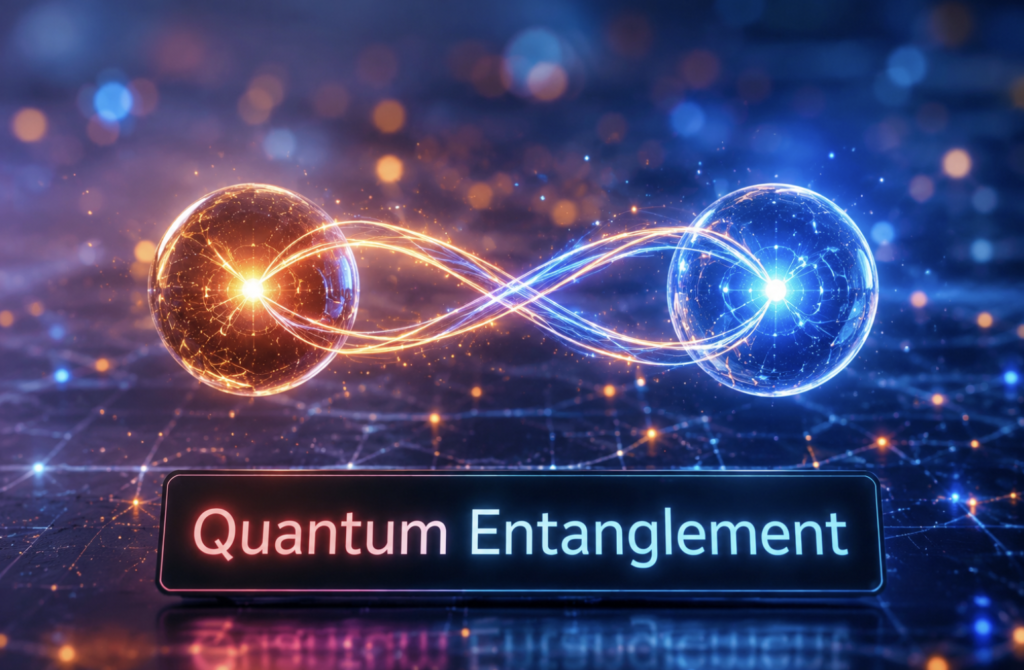
Entanglement is another remarkable quantum phenomenon. It occurs when two or more qubits become deeply connected.
Once entangled, changes to one qubit influence the others in predictable ways. This relationship remains significant even when the qubits are separated by large distances.
Scientists use entanglement to coordinate calculations across many qubits. Consequently, quantum systems can process information with extraordinary efficiency.
Although entanglement sounds mysterious, it plays a central role in the power of quantum computing.
Quantum Interference and Smarter Problem Solving
Quantum interference helps quantum computers focus on correct answers while reducing the likelihood of incorrect ones.
Much like waves interacting in water, quantum states can strengthen or weaken each other. Positive interference amplifies useful outcomes. Negative interference suppresses less useful paths.
As a result, quantum algorithms can guide computations toward optimal solutions more effectively.
This capability becomes especially valuable when solving problems involving massive numbers of possibilities.
How Quantum Computers Are Physically Built
Building a quantum computer is one of the greatest engineering challenges in modern science.
Most quantum systems operate at temperatures close to absolute zero. These temperatures are colder than outer space.
Extreme cooling is necessary because heat can disrupt delicate quantum states. Even tiny environmental disturbances can introduce errors.
Therefore, quantum computers often require sophisticated refrigeration systems that are larger than the computers themselves.
The Biggest Challenge: Quantum Errors
Quantum information is incredibly fragile. Small vibrations, electromagnetic interference, or temperature changes can corrupt calculations.
This challenge is known as decoherence. It remains one of the biggest obstacles facing the industry.
To address this issue, researchers use quantum error correction techniques. These methods combine multiple physical qubits to create more reliable logical qubits.
Although progress continues rapidly, reducing error rates remains a major priority for quantum engineers.
How Quantum Computing Has Progressed
Quantum technology has advanced significantly during the last decade. Early systems contained only a handful of qubits.
Today, major companies have developed processors containing hundreds and even thousands of qubits. Furthermore, researchers continue improving qubit quality and stability.
Experts agree that performance depends on more than qubit count alone. Reliability, coherence, and error correction are equally important factors.
Consequently, future breakthroughs will focus on both scale and quality.
Quantum Computing in Healthcare and Drug Discovery
Healthcare could become one of the biggest beneficiaries of quantum computing.
Developing new medicines often requires simulating molecular interactions. Unfortunately, these simulations become extremely complex for classical computers.
Quantum systems can model molecular behavior more naturally. Therefore, researchers may discover new treatments faster than ever before.
This advancement could accelerate breakthroughs in cancer research, neurological diseases, and personalized medicine.
The Impact on Cybersecurity and Encryption
One of the most discussed aspects of quantum computing involves cybersecurity.
Many encryption systems depend on mathematical problems that are difficult for classical computers to solve. Quantum computers could eventually solve some of these problems much faster.
As a result, governments and organizations are already developing quantum-resistant encryption methods.
The transition toward post-quantum security standards has become a global priority.
How Financial Institutions Are Using Quantum Technology
Banks and investment firms constantly analyze enormous amounts of data.
Quantum computing offers promising solutions for portfolio optimization, market forecasting, risk analysis, and fraud detection.
Because financial systems involve countless variables, quantum algorithms may uncover opportunities that traditional methods overlook.
Therefore, many leading financial institutions continue investing heavily in quantum research.
The Role of Cloud-Based Quantum Computing
Cloud-based quantum computing allows users to access quantum processors through the internet without owning expensive hardware.
This approach makes advanced quantum resources available to businesses, researchers, and students worldwide. Users can run experiments, develop algorithms, and test applications from virtually any location.
As a result, innovation has accelerated across multiple industries. Cloud access is helping expand quantum education and prepare organizations for future quantum advancements.
Transforming Logistics and Supply Chains
Modern supply chains are incredibly complex. Companies must optimize routes, inventory levels, warehouse operations, and delivery schedules.
Quantum computing could improve these processes by evaluating vast numbers of possibilities simultaneously.
Consequently, businesses may reduce costs, improve efficiency, and enhance customer experiences.
Transportation companies are already exploring quantum-based optimization solutions.
The Connection Between Quantum Computing and Artificial Intelligence
Artificial intelligence and quantum computing are becoming increasingly connected.
AI systems often require enormous computational resources for training and optimization. Quantum technology could potentially accelerate these processes.
Researchers are investigating quantum machine learning algorithms that may process data more efficiently.
Although this field remains experimental, the potential impact is enormous.
Climate Science and Advanced Materials Research
Scientists use computer models to study climate systems, chemical reactions, and advanced materials.
Quantum computers could simulate these processes with greater accuracy than classical systems.
As a result, researchers may discover better batteries, more efficient solar panels, and environmentally friendly materials.
These innovations could contribute significantly to sustainability efforts worldwide.
Where Quantum Computing Stands in 2026
The industry is currently in what experts call the Noisy Intermediate-Scale Quantum era.
Quantum computers are real and accessible through cloud platforms. However, they still experience significant error rates.
Researchers have demonstrated quantum advantages in certain specialized tasks. Nevertheless, widespread commercial adoption remains a work in progress.
Despite these limitations, momentum continues to grow across academia, government, and industry.
Common Myths About Quantum Computing
Many people believe quantum computers are simply faster versions of regular computers. In reality, they excel only at specific types of problems.
Others assume quantum computers will replace laptops and smartphones. However, classical computers remain better for everyday tasks.
Some people think quantum machines will instantly destroy all encryption. Yet practical large-scale attacks still require significant technological advances.
Finally, quantum computing is not science fiction. Real quantum hardware exists today and continues to evolve rapidly.
What the Future Could Look Like
Over the next decade, researchers expect substantial improvements in quantum hardware and error correction.
Larger and more reliable systems could unlock new applications in medicine, manufacturing, logistics, and artificial intelligence.
As quantum technology matures, businesses will gain access to computational capabilities previously considered impossible.
Therefore, the coming years may represent one of the most transformative periods in technological history.
Conclusion
Quantum computing represents a major leap beyond traditional computing methods. By leveraging qubits, superposition, entanglement, and interference, quantum systems can tackle problems that challenge even the most powerful classical machines.
Although significant obstacles remain, progress continues at an impressive pace. Governments, universities, and technology companies are accelerating development through massive investments and research initiatives.
The future of quantum computing is still unfolding. However, its potential impact on science, security, healthcare, artificial intelligence, and industry is undeniable. Understanding this technology today may provide valuable insight into the innovations that will shape tomorrow’s world.
Frequently Asked Questions
1. What is quantum computing in simple words?
Quantum computing uses qubits and quantum mechanics to solve certain problems much faster than traditional computers.
2. What is a qubit?
A qubit is the basic unit of quantum information that can exist in multiple states simultaneously.
3. Why is quantum computing important?
It can solve highly complex problems in medicine, finance, cybersecurity, and scientific research.
4. Can quantum computers replace regular computers?
No, quantum computers are designed to work alongside classical computers for specialized tasks.
5. What is quantum entanglement?
Entanglement is a quantum phenomenon where qubits become connected and influence each other.
6. What is superposition?
Superposition allows a qubit to exist in more than one state at the same time.
7. Are quantum computers available today?
Yes, several companies provide cloud access to real quantum computers.
8. Can quantum computers break encryption?
Future advanced quantum computers may break some current encryption methods.
9. What industries will benefit most from quantum computing?
Healthcare, finance, logistics, cybersecurity, energy, and artificial intelligence could benefit significantly.
10. Why do quantum computers need extreme cooling?
Cold temperatures help protect fragile quantum states from environmental interference.
11. What is quantum advantage?
Quantum advantage occurs when a quantum computer outperforms a classical computer on a specific task.
12. How far are we from practical quantum computing?
Researchers expect major progress during the next decade, though widespread adoption will take time.
13. Can quantum computing improve artificial intelligence?
Yes, quantum algorithms may eventually accelerate AI training and optimization.
14. What is post-quantum cryptography?
It is a new generation of encryption designed to resist quantum computer attacks.
15. Should beginners learn about quantum computing now?
Yes, because it is expected to become one of the most influential technologies of the future.