

Modern applications need to communicate with each other quickly and efficiently. Whether it’s receiving payment notifications, updating customer information, or sending messages between platforms, businesses rely on instant data exchange to keep operations running smoothly. This is where webhooks come into play.
If you’ve ever wondered, What is a webhook and how does it work?, you’re in the right place. In simple terms, a webhook is a way for one application to automatically send data to another application when a specific event occurs.
In this article, we’ll explain what a webhook is, how it works, its benefits, common use cases, and why it has become an essential tool for modern software development.
What Is a Webhook?
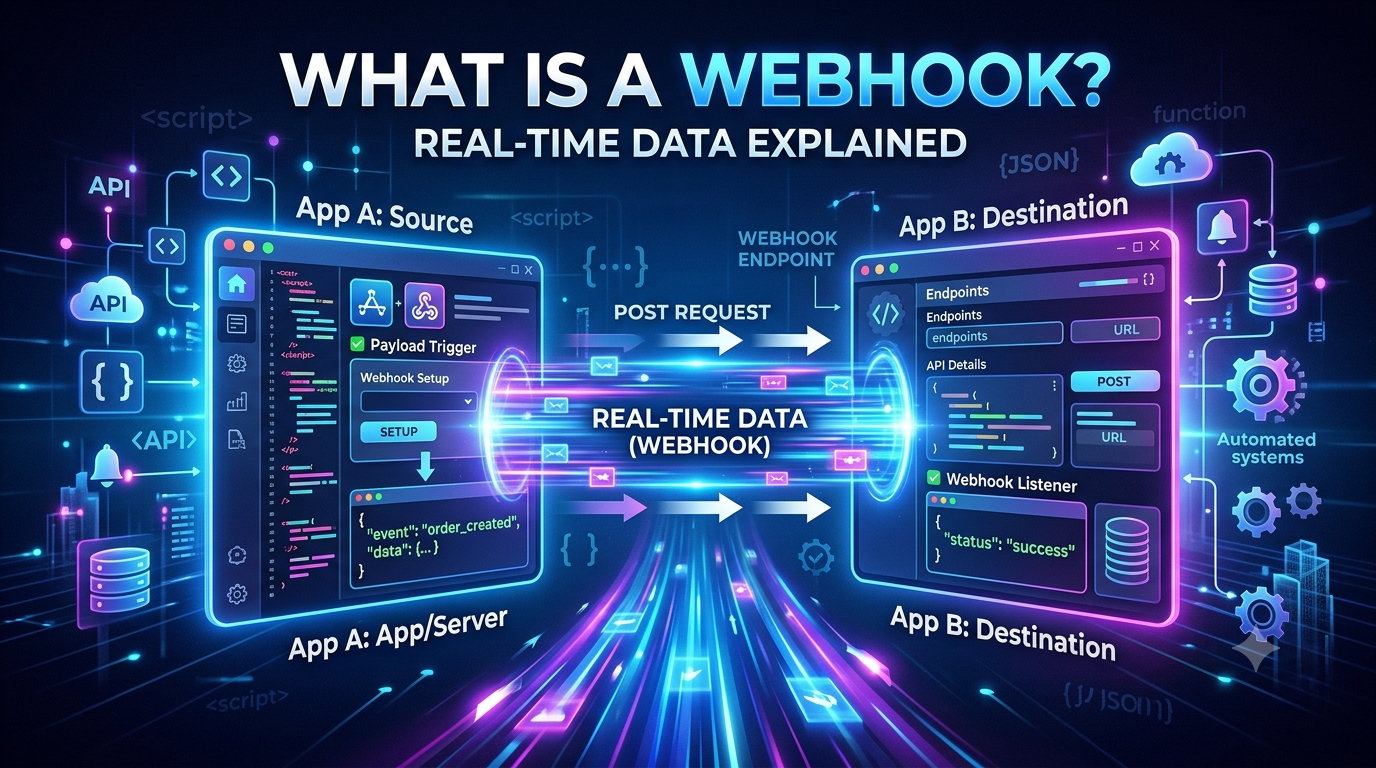
A webhook is an automated communication method that allows one application to send real-time data to another application whenever a specific event takes place.
Unlike traditional APIs, which require applications to repeatedly ask for new data, webhooks automatically push information as soon as something happens.
For example, when a customer makes a purchase on an online store, a webhook can instantly notify the payment gateway, update inventory, and send a confirmation email.
Simply put, a webhook acts like a digital messenger that delivers information automatically.
How Does a Webhook Work?
The process of a webhook is surprisingly simple.
Here’s how it works:
- An event occurs in Application A.
- The application detects the event.
- A webhook is triggered.
- Data is sent to a predefined URL.
- Application B receives the information and performs an action.
For example, imagine that someone submits a contact form on your website. A webhook can automatically send that information to your CRM software without any manual effort.
This real-time communication helps businesses save time and reduce errors.
Components of a Webhook
Every webhook system consists of several important components.
Event Trigger
A webhook starts when a specific event occurs, such as:
- A customer makes a purchase.
- A payment is completed.
- A new user signs up.
- An order is shipped.
- A form is submitted.
Webhook URL
The receiving application provides a unique URL where data should be sent.
Payload
The payload contains the actual data being transferred between applications. It usually includes information such as customer details, order numbers, or payment status.
Response
Once the receiving application gets the data, it sends a response to confirm that the information was received successfully.
Webhooks vs APIs: What’s the Difference?
Many people confuse webhooks with APIs, but they work differently.
| Feature | Webhooks | APIs |
| Data transfer | Automatic | Manual request |
| Speed | Real-time | Depends on requests |
| Communication style | Push | Pull |
| Resource usage | Lower | Higher |
With an API, an application repeatedly asks for updates. With a webhook, updates are delivered automatically when an event happens.
Why Are Webhooks Important?
Webhooks are important because they enable instant communication between applications.
Here are some of their biggest advantages:
- Real-time data sharing
- Faster automation
- Reduced server load
- Improved efficiency
- Better user experience
- Lower operational costs
Businesses use webhooks to automate tasks that would otherwise require manual intervention.
Common Uses of Webhooks
Webhooks are used in many industries and applications.
Payment Processing
Payment platforms use webhooks to notify businesses when transactions are completed, refunded, or canceled.
E-commerce
Online stores use webhooks to update inventory, process orders, and send shipping notifications.
Customer Relationship Management (CRM)
CRMs use webhooks to automatically update customer records when new leads are generated.
Marketing Automation
Marketing tools use webhooks to send email campaigns, track user behavior, and update subscriber lists.
Social Media Platforms
Social media applications use webhooks to send notifications for comments, likes, and messages.
Real-World Example of a Webhook
Let’s say you run an online clothing store.
Here’s how a webhook might work:
- A customer purchases a product.
- The payment gateway confirms the payment.
- A webhook sends the order details to your inventory system.
- Your inventory is updated automatically.
- The customer receives a confirmation email.
- The shipping department receives the order information.
All of these actions happen within seconds, without any manual effort.
Benefits of Using Webhooks
Businesses use webhooks because they offer several key benefits.
Real-Time Updates
Data is delivered instantly, which improves efficiency and customer satisfaction.
Automation
Webhooks eliminate repetitive tasks by automating workflows.
Scalability
As businesses grow, webhooks can handle increasing amounts of data without major infrastructure changes.
Cost Savings
Since applications don’t need to constantly check for updates, companies save server resources and operational costs.
Are Webhooks Secure?
Security is an important consideration when working with webhooks.
Developers use several methods to secure webhook communication, including:
- HTTPS encryption
- Secret keys
- Authentication tokens
- IP restrictions
- Signature verification
Implementing these security measures helps protect sensitive data from unauthorized access.
Challenges of Using Webhooks
Although webhooks offer many advantages, they also come with challenges.
Some common issues include:
- Delivery failures
- Network interruptions
- Security vulnerabilities
- Incorrect configuration
- Duplicate messages
Developers must monitor and test webhooks regularly to ensure they work correctly.
Best Practices for Using Webhooks
To get the best results, businesses should follow these best practices:
- Always use HTTPS.
- Verify webhook signatures.
- Log webhook events.
- Retry failed requests.
- Monitor performance.
- Validate incoming data.
Following these practices improves reliability and security.
The Future of Webhooks
As businesses continue to rely on cloud services and automation, webhooks will become even more important.
Technologies such as artificial intelligence, the Internet of Things (IoT), and advanced automation systems are increasing the demand for real-time communication between applications.
Webhooks provide a simple and efficient way to connect software systems, making them an essential part of modern digital infrastructure.
Conclusion
So, what is a webhook and how does it work? A webhook is an automated system that allows applications to communicate in real time whenever a specific event occurs.
By reducing manual work, improving efficiency, and enabling instant data transfer, webhooks have become a crucial tool for businesses and developers.
Whether you’re managing an online store, processing payments, or automating marketing campaigns, webhooks can help streamline operations and create a better user experience.
FAQ’s
1. What is a webhook in simple terms?
A webhook is a tool that automatically sends data from one application to another when a specific event happens.
2. What are the differences between a webhook and an API?
An API requires applications to request data, while a webhook automatically sends data in real time.
3. Are webhooks secure?
Yes, webhooks can be secure when developers use encryption, authentication tokens, and signature verification.
4. Where are webhooks commonly used?
Webhooks are commonly used in e-commerce, payment processing, marketing automation, customer relationship management, and social media platforms.